Categories
Economists Funny Business M.I.T.

M.I.T. Analysis in Wonderland. Graduate Student Skit, 1975


The annual skit party was a huge social event in the economics department at MIT in the 1970s and presumably before and after.  Each of the cohorts was expected to write and perform its own skit in which economics and economics professors were the principal targets. Faculty written skits were often a part of the festivities. Here in this posting for the historical record, a parody of Alice in Wonderland set in the Wonderland Institute of Technology in 1975 written by the first-year class of 1974-75. But first I provide a list of my classmates with links to some biographical information where I was able to find something…whatever happened to Paul Krugman? Not everybody participated in the preparation and performance so there remains a presumption of comic innocence for the majority of the following.

In 1978 many of this cohort were involved in Casablank, a parody of the movie Casablanca. That script has been transcribed and posted at the highlighted link.

__________________

First Year Economics Graduate Students, 1974-75
M.I.T. (Spring 1975)

Abel, Andrew B.
Aspe, Pedro A.
Begg, David K. H.
Beleza, Luis Miguel C. P.
Bookstaber, Richard M.
Collier, Irwin L., Jr.
Datcher, Linda P.
Daula, Thomas V.
Desormeaux, Jorge J.
Donnelly, John F.
Duarte, Virgulino
Klorza, Santiago C.
Feiger, Margaret C.
Frankel, Jeffrey A.
Geehan, Randall R.
Giavazzi, Francesco
Halpern, Janice D.[sic, H.?]
Helms, L. Jay
Hill, Raymond D.
Krasker, William S.
Krugman, Paul R.
Malveaux, Julianne M.
Mincy, Ronald B.
Mooney, Patricia D.
Mork, Knut A.
Nagatani, Hiroaki
Neuer, Margaret R.
Smith, David A. [Alton]
Startz, Richard
Winicker, Mary K.

Source:  M.I.T. Archives. MIT Department of Economics Records, Box 1, Folder “Women & Minorities”.

__________________

While transcribing this skit from my own days as a graduate student, I discovered how much I had indeed forgotten. The mapping of many a character to the corresponding faculty member was no longer obvious to me. I have added a listing of  Dramatis Personae with annotations based on the combined incomplete memories of myself,  Jeff Frankel, Dick Startz, Andy Abel, Ray Hill and Jay Helms. Perhaps some long-lost member of the troupe will stumble across this page and help me fill in the blanks, especially with respect to casting (20 characters!). 

______________________

ANALYSIS IN WONDERLAND

Composed and performed by the first-year economics graduate students at M.I.T.
Second term, 1974-75


DRAMATIS PERSONAE

Narrator: played by Richard Bookstaber
Alice (Representative Graduate Student): played by Margaret (née Agnew) Feiger
Advisor (presumably the actual first-year advisor, Peter Diamond): actor unknown
Cheshire Cat (Jagdish Bhagwati): actor unknown
Micro: (Hal Varian?): actor unknown
Macro: (Stanley Fischer?): actor unknown
Quick & Dirty (Martin Weitzman): actor unknown
Palmer (Palmer, an actual Sloan School graduate student): actor unknown
Dormouse (Evsey Domar?): actor unknown
Mad Hatter (Charles Kindleberger): played by Jeffrey Frankel
March Hare (Robert Engle?): actor unknown
Tweedledee (Jerry Hausman):  possibly played by Jay Helms
Tweedledum (Robert Hall): possibly played by Bud Collier
Knave of Hearts (Franco Modigliani): actor unknown
Knave of Clubs (Arthur Burns): actor unknown
Knave of Spades (William McChesney Martin): actor unknown
Knave Alan (Allan Greenspan): actor unknown
King (President Gerald Ford): actor unknown
Joker (Paul Samuelson): possibly played by Ray Hill
White Rabbit (Robert Bishop?): actor unknown

ACT I

Narrator: The first year class presents…

Analysis in Wonderland, a tragicomedy in four unnatural acts. Any resemblance to faculty members living or otherwise should be inferred from the initials worn by the characters.

Act I, Alice enters Wonderland and meets the Cheshire cat.

(Alice is sitting at a table reading Samuelson’s Economics.)
Narrator: One day Alice was reading a book, but she was getting very bored, for the book had no conversations or jokes in it.
Alice: And what is the use of a book without conversations or jokes?
Narrator: And so she began to drift off. And eventually she noticed that there was someone on the other side of the desk…
Advisor: Hi! Welcome to the Wonderland Institute of Technology. You must be a first year graduate student. I’m your first year advisor, and it’s my job to talk to you and give you a feeling that someone cares about you personally.

Now, let me see your schedule (grabs book). Well, uh, (looks at book then says with emphasis) Paul, this schedule looks fine to me (signs it) and remember to turn in your roll cards on the first day of each class.

(Through all this Alice keeps going “uh” and “but”…but can’t manage to say anything)

Remember that if you have any questions or problems, just come in and talk to me, I have plenty of time. Excuse me!

(The advisor gets up and runs out. Alice runs after, then comes back)

Alice: What a strange place! But where should I go from here? Why there’s a Cheshire Cat. (Enter Cheshire cat) Excuse me, sir, but can you tell me where I ought to go from here?
Cheshire Cat: Why, I’m wery [sic] glad you asked me that. You should go to the optimal point, of course.
Alice: But how long will that take me?
Cheshire Cat: I can’t tell you that, listen to this. (Turns on radio, which produces static. Turns it off.) You see! Our economic theories are all static.
Alice: I would like to see some faculty.
Cheshire Cat: Well, you could go to Harward [sic], but it’s wery rare that anyone sees any faculty there. Or you could stay here, but everyone here has completely lost their faculties. They’re all mad, you know.
Alice: But I don’t want to go among mad people.
Cheshire Cat: Oh, you can’t help that; we’re all mad here. I’m mad. You’re mad.
Alice: How do you know I’m mad?
Cheshire Cat: Well, a physicist’s not mad, you grant that? Now, a physicist starts with facts and tries to find theories that fit them. I start with theories and don’t bother with facts. Therefore I’m mad. Yes?
Alice: But what are your theories about?
Cheshire Cat: Do they have to be about anything?
Alice: Well, I’ve often seen a subject without a theory, but a theory without a subject? It’s the most curious thing I ever saw in all my life!

(Alice suddenly starts)

Cheshire Cat: Don’t worry, it’s just the inwisible hand.
(Enter two characters with paper hats (?) on which are cross diagrams. One has a potato chip taped to his shoulder.)
Cheshire Cat: They’re Mike and Mac Ro
Micro: Someone must stop him! It’s shameful! Look at that silly diagram he’s wearing! It’s a disgrace to the profession.
Macro: It’s a perfectly good diagram. Not like that ridiculous diagram you’re wearing!
Alice: But the diagrams look just the same.
Cheshire Cat: Shhh! You’ll only get them more upset.
Alice: Why don’t you try to talk your differences over?
Micro: Well, we microeconomists believe in logic, so I’m willing to reason it out.
Macro: You can’t expect me to be reasonable. Can’t you see I’ve got a chip on my shoulder?
Alice: Why, yes—it’s a potato chip in fact.
Macro: I wear it in honor of our founder, Cain’s. So prepare to defend yourself.
Micro: I warn you, I’m a master of the Marshallian arts.
Macro: But I’m armed with the most deadly tool of macroeconomics: (pulls out several pairs of pliers)…Multi-pliers!
Micro: And I have the most dangerous concept of microeconomics. (pulls out a slingshot) Elasticity!
Alice: Oh no, they’re going to have a duel and micro is a semi-strict under dog!

(Mike and Mac turn back to back)
(enter panting, the Quick and Dirty banker, carrying a money bag and a calculator)

Q&D: Wait! You can’t have a duel without a primal.
Alice: Who are you?
Q&D: I’m duh quick and doity bankuh. And by my quick and doity bankuh’s calculation, I find dat what you need is more liquidity which I will now provide.

(out of the moneybag he pulls a waterpistol, shoots everyone, then runs)

Macro: Now we’re all wet. What are we going to do?
Alice: It’s all right, I know just what to do. Here’s the driest thing I know.

(begins reading from Bishop [notes])

Micro: This isn’t getting me dry at all.
Macro: Now there’s only one way to get dry, and this will prove to you that macroeconomics is good for something.
Alice: What are you going to do?
Macro: I’m going to do some hand-waving! Macroeconomists are always drying things out by waving their hands.
Alice: They are?
Macro: Of course! That’s why none of their theories will hold water. Now, watch this! (He begins to draw a diagram)
Alice: What do those lines mean?
Macro: Oh, I don’t know. But they’re pretty good lines, and Lord knows I have the right to a few good lines in this ridiculous skit.
Palmer: Haven’t you got the A line drawn wrong?
Macro: (Going very fast) Well, that line doesn’t really matter. (erases it)
Palmer: But then shouldn’t you erase the k line, too?
Macro: Well, all right (erases).
Palmer: What do X and Y stand for?
Macro: Oh, don’t worry about the axes (erases them). Actually, these are not quite like this anyway. (erases remaining lines) And, as you can see, equilibrium is at the intersection.
Alice: Well, I’ve often seen lines without an intersection, but an intersection without lines? It’s the most curious thing I ever saw in my whole life.
Narrator: You’re repeating yourself, Alice.
Alice: What do you expect, Mel Brooks?
Micro: You think that’s hand-waving! Why, I have seen hand-waving, compared with which that is no better than eternal bliss.
Alice: But what is better than eternal bliss?
Micro: Well, a ham sandwich, for instance.
Alice: But nothing’s better than eternal bliss.
Micro: And a ham sandwich is better than nothing. So, by transitivity, there you are!
Alice: (ignoring Micro as she turns to the Cheshire Cat) Isn’t there anyone here who isn’t mad?
Cheshire Cat: You might try an assistant professor.
Alice: Which one should I try?
Cheshire Cat: It doesn’t matter—pick one at random.
Alice: How do I do that?
Cheshire Cat: Just draw one from an assistant professor urn.
Alice: What’s an assistant professor urn?
Micro, Macro, Cheshire Cat, Narrator (in unison) About eleven thousand a year!
(pause)
Narrator: …and a copy of Bishop’s notes.
Alice: Curiouser and curiouser.
(exeunt all)


ACT II

Narrator: Act II. The Mad Boston Tea Party
(Dormouse sleeps throughout. Mad Hatter stuttering throughout; price keeps going up on hat.)
Mad Hatter: What’s your liquidity preference my dear?
Alice: It looks like you have nothing but tea.
Mad Hatter: That is all we have.
Alice: Then why did you ask?
Mad Hatter: Consumer sovereignty. (gives Alice tea) I would like to suggest to you that that will be eight pence (takes shilling from Alice.)
Alice: No cover charge?
Mad Hatter: A gentleman never takes cover, as we say in the old country.
Alice: Hey, I gave you a shilling and you only gave me two pence change back!
Mad Hatter: A gentleman never counts his change.
Hare: Gentleperson!
Alice: This sounds like a liquidity trap to me.
Mad Hatter: Alright, I’ll put it down on the T-account…(gets book)
Alice: There is something floating in my tea.
March Hare: (looking) Exchange rates.
Mad Hatter: … two pence… (fiddling with T-accounts)
Alice: No it’s ice.
Mad Hatter: …under frozen assets.
Hare: Gary Becker! (general laughter)
Mad Hatter: Why is the Poisson distribution like a temperature of 102?
Alice: Well, let’s see… I suppose you would have to integrate e to the…
Mad Hatter: Integration! They only do that in South Boston.
March Hare: No, that’s disintegration.
Alice: I suppose you have to differentiate between…
Mad Hatter: Differentiate? The first derivative is the last refuge of a scoundrel.
Alice: I give up, why is the Poisson distribution like a temperature of 102?
Mad Hatter: I haven’t the slightest idea.
Alice: That’s not very funny.
Mad Hatter: Funny?
March Hare: She wants to hear a joke.
Mad Hatter: A joke, a joke!
March Hare: …Fogel and Engerman! (general laughter)
Alice: I’m afraid I don’t get it.
Mad Hatter: Well, you see, certain names are standing jokes around here, like…Walt Whitman Rostow! (laughter)
Alice: Can I try one?
Mad Hatter: Go right ahead.
Alice: Milton Friedman! (silence among the actors who look sour a moment after the audience’s laughter dies down.)
Mad Hatter: Try another one.
Alice: Jay Forrester….(more silence).
Alice: I don’t understand. What’s wrong?
Mad Hatter: Well, some people just can’t tell a joke.
March Hare: Perhaps you’d like to see a proof?
Mad Hatter: A proof! A proof!
March Hare: This is a proof I recited before the Queen of Hearts. (goes to board)

Twiddle Twiddle lambda star
Alpha hat, beta hat times X bar.
Alpha hat, beta hat sigma Xi

One over n, equals mean of Y.

[writes on board:]:
\begin{array}{l}\mathop{{\tilde{\tilde{\lambda }}}}^{*}=\hat{\alpha }+\hat{\beta }\cdot \bar{X}\\=\hat{\alpha }+\hat{\beta }\cdot \sum{{{X}_{i}}}\left( \frac{1}{n} \right)=\bar{Y}\end{array}
Mad Hatter: Time to move on to the next place.
(everybody gets up to move)
Alice: What?! You mean you just move on to the next place without erasing?
March Hare: We don’t have to erase; we just relabel the axes.
Mad Hatter: I always erase twice, once before the period and once afterward. (erases)

(everyone moves down one, and relabels axes and curve)

     
Alice: And I suppose when you use up all the places you just start again at the beginning of the circle?
Mad Hatter: Yes. It’s called recycling.
March Hare: You better wake up the Dormouse.

(Mad Hatter and March Hare exit)

Alice: (To Dormouse) Wake up, wake up. (shakes him)
Dormouse: (waking) Whaaaaat?
Alice: Wake up. It’s over.
Dormouse: (Pause…) Can I Xerox your notes?
Alice: (starts to leave. turns and says) Why is a Poisson distribution like a temperature of 102? (Pause. Alice exits)
Dormouse: (alone) Because it’s not normal.


ACT III

Narrator: Act III. Alice meets Tweedledum and Tweedledee, who have a battle.
(Alice enters and sits down. Dum and Dee enter, arm-in-arm, prancing. Dee sits down; Dum goes to the board and begins. Throughout, Dee is frantic, pacing, and talking very fast. Dum is red-faced, slow-talking, constantly looking at the floor; arms folded, with noticeably short pants and a turtleneck.)
Dum: So, to conclude yesterday’s talk, we can see that it’s entirely possible that for the two sub-groups, say, men and women, you could have different parameters in the regression…
Dee: (jumping up to interrupt) I think I can draw a picture that will make that all clear. Wish I had my colored chalk… [draws pictures].
     
…so you see that while the slope in the pooled regression is zero, contrariwise; it’s actually negative for men and positive for women.
Dum: …Sort of, different slopes for different folks, which tells us…
Dee: [interrupting] …and contrariwise, I can clear this up by drawing a picture that would show…[draws picture]
 
Dum: [interrupting]…that there could be kinky behavior in some subgroups….
Dee: Right. (sits down)
Dum: But, as I was going to say, this illustrates the 287th “Iron Law” of econometrics, which states that….
Dee: (again jumping up to interrupt)…Contrariwise,…I think I can make that clear with a picture in four dimensions. Damn, I just wish I had my colored chalk…(draws pictures)
…which shows that…
Dum: (getting very irritated, interrupting) Nohow!

The time has come, the Walras said
to talk of many things,
of matrices and error terms
of cabbages and kings,
and keeping out your pictures
that keep complicating things.

Dee: Contrariwise!

In my way of showing things
I’m better far than you,
Your talk is like an old dead horse–
It’s slow, not unlike glue.

Dum: Now wait a second…
(Dum and Dee break into a general dispute, yelling at one another.)
Dum: ….you’re not consistent…
Dee: …you’re almost surely driving me to the p-limit…
Dum: …you’re a homoscedastic deviate…
(While Tweeledum and Tweedledee continue arguing, the Narrator breaks in…)
Narrator: So Tweedledum and Tweedledee
Agreed to have a fight
For Tweedledum said Tweedledee
Couldn’t prove Gauss-Markov right.
Dum: Of course we must have a fight. What time is it?
Dee: 10:40—We’re late getting started, so we better hurry up.
Dum: Let’s fight ‘till noon, then have lunch.
Narrator: So they agreed to fight and, as Alice watched, they began to see who could prove the theorem better.
(Dum and Dee give lectures simultaneously, beginning and ending at the same time with the same words.)
Dee:

[simultaneously with Dum]

I CLAIM THAT OLS IS BLUE.

Basically, we want to prove that

{{\sum{\left( \mathbf{{X}'Y} \right)}}^{-1}}\mathbf{{Z}'}\beta \le {{\sum{\left( \mathbf{{X}'\tilde{Y}} \right)}}^{-1}}\mathbf{{Z}'}\gamma

Now just take the inverse of the antilog of the Jacobian and delete the fourth row. Let little x be the square root of big X, and let medium-sized x be measured from its mean; substitute back in and we have

{{\sum{\left( \mathbf{{X}'}\left[ \begin{matrix}  \mathbf{Y} \\  \mathbf{Z} \\  \end{matrix} \right] \right)}}^{-1}}{\left| J \right|\cdot \Pi \cdot {{R}^{2}}}/{\text{hat size}}\;

which you will recall from 14.381.

Then, as I promised, you can use this by transposing Z and x, deleting R and reversing the inequality…..OH SHIT…I’ve screwed up…Well, just change every medium-sized x in your notes to big X, delete all sigmas, and reverse the third and fourth steps of the proof I gave last week which was right here on the board. Or look in Tahl’s [Theil with an West Virginian accent] book. Everyone should understand this perfectly—and of course the notation is clear. Then, adding the obvious steps we learned in 14.381 to this proof completes the argument. SO OLS IS BLUE, as promised.

Dum:

[simultaneously with Dum]

I CLAIM THAT OLS IS BLUE.

Well….a lot of people go around proving the Gauss-Markov….Theorem….but the literature is full of cases….where what’s done is wrong….Take matrix addition for example….Some people just add element-by-element….while often the more interesting thing to do…..is to use the Choleski factorization of one of the matrices….And recalling that Tweedledum and I are the final arbiters of econometrics at W.I.T. (at least until Fisher gets back off leave) you’d better do it this way, or consider dropping the course. SO OLS IS BLUE, as promised.

Palmer: Shouldn’t you invert that Jacobian before proceeding to expansion in Lambert spaces….
Dee: [interrupting] If it was so, it might be; If it WERE so, it could be; But as it isn’t, it ain’t. That’s logic.
Narrator: Alice couldn’t figure out just who had won the fight, although Tweedledee HAD used a lot more words….
[exeunt]


ACT IV

Tweedledee: Act Four, “The trahl”.
Narrator: Within a few moments Alice will witness the trial of the Knave of Hearts who is in deep trouble now because the King of Hearts is flying all the way from the Capital of Wonderland to preside at the trial. You are undoubtedly familiar with the Knave of Hearts most important contribution to economic analysis, “A Life-Cycle Built for Two”. But now he has been accused of starting the latest Wonderland inflation and depression—or as they say in the seminar rooms down by the River Chuck—“inflession”. The economic experts of the King—Knave Arthur of Clubs, Knave William of Spades, and Knave Alan of Diamonds—have all convinced him that economic voodoo has been practiced on models on the Wonderland economy in the hallowed halls of W.I.T. Since the King of Hearts has never played with a full-deck in his life, he was easily deceived by these rascals. Fortunately for the Knave of Hearts the Queen was unable to come to the trial due to a prior speaking engagement before the Veterans of Foreign Business Cycles.
(Enter Knaves of C.S. &D. They play “Hail to the Chief” on kazoos for a few bars and end with “Pop goes the weasel.” Then the King enters wearing a helmet and carrying a football. A WIN button is conspicuous. King bends over, hikes the ball to Knave of Clubs. King sits down on throne in middle of stage.)
Knave of Clubs. Where’s the jury?
King of Hearts. (points at the Knaves) You. (Knaves turn around but no one is behind them. King continues…) Yes, you. You are his peers. And for a proper trial before we cut off his grant, we must have a jury of his peers.
Knight of Diamonds. (tossing a coin à la [George] Rath) We know what to do.
(Enter all the other characters from Wonderland, except Joker and reporters)
King: What are the charges?
Knave of Clubs: Eleven dollars a barrel.
White Rabbit: The King of Hearts, he has no smartz
But Unemployment yes.
The Knave of Hearts has played his part
To make inflation worse.
Knaves in the jury-box: Boo, Hiss, Boo!
King: It is a pretty despicable offense isn’t it?
Knave of Spades: Are you kidding? The charges don’t even rhyme.
King: Will the defendant rise?
Knave of Hearts: If I had known you were going to ask me that question I would have built it into my model.
King: I’ll hold you in contempt!
Knave of Hearts: I don’t suppose I’ll become overly fond of you either.
King: Let the jury note the defendant’s behavior.
Knave of Hearts: Which reminds me of my 1944 paper, but that is of course a secondary issue given the gravity of the problems which we now face. While I can’t formally defend the following equation to my own satisfaction, I think that it does make some economic sense. But first I should say that things will be getting much worse before they will get better, I can give you the latest predictions…..
King: (fuming through all of the above) Bind the bearer of bad tidings or he’ll talk us to death…
Knave of Clubs: But what shall we bind him with?
King: Bearer bonds, naturally!
(The Knaves come out of the jury box and use first-aid gauze to tie the knave of Hearts by body and legs & gag him—leaving only one arm free. Knave of Hearts has been talking with his hands throughout his testimony, and he continues gesturing with his free hand while occasional grunts can be heard under his gag.)
King: May it be noted that in the tradition of Wonderland jurisprudence we have left the defendant with one degree of freedom in spite of his lack of respect for this court. Are there any witnesses?
Mad Hatter: I am.
King: Take the stand.
Knave of Clubs (to Mad Hatter): Did the defendant do it?
Mad Hatter: Certainly not.
Knave of Spades: And you witnessed this with your own eyes?
Mad Hatter: And I didn’t hear or smell him do it either.
Knave of Diamonds: But how strong was your prior?
Mad Hatter: Well, I don’t like to boast but when I was a young man working for the OSS during the War, I once spent a week in bed with a….
Knave of Clubs: No, no, no. How much could new data affect your prior beliefs, and if considerably, what was your posterior judgment?
Mad Hatter: I don’t now, that’s a good one. But I’ve got one for you. What weighs 12,000 pounds and has a twice differentiable indifference map over hay and peanuts?
King: That’s irrelevant!
Mad Hatter: That’s right.
King: Give your evidence, or I’ll cut your grant off on the spot!
Mad Hatter: (stutters) I’m a poor man your majesty.
King: You’re a very poor speaker. (knaves laugh) I thought that was a pretty good one too. I’m in the mood for a few laughs (to White Rabbit) Call in the Joker.
White Rabbit: The Joker.
(Enter Joker, attended by secretary, fans seeking autographs, and reporters taking pictures)
Joker: It’s great to be back in Wonderland folks. A funny thing happened on my way…
King: (interrupting) You have been called here to testify. What is the Keynesian viewpoint?
Joker: As Uncle Miltie Friedman would say, only blindmen use Keynes. Hey, that’s a pretty good one. (To secretary) Write that down for my textbook—Better yet, put out a new edition. But, seriously folks just the other day I was leafing through a volume of Ricardo’s letters in the Sraffa collection when I came across a letter from Ricardo to James Mill describing the following encounter between Thomas Malthus and David Ricardo. Ricardo was walking down the street one day when he ran into the good Reverend who was, much to Ricardo’s surprise, sporting a banana in his left ear. Ricardo was surprised because Malthus was always the last of the political economists to adopt a new fashion. Finally Ricardo’s curiosity got the better of him and he asked, “I say Tom, why is that banana in your ear?” Malthus didn’t seem to understand—but that was hardly unusual as Malthus, more often than not, couldn’t understand what his friend was saying. In fact, old Malthus personally thought that Ricardo couldn’t optimize his way out of a paper sack, much less a Lambert space. Finally Malthus said, “I’m sorry Dave, but I can’t hear you, you see, I have this banana in my ear.” (everyone in the courtroom is sleeping) And now….ahem…ahem (everyone wakes up). A few of your favorite impressions: Francois Quesnay! (He covers his face with his hands; removes hands; expression unchanged) Böhm-Bawerk! (same routine)
King: Enough!
Joker: Nassau Senior! (same routine)
King: Take him away. (White rabbit and knaves carry Joker off, still doing impressions. e.g. Stanley Jevons, Joseph Schumpeter, Vilfredo Pareto….)
King: Who is the next witness?
Rabbit: Alice!
Alice: Here! (she goes to the witness stand)
King: What do you know about this business?
Alice: Nothing.
King: If you say anything, I’ll give you part credit. Otherwise….
Alice: But I don’t need part credit!
King: Young lady, I’m growing impatient. Either tell us something about this business or I’ll cut off your grant.
Alice: (crying) But I don’t have a grant.
King: Then why are you so upset, indeed.
Alice: What sort of….(alarm clock goes off in the jury box and the knaves wake up).
Knaves: (in unison) Verdict time!!
Knave of Spades: (To Knave of Diamonds) Do you have the coin?
Knave of Diamonds: Yes I do. (to Spades). You’re innocence, (to Clubs) you’re guilt. Call it innocence. (he tosses the coin high in air)
Alice: What kind of trial is this?
King: Don’t be a stupid child. It’s a Bernoulli trial.
Knave of Spades: Tails.
Knave of Diamonds: Sorry it’s heads. He’s guilty!
Alice: May I see the coin? (it’s tossed to her) This coin has two heads.
King: Did anyone say p equaled one half?
(Lights out. Everyone leaves but Alice. Lights on she has book and wakes up.)
Alice: I’m glad I woke up before I had to take generals. (She leaves)
Audience: (Deafening applause) Bravo. Cheers. Whoopee.


Source: Transcribed by Irwin Collier from personal copy.

Categories
Chicago Economists

Cowles Commission. Evsey Domar’s Four Salient Episodes, 1947-48


When asked by Clifford Hildreth who was working on his project, The Cowles Commission in Chicago, 1939-1955, for suggestions and/or observations from economists who had worked at Cowles during that period, Evsey Domar had few vivid recollections to offer of his year there some thirty five years earlier. Two items were associated with Jacob Marschak, one with Lawrence Klein, and one with Kenneth Arrow.

Having written the last Ph.D. dissertation supervised by Evsey Domar, I feel it my obligation to include such nuggets of Domaresque delight as his characterization of the difference between the economist (Kenneth Arrow) and the political scientist (David Easton) whom Domar had introduced to each other: “the political scientist assumed all except what he had explicitly rejected; the economist assumed only what he had explicitly stated.” 

___________________

Carbon copy of Domar letter to Hildreth

November 26, 1982

Professor Clifford Hildreth
Department of Economics
University of Minnesota
1035 Business Administration
271 19th Avenue South
Minneapolis, NM 55455

Dear Cliff:

This is in reply to your letter of October 27th regarding my impressions of the Cowles Commission.

I really have very little to say, because my connection with the Commission was short (about a year) around 1947-48, and also because I was only nominally a member of the group. I remember four episodes:

  1. Jacob Marschak asking for another dozen years or so to make economics truly scientific.
  2. Same, discussing the economics of free (atomic) energy.
  3. Larry Klein predicting such a low GNP for (I believe) 1947, that after some six months hardly anything was left for the remainder of the year.
  4. I introduced Ken Arrow and David Easton (the political scientist) to each other. it took them some time to find a mutual language. Reason: the political scientist assumed all except what he had explicitly rejected; the economist assumed only what he had explicitly stated. Perhaps this episode was the most educational of all.

Sorry I cannot help you more.

Cordially,

Evsey D. Domar

/gjk

Source: Economists’ Papers Archive, David M. Rubenstein Library, Duke University. Evsey Domar Papers, Box 4, Folder “Correspondence Hf-Hz”.

___________________

Arrow on David Easton

The exposition of the book [Social Choice and Individual Values] was developed in the next year back in Chicago. I presented the material over a number of seminars. I was grateful to these people [Tjalling Koopmans, Herbert Simon, Franco Modigliani, T.W. Anderson, and Milton Friedman] because they thought it was a good idea, encouraged me and asked good questions; parts of the book are making clear points they found obscure.

Easton was a little different. He was the first political scientist I talked to about this. He gave me the references to the idealist position which was sort of the opposite idea. In a way the idealist position was the only coherent defense that I could see in political philosophy. It wasn’t a very acceptable position, but it was the only one that had at least a coherent view of why there ought to be a social ordering.

Source:  J. S. Kelly and Kenneth J. Arrow, An Interview with Kenneth J. Arrow, Social Choice and Welfare, Vol. 4, No. 1 (1987), pp. 55-56.

Image Source: Economists’ Papers Archive, David M. Rubenstein Library, Duke University. Evsey Domar Papers, Box 18, Folder “Photographs (Domar)”.

Categories
Bibliography Johns Hopkins

Johns Hopkins. Fiscal Policy Readings. Domar, 1949-50


Evsey Domar was hired at Johns Hopkins in 1948. This posting provides a convenient list of the greatest (English language) hits in the macroeconomics of fiscal policy at mid-twentieth century.

___________________________________


Course Announcement

Fiscal Policy 627-628. Associate Professor Domar. Two hours weekly through the year.

Fiscal policy as an instrument of economic stabilization and development. An analysis of its theory and actual applications in recent years.

Prerequisites: Monetary Theory 309-10 and Business Cycles 617-18, or their equivalents.


Source: Announcements of Courses, 1949-50. The Johns Hopkins University Circular, New Series 1949, Number 4 (April 1949), p. 92.

___________________________________


FISCAL POLICY
Political Economy 627-28
1949-50

It is assumed that the students are already familiar or will familiarize themselves shortly with the following books or their equivalent:


Author

Title

Year

American Econ Assn. Readings in Business Cycle Theory

1944

Board of Governors of the Federal Reserve System The Federal Reserve System. Its Purpose and Functions

1947

Council of Economic Advisers The Midyear Economic Report of the President to the Congress, July 11, 1949, together with a report, The Economic Situation at Midyear 1949

1949

Haberler, Gottfried Prosperity and Depression

1946

Hansen, Alvin H. Fiscal Policy and Business Cycles

1941

Hansen, Alvin H. Monetary Theory and Fiscal Policy

1949

Keynes, John Maynard The General Theory of Employment Interest and Money

1936

Lange, Oscar Price Flexibility and Employment

1944

Lerner, Abba P.

The Economics of Control. Principles of Welfare Economics

1944

National Planning Assn. National Budgets for Full Employment

1945

Ruggles, Richard An Introduction to National Income and Income Analysis

1949

Somers, Harold M. Public Finance and National Income

1949

Whittlesey, Chas. R. Principles of Money & Banking

1948

The following books are recommended:
Arndt, H. W. The Economic Lessons of the Nineteen-Thirties

1944

Beveridge, Wm. H. Full Employment in a Free Society

1945

Board of Governors of the Federal Reserve System Banking Studies

1941

Bopp, Karl R. et al Federal Reserve Policy

1947

Ellis, Howard S. (ed.) A Survey of Contemporary Economics

1948

Fellner, Wm. Monetary Policies and Full Employment

1946

Hansen, Alvin H. Economic Policy and Full Employment

1947

Hansen, Alvin H. & Perloff, Harvey S. State and Local Finance in the National Economy

1944

Harris, Seymour Edwin (ed.) Economic Reconstruction

1945

Harris, Seymour Edwin (ed.) The New Economics. Keynes’ Influence on Theory and Public Policy

1947

Hart, Albert Gailord Money, Debt and Economic Activity

1948

Hawtrey, Ralph George The Art of Central Banking

1932

Homan, Paul T. & Machlup, Fritz (ed.) Financing American Prosperity. A Symposium of Economists

1945

Keynes, John Maynard A Treatise on Money

1930

King, Willford Isbell The Keys to Prosperity. A Symposium of Economists

1945

Lerner, Abba P. & Graham, Frank D. (ed.) Planning and Paying for Full Employment

1946

Metzler, Lloyd A. et al Income, Employment and Public Policy. Essays in Honor of Alvin H. Hansen

1948

Mises, Ludwig von The Theory of Money and Credit

1935

Musgrave, Richard A. et al. Public Finance and Full Employment

1945

Balogh, T. et al The Economics of Full Employment

1944

Rist, Charles History of Monetary and Credit Theory from John Law to the Present Day

1940

Robertson, Dennis Holme Essays in Monetary Theory

1940

Additions to this list will be made from time to time.


Source: Duke University, Rubenstein Library. Economists’ Papers Archive. Evsey D. Domar papers, Box 15, Folder “Macroeconomics: Old Reading Lists.”

Image Source: Joshua Domashevitsky (Evsey D. Domar), University of California at Los Angeles, Bruin Life Yearbook/Southern Campus Yearbook, 1939, p. 52. Caption to graduation picture: “Joshua Domashevitsky, A. B./Economics/ Transferred from State College of Law, Manchuria: Foreign Trade Club; Artus, Chancellor of the Exchequer 4.”

Categories
Exam Questions M.I.T.

M.I.T. General Exams in Macroeconomics, 1959-71

________________________

The original plan of Economics in the Rear-View Mirror was to provide a single artifact for each post. Larger (composite) data sets are given dedicated pages (e.g. Harvard Ph.D.’s in economics 1875-1926; Chicago Ph.D.’s in economics 1894-1926Economics Rare Book Reading Room). Sometimes I come along a group of artifacts that are best kept together so I end up with a post like today’s that prints out as more than 25 pages of text. 

Today’s treasure is a fairly complete run of MIT general examination questions in macroeconomics for the period 1959-1971 found in a folder in the Evsey Domar papers at the Economists’ Papers Archive at Duke University. For a few of the exams we even have handwritten records indicating the questions chosen by the examinees and the grades awarded (I have omitted the names).

________________________

May 22, 1959
General Examination in Macroeconomics

Answer four questions, including at least one from each group.

I.

  1. (a) Explain the basic economic philosophy which forms the foundation of modern national income (and gross product) estimates in Western countries.
    (b) Show how this philosophy is transformed into specific criteria used by the U.S. Department of Commerce in their estimates of Gross National Product, National Income, and Consumer Disposable Income. Be as specific as you can.
  2. Present a careful analysis of the problem of “Price Flexibility and Employment” and trace its discussion (that is, of its principal points) through economic literature beginning with Keynes’ General Theory.
    What practical conclusions follow from this discussion?
  3. It was repeatedly said in 1946 that “Increased production is the best cure against inflation.” Comment on this statement as completely as you can. (Hint: Consider the dual aspect of the production process.) In the light of your finding, do you think a labor strike to be deflationary or inflationary?

II.

  1. Construct a “flexible” multiplier-accelerator model in which the government plays an active role. That is, it levies a proportional income tax and engages in stabilizing expenditures.
    1. Imagine first that the tax on last year’s income is collected this year, while consumers recon their disposable income on a cash basis (i.e. income earned minus taxes actually paid). Government expenditures are constant. How do changes in the tax rate affect the behavior of the model?
    2. If the tax system should go on a withholding basis, so that the tax on this year’s income is collected this year, how does that affect the stability and other characteristics?
    3. Taking taxes as in (b), suppose government expenditures are proportioned to the gap between full employment income and last year’s income. Is this stabilizing?
    4. Suppose government outlays are a decreasing linear function of the observed rate of change of income. Is this stabilizing?
  2. It is often said that the cause of any depression is the previous boom and its “excesses.” Does this make sense in terms of modern business cycle theory?

III.

  1. “The purpose of taxation is never to raise money but to leave less in the hands of the taxpayer.” Comment fully and critically. Can you identify the author? (No great penalty if you cannot.)
  2. To the best of your ability, try to analyze the incidence of a corporate income tax. What empirical information would you need for this purpose? (Please be reasonable).
  3. “People are always willing to become wealthier. The problem of economic growth in advanced countries is: will the public be willing to add to its holdings of physical assets an amount equal to the unconsumed portion of full employment output?” Discuss fully including a description of the alternatives to holding physical assets, the efficacy of the price system, policy measures.

________________________


February 8, 1960
GENERAL EXAMINATION IN ECONOMIC THEORY

For the old-style exam (microeconomics alone), answer the first question (one hour) and any three of the others in Part I (two hours). For the new-style exam, answer any three questions in Part I (two hours) and any three questions in Part II (two hours), but without including both 3 and 4. Use separate books for Parts I and II.

PART I

  1. In a purely competitive economy, the only goods are food (F) and clothing(C), and the only factors are labor (L) and land (T), both fixed in supply. Each household supplies either L or T, but not both. Both goods are produced at constant returns to scale with both L and T. Isoquants are normally curved for both products; and, at any given marginal rate of substitution, a higher ratio of T to L is implied for F than for C.
    1. Show how the economy’s transformation curve for F and C is derived. Could it be either concave or convex or linear, and why?
    2. If everyone in the economy always divides his income equally between F and C, show how this determines uniquely what goods are produced, how they are produced, and for whom.
    3. How is that general equilibrium modified if the government imposes a tax on F and distributes the entire proceeds equally among all of the labor-supplying households. (Assume for simplicity that the tax and subsidy involve no administrative costs.)
    4. Would there be better ways of achieving the same redistribution of income? Explain fully why or why not.
  2. The demand for a monopolist’s produce is given by p = 50 – .001q. Within the relevant range, his total cost as a function of his output is C = 40q – .0005q2.
    1. In the monopolist’s long-run equilibrium, what are his price, output, and profit?
    2. How are those magnitudes affected if demand now increases to p= 56 – .001q?
    3. In general, what factors determine whether a monopolist’s equilibrium price will rise or fall in response to an increase in demand? Explain how the actual result in the present example fits in with those general principles.
  3. Plant capacity for a certain product costs $6 per year per unit of output. Given a plant of any particular size, any output up to the capacity level can be produced at a variable cost of $12 per unit; and outputs in excess of capacity are impossible. Demand is given by p = 24 – .001q (where p is the price of the product in dollars per unit and q is the quantity of product demanded per year).
    1. What are the long-run-equilibrium prices, outputs, and profits under conditions of (i) monopoly and (ii) pure competition?
    2. How are those equilibrium magnitudes affected in both the short and long run if new technological knowledge suddenly makes it possible to produce the product with a new type of equipment at a capacity cost of $5 per year per unit of output and a variable cost of $9 per unit of output. (Assume that, in the short run, new capacity can be added but none of the pre-existing capacity wears out. In the long run, all of the old capacity does wear out.)
  4. Show how an individual’s labor-supply curve can be derived from his basic preferences for leisure and income, assuming that he also has a fixed income from other sources. Then show the comparative effects of three alternative taxes that might be imposed to extract the same revenue from this man: (a) a lump-sum or poll tax, (b) a proportional income tax, and (c) a progressive income tax.
  5. Summarize Ricardo’s theory of rent, and evaluate its correctness and realistic relevance. In what sense, if any, does rent not enter into cost? Explain carefully.

PART II

  1. Discuss the role played by population growth in modern theories of economic development and business cycles. Be specific.
  2. Write an essay on the subject of “The General Theory After Twenty-Five (almost) Years.” Include in it, among other things, your evaluation of the usefulness of the book from the point of view of: (a) an advanced capitalist economy like the U.S.; (b) an underdeveloped mixed economy like India; (c) a centrally directed socialist economy like the USSR.
  3. Present your favorite theory (traditional, eclectic or entirely original) of the business cycle. Explain the empirical tests which you would subject it to. Be specific.
  4. Present an explanation of the causes of the current inflation in this country. Indicate the empirical tests which your explanation would have to pass. Be specific.
  5. (a) Explain the reasons why the economic activities of the government create special problems in national income (or gross product) accounting. Analyze critically the treatment of these problems by the U.S. Department of Commerce.
    (b) “Existing methods of international comparisons of per capita national income have an upward bias in favor of advanced countries.” Comment. “Don’t forget to indicate what these methods are.)


Comprehensive Exam Grades in Macro Theory
MIT Feb. 1960

[Student]

Q1 Q2 Q3 Q4 Q5 Average Remarks
[1] 50 (F) 30 (F) 60(D) F+ Fail
[2] 60(C-) 20(F-) 60(C-) D ? [guess: “Directed information to who? , ≥4 fail”]
[3] 70 (C) 65 (C) 70 (C) C Fair –
[4] 70 (C) 70 (C) C Fair –

A: 90-100
B: 75-89
C: 60-74
D: 50-59
F: less than 50

________________________


September 19, 1960
General Examination in MACROECONOMICS

Answer three questions; at least one from each part.

I.

  1. Discuss Savings as an economic problem.
  2. a. Write an essay on the subject of “The Problem of Intermediate Products in National Income and Product Accounting.” Be as comprehensive as you can.
    b. Compare briefly the treatment of intermediate products in the Input-Output and Flow-of-Funds systems.
  3. Write a comprehensive essay on the subject of “The Economic Significance of the Rate of Interest.”

II.

  1. Write on the capital-output ratio as a tool for economic analysis, including some comment on:
    1. The problem of defining, measuring and interpreting the concept.
    2. Known facts about the historical course of the ratio..
    3. The role the concept plays in theories of growth and fluctuations.
  2. What are the facts about the relative magnitude of cyclical fluctuations in the output of capital goods and consumer goods? What are the theoretical implications of the facts as you know them? Discuss in this light the mildness of post-war economic fluctuation in the U.S.
  3. Write an essay on the contribution to the theory of economic growth of one of the following: Wicksell, Schumpeter, Kaldor, Tobin.


Macroeconomics Grades
Sep. 1960

Part I Part II Aver.
Q1 Q2 Q3 Q1 Q2 Q3
[1] G- G- F+/G- G-
[2] G F+ F-/Fail
[3] G+ F+ G- G-
[4] G+ G/G+ G- G/G+
[5] G G+ G- G
[6] G G G G


________________________


February 6, 1961
GENERAL EXAMINATION IN ECONOMIC THEORY
Part II—Macroeconomics—Two Hours

Answer THREE questions, at least ONE from each Part. Use a separate examination book for each question.

Part I.

  1. Write a comprehensive essay on the subject of “International Comparisons of National Income and Product”.
  2. Discuss saving as an economic problem. Trace the treatment of saving in the relevant economic literature.
  3. Write a comprehensive essay on the subject of “The Economic Significance of the Rate of Interest”.

Part II.

  1. Assume that inventory behavior is governed in the following Metzlerian way:
    1. Desired inventory is proportional to expected sales.
    2. Planned inventory investment behaves according to the capital stock adjustment principle (“flexible acceleration”).
    3. Expected sales equal last period’s sales.
    4. Current sales are proportional to current income, with unexpected sales made from stock.
    5. Income is the sum of Sales, exogenous government and fixed investment expenditures, and inventory investment (including unplanned!).

Now suppose operations research succeeds in (i) reducing the desired inventory-sales ratio and (ii) increasing the speed of adjustment. What effects will this have on the cyclical behavior of the system?

  1. Discuss the role of (i) floors and ceilings and (ii) autonomous investment in theories of growth and fluctuation, and say something about the realism of each concept.
  2. Formulate a one-sector model of economic growth using the following assumptions:
    1. One commodity, usable either as consumer good or as capital good.
    2. Its output is given by a production function with the stock of the capital good and labor as inputs, under constant returns to scale. (Consider various degrees of substitutability.)
    3. Depreciation proportional to stock of capital.
    4. Supply of labor grows geometrically, and exogenously, and is inelastically supplied.
    5. Competitive profit-maximizing rules.
    6. All profits are saved, all wages consumed.

Within this model, discuss the properties of the full-employment growth path (i.e. the development of output capital, wages, etc., which will equate desired saving and investment at full employment).

________________________


May 22, 1961
GENERAL EXAMINATION IN ECONOMIC THEORY
Macroeconomics—Two Hours

Answer THREE questions, at least ONE from each part. (Course XV students answer ONE question from each part only.) USE A SEPARATE EXAMINATION BOOK FOR EACH QUESTION.

Part I.

  1. Write a comprehensive essay on the subject of “The Measurement of Economic Growth”. Include in it the description of existing methods, their rationale (the most important part) and your suggestions for improvement.
  2. Write an essay on “The General Theory after Twenty-Five Years”.
  3. a. Explain the nature and the rationale of the definition of the concept of money in “Price Flexibility and Employment” problems.
    b. “If the ‘Balanced-Budget Multiplier’ is correct, isn’t Say’s Law also correct?” Comment fully.

Part II.

  1. “By making existing capital assets obsolete, technological progress is alleged to create new investment opportunities and thus raise the level of income and employment. But to the extent that such obsolescence was foreseen, the assets were depreciated over a shorter period and thus gave rise to larger gross savings. Therefore, expected technological progress fails to stimulate the economy.” Comment fully.
  2. Present your favorite (traditional, eclectic, or original) business cycle theory. Indicate the empirical tests to which it will be subjected.
  3. “In order to prevent a cost-push inflation, wage rates in each firm or industry should not increase faster than its labor productivity; price increases will thus be avoided.”
    Comment fully and critically; indicate and justify your wage and price policy.


General Exam Grades “MacroTheory” May 22, 1961

[Part] I [Part] II
[Student] Q1 Q2 Q3 Q4 Q5 Q6 Average
[1] G G-/F+ F+ G-
[2] G- G-/F+ F- F+
[3] F+ G- G G-
[4] E- G- E- G+
[5] G+ G- F G-
[6] E-/G+ G F G
[7] G+ G- F- G-
[8] E- E- G+ E-
[9] Failed F F-/Failed Fail+
[10] F+ G G- G-
[11] G G F- G-
[12] G- G-/F+ F- F+
[13] F+ G- G G-
[14] G+ G- G G
[15] Failed G G-/F+ F+
[16] F-/Failed Failed Failed
[17] G-/F+ F F+


________________________


September 18, 1961
GENERAL EXAMINATION IN ECONOMIC THEORY
Macroeconomics—Two Hours

Answer FOUR questions, TWO from each part. USE A SEPARATE EXAMINATION BOOK FOR EACH QUESTION.

Part I.

  1. State, explain and justify the treatment of government expenditures (Federal, state and local) in the computation of national product and its components. Why is government treated differently from other sectors? What is the logical foundation for such treatment?
  2. Compare and contrast the Keynesian and the so-called Classical systems.
  3. Contrast the investment criteria applicable to (a) an individual firm, (b) the U.S. government, (c) the government of an undeveloped country. Explain clearly your reasons for such differences, if any.
  4. Write an essay on “The History of the Consumption Function.” Indicate and evaluate the major contributions. How significant are they? Which one do you prefer and why?

Part II.

  1. Describe fully the “economic indicator” approach to economic forecasting. Evaluate its performance. Compare it with the use of projected models of GNP.
  2. Describe the long-term trends in (a) population, (b) output, (c) capital, (d) real wage rates, (e) interest, (f) relative shares, (g) capital-output and other important ratios. What constancies have people claimed to observe? What behavior is explicable by a simple neoclassical model? What points to technological change or to various non-neoclassical growth theories? Mention authors as well as theories.
  3. Summarize briefly the historical facts on business cycles or fluctuations here and abroad. What theories have been suggested? Besides naming names, give your own best way of cataloguing the different theories (e.g. non-linear, etc.).
  4. Give the basic facts on “growth” here and abroad, recently and in history. How could America increase its sustained growth rate? Be analytical and specific.

________________________


February 5, 1962
GENERAL EXAMINATION IN ECONOMIC THEORY
Part II—Macroeconomics
TWO HOURS

Please answer THREE questions, at least ONE from each Part. Use a separate examination book for each question.

Part I.

  1. “Existing methods of national product computation exaggerate the rate of growth of real product over time in a given country, and overstate the ratio between the real product of highly developed and of undeveloped countries.”
    Comment fully.
  2. Compare and contrast the economic effects (on growth and level of income, employment, income distribution, and on any other phenomena you consider important) of population growth and of the growth of the capital stock.
  3. a.Explain the basic assumptions and reasoning used in the “Price Flexibility and Employment” discussions. (If you can, identify the authors involved.)
    b. Explain the nature and definition of the concept of money used in the same discussions.
    c. “If the ‘Balanced-Budget Multiplier’ is correct, isn’t Say’s Law also correct?” Comment fully..

Part II.

  1. Analyze a one-sector growth model in which net output is produced by labor and capital by a smooth neoclassical constant-returns-to-scale aggregate production function experiencing no technical change. Net output is divided up into consumption and net capital formation (or investment). Consumption, according to Modigliani, is 100 per cent of income when the capital wealth-to-output ratio is, say, 3, being a fraction at lower ratios and exceeding unity at higher ratios.
    1. First, let labor supply be stationary. Starting with very low capital, describe the evolution of the system’s output, wage rate, interest rate, capital, and various ratios (Q, w, r, k, k/L, Q/L, Q/k, wL/rk, etc.)
    2. Do the same if labor will always grow at 2 per cent per year.
  2. Describe and contrast business cycle approaches of (a) The National Bureau of Economic Research, (b) Econometricians like Tinbergen and Klein, (c) other typical modern Evaluate with respect to policy, prediction, explanation and present-day relevance.
  3. How can President Kennedy increase “growth” in a world with problems of international payments, possible wage-price “creeps,” fiscal burdens for defense, and stubborn productivity and personal thrift patterns. Prescribe, diagnose, and compromise dilemmas if there are any.

________________________


May, 1962
GENERAL EXAMINATION—MACROECONOMICS


Answer three questions, including at least one from each part.

PART I

  1. a. Write an essay on the subject of “The Problem of Intermediate Goods in National Income and Product Accounting”.
    b. Suppose you were asked to compute national income and product for an economy consisting of a Prince and a number of slaves, from the point of view of the Prince. Explain the modifications of the usual methods that this assignment will require. Do you think it will result in a larger or a smaller income?
  2. A critic of Keynes’ General Theory once said that “What is new in it is wrong, and what is right is old”.
    Comment fully.
  3. “The problem of price flexibility and employment is a silly game based on the inclusion of some debtor-creditor relationships and the exclusion of others”.
    Comment fully.

PART II

  1. Is an economy which has been growing at full employment (and full utilization of capacity) helped or hindered in the maintenance of full employment (and utilization) by a more rapid rate of growth of the labor force?
  2. It is sometimes said that the widespread adoption of scientific inventory control, permitting lower inventory-sales ratios on the average, will have the effect of damping inventory fluctuations. Discuss this theoretically. Do the same for the advent of improved forecasting methods.
  3. Discuss the relation between the propensity to save and the rate at which potential output increases.


________________________


September 17, 1962
GENERAL EXAMINATION IN ECONOMIC THEORY
Part B—Macroeconomics

TWO HOURS

Please answer THREE questions, at least ONE from each part. Use a separate examination book for each question.

Part I

  1. Write an essay on the role of microeconomics in the construction and the testing of macroeconomic theory.

Part II

  1. Discuss and evaluate the treatment of government in the U.S. National income Accounts. Give special emphasis to the problems involved in using the figures for intertemporal and international comparison of the role of government both as a user of resources and as a producer.
  2. Write an essay on the “history, nature and significance” of the consumption function. 

Part III

  1. Discuss the issues of concept, theory, inference, and measurement that are involved in estimating the relation between investment and the growth of potential output.
  2. What is your theory of inflation? How does it tie in with modern business cycle theory?


________________________


GENERAL EXAMINATION IN MACROECONOMICS
February 4, 1963

ANSWER ONE QUESTION FROM EACH PART (THREE QUESTIONS IN ALL).

Part I.

  1. Suppose that in an economy in equilibrium a large number of enterprises operating as proprietorships and partnerships decide to incorporate.
    1. List the principal ways in which the national income accounts might be affected in the short run. (Make explicit any reasonable assumptions you may want to make about real changes in the flows of spending and income.)
    2. What fallacious conclusions might you draw as to structural changes in the economy from these changes in the accounts if you did not know their source?
  2. Explain the basic economic philosophy which forms the foundation of national income and product estimates in the United States. Indicate how this philosophy is applied by the Department of Commerce in its estimates of Gross National Product, National income, and Disposable Income. (Be specific.)

Part II.

  1. Discuss, making use of an explicit model of income-determination, the various ways in which prices and wage rates enter into the determination of national income. In particular, what are the issues of theory and fact which are relevant to the debate about “underemployment equilibrium”?
  2. Identify and discuss, briefly and concisely, the nub of the issues raised by each of the following (where appropriate use an explicit model)
    1. “The rate of interest bears no necessary relation to the quantity or value of the money in circulation. The permanent amount of the circulating medium, whether great or small, affects only prices; not the rate of interest.” (J. S. Mill)
    2. “If it is true that the marginal propensity to consume of wage earners is higher than of profit recipients, one way to cure a deflationary gap and unemployment is to raise the money wage rate.”
    3. “Increased production is the best cure against inflation.”
    4. “The cause of any depression is the previous boom and its “excesses”.”

Part III.

  1. Discuss the critical issues of fact, theory, and value that are involved in designing a fiscal-monetary policy for the United States for the mid-1960’s. Elaborate, in particular, the criteria in terms of which you (“as economist”) would evaluate any particular mix of instruments.


________________________


General Examination in Macroeconomics
May 13, 1963

Answer three questions in all, including at least one from each part.

I.

  1. In the earlier postwar period it was often said that “Increased production is the best cure against inflation.” Comment on this statement. In the light of your comment, do you think a prolonged strike is inflationary or deflationary?
  2. a. Set up a reasonable aggregative model appropriate to a closed economy where the money wage rate is rigid ownwards (only downwards).
    b. Assuming that the initial equilibrium configuration yields “full employment” and that the money wage rate cannot fall below the initial equilibrium wage rate, trace the effects on the critical variables of

    (i) an increase in the nominal stock of money

    (ii) a decrease in the nominal stock of money

    (iii) an autonomous fall in the volume of investment

    c. In each case, how would your answers differ, especially as regards the possibility of “under-employment equilibrium”, if the money wage rate, as well as all other prices, were fully flexible?
    d. How would your answers differ if money wage rates were governed by two-way escalator clauses?

  3. Write an essay on the theoretical and empirical foundations of an eclectic macroeconomic theory of demand for investment.

II.

  1. In Kaldoria, the marginal (=average) propensities to save out of wages and out of non-wages are different. The latter exceeds the former by a considerable margin. Together wages and non-wages exhaust national income. Markets are such that when national income exceeds a certain value Y*, the share of profits in national income tends to rise, and when national income falls short of Y*, the share of profits tends to fall. Finally, all investment is exogenous.
    1. Show that Y* is a stable level of national income.
    2. Calculate the share of profits when national income is Y*.
    3. Can you think of any reasons why Y* should correspond to “full employment”?
    4. Discuss the factual validity of the theory. That is, does Kaldoria resemble any country you know well?
    5. Can you modify the theory to include a marginal propensity to invest out of profits?
  2. Suppose investment behavior is such that all investment opportunities which offer a rate of return greater than or equal to some fixed target rate R are instantly adopted. Labor and capital are the only factors of production and constant returns to scale prevail. (Use a Cobb-Douglas production function, if you like.) The labor force grows exogenously at a fixed annual rate g.
    1. What saving rate, relative to national product, will just maintain full employment equilibrium?
    2. How does that saving rate vary with g?
    3. What do you make of the common notion that a rapidly-increasing labor force makes it harder to maintain full employment?
  3. Describe the approximate timing of inventory investment during postwar American business cycles, and compare this with the results of some formal model of inventory fluctuations.


________________________


September 16, 1963
GENERAL EXAMINATION IN MACROECONOMICS
TWO HOURS

Please answer THREE QUESTIONS, at least ONE from each part. Use a separate examination book for each question.

Part I.

  1. a. Write an essay on the subject of “The Problem of Intermediate Goods in National Income and Product Accounting”.
    b. Suppose you were asked to compute national income and product for an economy consisting of a Prince and a number of slaves, from the point of view of the Prince. Explain the modifications of the usual methods that this assignment will require. Do you think it will result in a larger or a smaller income?
  2. A critic of Keynes’ General Theory once said that “What is new in it is wrong, and what is right is old”.
    Comment fully.
  3. a. Explain the nature and the rationale of the definition of money in “Price Flexibility and Employment” problems.
    b. “If the ‘Balanced-Budge Multiplier’ is correct, isn’t Say’s Law also correct?”
    Comment fully. Explain the nature of both propositions.

Part II.

  1. Discuss the role of (a) floors and ceilings and (b) autonomous investment in theories of growth and fluctuations.
    Indicate the empirical tests to which the propositions expounded by you can be subjected.
  2. “In order to prevent a cost-push inflation, wage rates in each firm or industry should not increase faster than labor productivity.”
    Comment fully and critically. Indicate and justify your wage and price policy to achieve economic growth and stability.
  3. Explain and compare the roles which the growth of population and the growth of capital (separately and together) play in modern growth and business cycle theory.

General Examination Grades in Macroeconomics September 1963

Questions
 Student 1 2 3 4 5 6 Total Grade
[1] 18 25 22 65 Fair
[2] 29 24 26 79 G
[3] 30 29 29 88 E-
[4] 22 20 23 65 Fair
[5] 29 24 25 78 G


________________________


February, 1964
GENERAL EXAMINATION IN ECONOMIC THEORY
MACROECONOMICS—TWO HOURS
[Note: this exam recycled in February, 1968]

Answer THREE QUESTIONS, at least ONE from each part. Use a separate examination book for each question.

Part I

  1. Write a comprehensive essay on the subject of “Comparisons of National Income and Product in Time and Space.” Indicate the biases which arise in such comparisons.
  2. “The problem of price flexibility and employment is a silly game based on the inclusion of some debtor-creditor relationships and the exclusion of others.” Comment fully. Indicate what definition of money used in your discussion.
  3. Write a comprehensive essay on the subject of “The Interrelationships between Money, Prices and the Rate of Interest.” Include brief reviews of the relevant theories.

Part II

  1. “In order to prevent a cost-push inflation, wage rates in each firm or industry should not increase faster than its labor productivity.” Comment fully.
  2. “If Hansen is correct, the faster is the rate of growth of population, the lower will be the unemployment level in the U.S.” Discuss fully. Include natural growth of population and immigration. In what respect does the growth of population differ from that of the stock of capital?
  3. Write an essay on “Floors and Ceilings in Business Cycle Theory.” Indicate the specific theories and your methods of testing each.

 ________________________


February 8, 1965
GENERAL EXAMINATION IN MACROECONOMICS
TWO HOURS

Please answer THREE questions, at least ONE from each part. Use a separate examination book for each question.

Part I.

  1. Write an essay on the subject of “Keynes and Patinkin on the Relation between the Quantity of Money on the One Hand, and Interest Rate, Price Level and National Income on the other.”
  2. It is frequently said that existing methods of national income computations exaggerate the present-day American per capita income in comparison with that of less developed countries and in comparison with American income in the past. Comment fully and critically. Are there statistical methods which may impart an opposite bias?
  3. Compare and contrast the economic effects (on growth and level of income, employment, income distribution, and on any other economic phenomena you consider important) of population growth and of the growth of the capital stock.

Part II.

    1. According to the 1965 Economic Report of the President:
      1. “The general guide for wages is that the percentage increase in total employee compensation per man-hour be equal to the national trend rate of increase in output per man-hour.”
      2. “The general guide for prices calls for stable prices in industries enjoying the same productivity growth as the average for the economy; rising prices in industries with smaller than average productivity gains; and declining prices in industries with greater than average productivity gains.” (p. 108)
        1. What would this policy imply for:
          1. average unit labor costs
          2. average product prices
          3. income distribution
          4. labor allocation among industries and skills
        2. According to theories of inflation you find most persuasive, what aspects of the price-wage mechanism would be most likely to frustrate the Council guideposts that are outlined above?
      1. The U. S. economic recovery from 1961 to the present has been accompanied by less inventory investment, especially in manufacturing, than occurred in previous recoveries. Some pertinent data are presented below.


Manufacturing
(Monthly averages for year)
$ billions
Sales Inventories Ratio
1950 18.6 31.0 1.48
1951 21.7 39.3 1.66
1952 22.5 41.1 1.79
1953 24.8 43.9 1.76
1954 23.3 41.6 1.81
1955 26.4 45.0 1.62
1956 27.7 50.6 1.73
1957 28.7 51.8 1.80
1958 27.2 50.0 1.84
1959 30.2 52.7 1.70
1960 30.8 53.8 1.76
1961 30.9 55.1 1.74
1962 33.3 57.7 1.70
1963 34.7 60.1 1.69
1964 37.1 62.2 1.64

Source: 1965 Economic Report, p. 237.


It has been said that this development has

    1. substantially improved the ability of the economy to avoid a recession;
    2. made it more likely that if a recession does occur, that it will be milder than it would otherwise have been.
      1. Briefly evaluate the validity of this remark by reference to the data, distinguishing intended from unintended investment to the extent possible. What minimum additional information would be required in order to make a rigorous distinction between intended and unintended inventory investment?
      2. Discuss this observation critically in the context of a sensible model of cyclical fluctuations. Do so on the presumption that improved methods of inventory control have lowered the desired inventory-sales ratio.

REMARK: Part A will be given 1/3 weight. Part B will be given 2/3 weight.

      1. Consider several alternative growth models which include technical change, labor and capital. What effects would the following policy measures have on growth rates, output/head and consumption /head:
        1. A decrease in the rate of interest;
        2. An increase in the ratio of investment and savings to toal output;
        3. A decrease in the rate of population growth.

________________________


May 17, 1965
GENERAL EXAMINATION IN MACROECONOMICS
TWO HOURS

Please answer THREE questions, at least ONE from each part. Use a separate examination book for each question.

Part I.

  1. (A) National product is defined as the sum of all final goods each multiplied by its price.
    (B) National income is defined as the sum of all net incomes of certain recipients.

Discuss the following questions:

i. What is a final good in (A)? What special problems arise from the presence of certain types of organizations?
ii. What is the rationale of multiplying each product by its price? What assumptions are implied in this procedure? Are they realistic?
iii. Whose net incomes are aggregated in (B)? What assumptions does this procedure imply? Are they realistic?
iv. Could you propose changes or improvements in the above procedures? What additional comments would you like to make?

  1. Explain the following concepts with a particular stress on the assumptions underlying them.
    1. The ordinary (Keynes’) multiplier
    2. The balanced-budget multiplier
    3. The acceleration principle

Indicate the virtues and defects of each concept and their use in economic analysis.

  1. Discuss saving as an economic problem. Trace the treatment of saving before Keynes, by Keynes and after Keynes. Evaluate the contribution of the several authors you mention critically.

Part II

  1. Consider a one-sector economy with:
    1. A conventional, constant-returns to scale, diminishing returns, technology
    2. A labor force growing at a constant geometric rate
    3. No technical progress
    4. A ratio of net saving to output which is a falling linear function of the wealth-output (i.e., capital-output) ratio

Trace out the evolution of such an economy under conditions of full employment and full utilization of capacity, starting from an arbitrary stock of capital; and show how its stead-state properties are determined.

  1. “The ‘built-in stabilizers’ cannot stabilize the economy at a full employment level but can dampen oscillations.”

Analyze this statement using the following model:

(1) Yt = Ct + It + Gt Income Definition
(2) Ct = α(Yt-1Tt-1) Consumption Function
(3) It = β(YtYt-1) Investment Equation
(4) Tt = λCt Tax Equation

Note: the tax equation is the stabilizer in this model. Assume government outlays Gt are constant through time.

  1. Some economists believe recent high unemployment levels in the United States are structural in nature, others that the main cause has been a fairly simple Keynesian demand deficiency.
    1. Explain the main elements of the “structuralist” position. (It will be assumed that you understand Keynesian National Income analysis.)
    2. Show how the correct interpretation of these (not mutually exclusive) causes affect the analysis of price level movements in the United States over the past decade, with reference to two or three of the main theories that have been applied.

________________________


September 13, 1965
GENERAL EXAMINATION IN MACROECONOMICS
Two Hours

Please answer THREE questions, at least ONE from each part. Use a separate examination book for each question.

PART I.

  1. “The problem of price flexibility and employment is a silly game based on the inclusion of some debtor-creditor relationships and the exclusion of others.” Comment fully. Why is a special definition of money required here?
  2. “Existing methods of national product computations exaggerate the rate of growth of real product over time in a given country, and overstate the ratio between the real product of highly developed and of underdeveloped countries.” Comment fully and critically.
  3. In the early postwar period it was often said that “Increased production is the best cure against inflation.” Comment fully on this statement. Assume that the increase in output is indeed possible, but indicate what kind of output you have in mind. What other information would you require? In the light of your comments, do you think that a prolonged strike is inflationary or deflationary?

PART II.

  1. According to the 1965 Economic Report of the President:
    1. “The general guide for wages is that the percentage increase in total employee compensation per man-hour be equal to the national trend rate of increase in output per man-hour.”
    2. “The general guide for prices calls for stable prices in industries enjoying the same productivity growth as the average for the economy; rising prices in industries with smaller than average productivity gains; and declining prices in industries with greater than average productivity gains.” (p. 108)
      1. Using relevant aspects of production theory, what would this policy imply for:
        1. Income distribution
        2. Labor allocation among industries and skills
      2. According to theories of inflation you find most persuasive, what aspects of the price-wage mechanism would be most likely to frustrate the Council guideposts that are outline above?

Your answers should consider departures from competitive behavior where pertinent.

  1. Describe the long term trends in (a) population, (b) output, (c) capital, (d) real wage rates, (e) interest, (f) relative shares, (g) capital-output and other important ratios. What constancies have people claimed to observe? What behavior is explicable by a simple neoclassical model? Which of these regularities seem to require the introduction of technological change or the abandonment of central neoclassical propositions? Mention authors as well as theories.
  2. Discuss the role of (a) floors and ceilings and (b) autonomous investment in theories of growth and fluctuations.

________________________


February 7, 1966
GENERAL EXAMINATION IN MACROECONOMICS
Two Hours

Answer three questions, including at least one from each part.

PART I:

  1. Write a comprehensive essay on the subject of “The Distinction between Final and Intermediate Products in economics”.
    Include in your essay (but don’t limit yourself to) the following points:

    1. The basic philosophy
    2. Governmental receipts and expenditures
    3. Input-output systems
    4. Federal Reserve Index of Industrial Production
  1. Discuss the following aspects of the “Price Flexibility and Employment” problem:
    1. The basic statement as presented by Patinkin
    2. The role and definition of money
    3. The role of expectations
    4. Your conclusions
  2. Write a comprehensive essay on the subject of “The Economic Effects of a Redistribution of Income from the Upper to the Lower Income Groups”. Indicate the positions on the subject of several economists whose views are relevant to your essay.

PART II:

  1. Is an economy which has been growing at full employment (and full utilization of capacity) helped or hindered in the maintenance of full employment (and utilization) by a more rapid rate of growth of the labor force?
  2. “I take leave to doubt whether there has ever been a trade cycle, i.e. a self-perpetuating cyclical movement, as opposed to a series of fluctuations due to the propensity of a private enterprise economy to exaggerate its response, either way, to the changes of history as it meets them.” Discuss this remark of Joan Robinson’s.
  3. Consider a conventional one-sector neoclassical growth model (i.e. constant returns to scale and smoothly diminishing returns in labor and capital, full employment). There is no depreciation and the labor supply is growing exponentially. The ratio of investment to output is constant. There is “disembodied” purely labor-augmenting technological progress going on exponentially at the rate a/j where j is the elasticity of output with respect to labor input (not necessarily a Cobb-Douglas constant).

Analyze how the steady-state rate of growth depends on the value of the investment-output ratio.

________________________


May 13, 1966
GENERAL EXAMINATION IN MACROECONOMICS
Two Hours

Please answer THREE questions, at least ONE from each part. Use a separate examination book for each question.

PART I

  1. Beginning at least with Adam Smith, there has been much ado in economic writings about productive and unproductive activities and about their proper treatment in national income and product accounts (and in their subdivisions).
    Write a comprehensive essay on this subject. Include in it, but do not limit yourself to, the following points:

    1. The principles and procedures followed by the U. S. Department of Commerce
    2. Alternative methods which might be followed and the reasons for them
    3. Special problems created by the presence of governmental activities
    4. The Marxist position on this subject
  2. Write an essay on the subject of “Economic Effects of an Increase in the Stock of Money.” Indicate the position taken by several important economists familiar to you.
  3. Explain the investment criteria which should be used by:
    1. A private American enterprise
    2. U. S. government
    3. A Planning Board of some under-developed country.

Emphasize the differences in criteria to be used and the reasons for the differences.

PART II

A short well-organized answer is best.

  1. Formalize the following assumptions into a model:
    1. Current consumption is proportional to last year’s national income;
    2. Current investment is proportional to last year’s profits;
    3. Current profits are an increasing linear function of current national income and the change in national income since last year;
    4. National income is the sum of consumption and investment.

Will the model generate cycles if disturbed, for plausible values of the parameters? (Assume that, other things equal, 40% of a year-to-year increase in national income flows into profits.)

Describe how the response of the model economy would be affected by the imposition of a proportional income tax (with consumption proportional to disposable income).

Same for a proportional profits tax, with investment proportional to after tax profits.

Compare the stabilization effects of the two, if the profits tax is levied so as to raise the same amount of revenue as the income tax at a constant level of national income.

  1. Following is the text of a letter from James Tobin.

“Following is the text of a letter from Joan Robinson:

‘Many thanks for sending me the offprint from Econometrica (Money and Growth). Your Keynesian long-period theory is very different from mine and Kaldor’s. I should say that a lower rate of interest will make the rate of profit higher. The rate of profit r = g/sp, i.e. is equal to the rate of growth divided by the proportion of profit saved. I should say that, within reason, and provided that an appropriate part of investment is in research and training, a higher rate of investment will generate a higher natural rate of growth, so that deepening need not occur.’

Does this make sense?”

Answer Professor Tobin’s question. (The “rate of interest” refers, say, to the rate on government bonds, the only asset apart from real capital. The “rate of profit” can be taken to be the marginal product of capital in a one-sector economy near a steady state.)

Compare the behavior of output per man or per man-hour in the short-run (i.e. in the course of economic fluctuations) and in the long run, for the economy as a whole. Comment on any analytical issues raised by the behavior.

________________________

February, 1968
GENERAL EXAMINATION IN ECONOMIC THEORY
MACROECONOMICS—TWO HOURS
[Note: recycled exam from February, 1964]

Answer THREE questions, at least ONE from each part. Use a separate examination book for each question.

Part I

  1. Write a comprehensive essay on the subject of “Comparisons of National Income and Product in Time and Space.” Indicate the biases which arise in such comparisons.
  2. “The problem of price flexibility and employment is a silly game based on the inclusion of some debtor-creditor relationships and the exclusion of others.” Comment fully. Indicate what definition of money used in your discussion.
  3. Write a comprehensive essay on the subject of “The Interrelationships between Money, Prices and the Rate of Interest.” Include brief reviews of the relevant theories.

Part II

  1. “In order to prevent a cost-push inflation, wage rates in each firm or industry should not increase faster than its labor productivity.” Comment fully.
  2. “If Hansen is correct, the faster is the rate of growth of population, the lower will be the unemployment level in the U.S.” Discuss fully. Include natural growth of population and immigration. In what respect does the growth of population differ from that of the stock of capital?
  3. Write an essay on “Floors and Ceilings in Business Cycle Theory.” Indicate the specific theories and your methods of testing each.

[handwritten note: “special exam… She received good-/fair+ with charity]

________________________

14.452
FINAL EXAMINATION
May 23, 1968

Please answer each question in a separate examination booklet. Indicate on the front page of each booklet whether you are seeking only a grade in 14.452 or a grade in the general examination in economic theory. Those who seek only a grade in 14.452 should answer two questions in part I and two questions in Part II. Those who are taking the general examination in economic theory should answer two questions in Part II and two in Part III.

Part I

  1. Construct a difference-equation model embodying the following assumptions:
    1. Consumption is a linear function of disposable income lagged one time-unit;
    2. Tax revenue is proportional to national product;
    3. Investment is the sum of a component proportional to the current change in consumption and a component proportional to national product lagged one tie-unit;
    4. Imports are proportional to national product lagged one time-unit;
    5. Government purchases are constant.

Write down formally the conditions for an oscillatory response of the model to disturbance. When are the oscillations damped? How do variations in the tax rate affect these conditions? Suppose part of government purchases were made negatively proportional to the last observed change in national product?

  1. Why is technical progress an important part of the usual model of economic growth? Could increasing returns to scale play the same role? What is the special role of purely labor-augmenting (i.e. Harrod-neutral) technical progress?
  2. Imagine a planned economy choosing among steady states in the one-sector model, without technical progress. The planner values both consumption per head and capital per head (as a measure of national strength, say) and his preferences can be expressed by a system of conventionally-shaped indifference curves in consumption per head and capital per head.

Use this indifference map and the requirements for a steady state to show how the optimal steady state is chosen. Prove that the optimal capital per head will exceed the “Golden-Rule” (maximal consumption per head) level. Show what happens to the optimal position if the rate of population growth increases. Discuss briefly the case of a one-time upward shift in the production function.

Part II

  1. In the generalized multiplier-accelerator model, the equation \frac{dK}{dt}=I\left( Y,K \right) means that “investment decisions are always carried out”, so that when
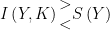
I\left( Y,K \right)\begin{matrix}  > \\  < \\  \end{matrix}S\left( Y \right)

“unintended consumption or saving” occurs. Replace the above equation with \frac{dK}{dt}=S\left( Y \right) and interpret and analyze the resulting model. Compare its behavior with the case analyzed in class.

  1. Suppose I = I(Y,K) and S = S(Y) are the schedules of desired investment and saving. In what sense is IS a measure of excess demand in the aggregate commodity market?

How is it that no specific supply variables (labor force, for example) appear in this measure? Under what circumstances is it natural to suppose that dY/dt responds to (IS)? (Y = real output, p = commodity price level). Under what circumstances is it natural to suppose that dp/dt responds to (IS)?

  1. Consider a one-sector non-monetary model of growth under the following assumptions:
    1. The production function in intensive form is q = Akb;
    2. The wage is equal to the marginal product of labor;
    3. Investment demand is such that the after-tax return on capital is always at a target level r*;
    4. There is a tax on profits at rate t and the government spends all its revenue on consumption;
    5. The savings rates from wages and after-tax profits are both equal to a constant s.

Find the tax rate that will permit a steady state at full employment. When will it be between zero and one? How does it change if s changes? Interpret.

  1. Consider a one-sector growth model, with two factors of production (capital and labor), constant returns to scale, and no technical progress. Suppose that the propensity to save out of profits and capital gains is equal to one, and the propensity to save out of wages and transfer payments (taxes = negative transfers) is zero.

Money, which is non-interest-bearing government debt, is the only alternative asset to capital. The desired money-capital ratio is of the form \frac{m}{k}=L\left( {f}'\left( k \right)+{{\left( {{\dot{p}}}/{p}\; \right)}^{e}} \right) where m is the real per capita stock of money, k is the capital-labor ratio, and  {{\left( {{\dot{p}}}/{p}\; \right)}^{e}}is the expected rate of inflation which is equal to the actual rate {{\dot{p}}}/{p}\; in the steady state.

Government purchases are zero and the budget deficit, which is equal to the excess of transfers over taxes, is financed by issuing money.

    1. Describe the steady-state characteristics of the model.
    2. Find the rate of inflation that maximizes steady-state consumption per head.
    3. Suppose that {{\left( {{\dot{p}}}/{p}\; \right)}_{o}} is the rate of inflation in (b) that maximizes steady state consumption per head. Would a higher rate of inflation lead to a higher or lower long-run capital-labor ratio?

Part III

  1. Write a comprehensive essay on the subject of “The Problem of Weights in National Income and Index-Number Construction”.
    Explain the criteria which are used, should be used (for what purpose?) and why.
  2. Discuss the economic effects of an increase in the stock of money. Include an evaluation of the positions of several (not less than two) prominent economists familiar to you. How would you test the correctness of their positions?
  3. Discuss the effects of inflation of the level of real investment.

________________________


GENERAL EXAMINATION IN ECONOMIC THEORY
Macroeconomics—Two hours
Sept. 1968

Answer THREE questions, at least ONE from each part. Use a separate examination book for each question.

PART I

  1. “Existing methods of national product computation exaggerate the rate of growth of real product over time in a given country, and overstate the ratio between the real product of highly developed and of underdeveloped countries.”
    Comment fully.
  2. Write a comprehensive essay on the subject of “The Interrelationships between Money, Prices and the Rate of Interest.” Include brief reviews of the relevant theories.
  3. Write an essay on the subject of “The Economic Effects of a Redistribution of Income from the Upper to the Lower Income Groups.”
    Include in your essay the evaluation of several current theories on the subject.
    Consider as many economic effects as you can.

PART II.

  1. “In order to prevent a cost-push inflation, wage rates in each firm or industry should not increase faster than the growth of its labor productivity.”
    Comment fully.
  2. Consider the effects of technological progress on employment of labor. Be as comprehensive as you can.
  3. What are the built-in stabilizers and how do they work? Can we rely on them to achieve price stability and full employment?
    Discuss the subject fully.

________________________


Spring, 1969
GENERAL EXAMINATION IN MACROECONOMICS
Three Hours

Please answer FOUR QUESTIONS distributed as follows:

Part I—without choice—1 hour
Part II—any two questions—40 minutes each
Part III—any one question—50 minutes

Use a separate examination book for each question.

PART I

The Federal Government wishes to stop the current inflation of the aggregate price level. What are the issues in choosing among various fiscal and monetary policies directed to this end? Try to use macroeconomic models (expressed algebraically, graphically or verbally) to illustrate the problems involved.

PART II

  1. Write an essay indicating what you think are the most important ideas about the determination of the rate of investment in economic theory and in economic practice. (Suppose the problem came up in the course of presenting the static Keynesian macroeconomic model of income determination.)
  2. In the two-asset neo-classical growth model à la Tobin or Sidrauski we have two basic equations:
    1. \dot{k}=sf\left( k \right)-nk-\left( 1-s \right)\left[ \dot{m}+nm+{{\pi }_{m}}m \right]{{p}_{m}}
    2. {{p}_{m}}m=L\left[ {{p}_{m}}m+k,{{\pi }_{m}},{f}'\left( k \right),f\left( k \right) \right]

Suppose we add the requirement that

    1. {{\dot{p}}_{m}}=\pi _{m}^{*}{{p}_{m}}, that is that the government always vary its deficit to produce a constant rate of deflation \pi _{m}^{*} (which would, of course, be an inflation if .) \pi _{m}^{*}<0


    1. Show that this model can be expressed by the two equations

1a) \dot{k}=\frac{sf\left( k \right)-nk-\left( 1-s \right)n\left( {{p}_{m}}m \right)}{\left[ 1+\left( 1-s \right)C \right]}

where C={\left[ {{L}_{1}}+{{L}_{3}}{f}''+{{L}_{4}}{f}' \right]}/{\left( 1-{{L}_{1}} \right)}\;>0

2a) {{p}_{m}}m=L\left( {{p}_{m}}m+k,{{w}_{m}},{f}'\left( k \right),f\left( k \right) \right)

Why are the pairs of k and (pmm) which make \dot{k}=0 the same regardless of \pi _{m}^{*}? HINT: When \dot{k}=0 what is the increase in the per capita real money supply? What determines the increase in the total real money supply?

    1. Show the dynamics of this system graphically by sketching the combinations of (pmm) and k that make \dot{k}=0 and those that satisfy 2a) (the aa schedule). What is the effect of a higher {{\pi }_{m}} on the stable steady-state stock of capital?
    2. Under what conditions can the government force the economy to the golden-rule capital stock by enforcing an appropriate \pi _{m}^{*} through fiscal policy without changing s (assume that pmm must always be positive for any \pi _{m}^{*})?
  1. Consider a vintage growth model with fixed factor proportions (clay-clay) a constant labor force (n=0), and Hicks neutral technical change at rate γ. Suppose the economy in question invests every year in a given fixed quantity of new machines (not a constant fraction of income), and has always followed this policy. Assume perfect competition, and full employment.
    1. Write down the production function for a given vintage. What rates labor and capital-augmenting technical change are implied?
    2. What is the labor requirement per machine of vintage τ?
    3. Find the economic life time of capital.
    4. Describe the growth paths of output, wages, quasi-rents and the labor share of income.
    5. Suppose the economy suddenly doubles its investment and then holds it constant. What will happen to wages and the life-time of capital as time passes?
  2. What growth model or growth model ideas would be helpful in studying the effects of a redistribution of income from businessmen to workers on investment and/or growth? You may develop a model explicitly or simply write an essay reviewing the important concepts and their relevance to the question.

PART III

  1. You are asked to compare the per capita national income of some underdeveloped country, such as Brazil, with that of the United States. Assume that the Brazilian currency (a) is convertible into dollars and (b) that it is not convertible.
    Discuss as thoroughly as you can the problems involved in this comparison and the methods used for dealing with them. Evaluate these methods critically and present and justify your own recommendations.
  2. Explain what is meant by “The Money Illusion” and what role does its presence and absence play in theories of employment, interest and prices. Be as comprehensive and as critical as you can.


General Examination Grades in Macroeconomics
Spring 1969

Spring 1969
90 = perfect
[1] 83 Ex+
[2] 79 Ex
[3] 78
[4] 77
[5] 75 Ex-
[6] 75
[7] 75
[8] 74 Ex-/G+
[9] 74
[10] 73 G+
[11] 72
[12] 72
[13] 71
[14] 71
[15] 71
[16] 70 G+/G
[17] 70
[18] 69 G
[19] 69
[20] 69
[21] 69
[22] 69
[23] 68
[24] 67
[25] 67
[26] 67
[27] 66
[28] 66
[29] 66
[30] 65 G/G-
[31] 65
[32] 64 G-
[33] 64
[34] 62
[35] 61
[36] 57 F+
[37] 56
[38] 53 F
[39] 50 ?
[40] 49
[41] 48

________________________

MACRO GENERAL
February 3, 1971

DO THREE QUESTIONS, AT LEAST ONE FROM A AND ONE FROM B. 40 Minutes each

A

  1. There has been a long-standing dispute among economists whether money is or is not neutral. Explain what this dispute is about, what the major positions are, and present and justify your own position on the subject.
  2. In order to stimulate investment expenditures by business, President Nixon has suggested a more accelerated treatment of depreciation for income tax purposes. For simplicity assume that every depreciable capital asset can be written off for tax purposes in half the usual time. Analyze the proposal and state and justify your conclusions.
  3. The Bergson Index may be defined as the ratio of Soviet output (industrial production or GNP or a similar measure) to Soviet inputs (labor and capital) divided by a similar ratio for the U.S., first in Soviet and then in American prices for some given year. On finding that this Index is less than one, Bergson has concluded that the Soviet economy is less efficient than the American.
    1. Which comparison (that is, in Soviet or in American prices) is more likely to be more favorable for the USSR? Why? (This is the less important part).
    2. Evaluate critically Bergson’s conclusions. (This is the more important part).

B

  1. Use a simple macroeconomic model that describes the interaction of the real and financial sectors to describe a theory of determination of the price level. Is simultaneous unemployment and inflation consistent with this theory? What parts of the theory would you modify to take account of simultaneous unemployment and inflation?
  2. Define the “golden rule” growth path and derive conditions for an economy to be on it. Compare some actual economy’s performance to the golden rule and, if you can, estimate the saving necessary to reach it. Would you favor such a policy?
  3. Consumer spending in the U.S. is currently in a slump. What hypotheses can you advance to explain this fact?


________________________


GENERAL EXAMINATION IN MACROECONOMICS
June 24, 1971
TWO HOURS

Please answer THREE questions, at least ONE from each part. Use a separate examination book for each question. Write your CODE NUMBER on your book but not your name.

PART I

  1. In a recent speech, Simon Kuznets suggested the following method for expressing the relative rate of growth of real national income of a country: calculate the relative rate of growth of real income of each person (or family) and then take the unweighted arithmetic mean of these rates. Let us call the resulting rate
    1. Compare the rationale behind Kuznets’ suggestion with that of the conventional computation of the rate of growth.
    2. For what purposes would you use each method? Why?
    3. Suggest other ways for achieving Kuznets’ objective.
    4. How would the magnitude of K compare with that of the conventional rate?

(Note: do not worry about the distinction between national income and gross product.)

  1. Write an essay on the subject of “Economic Effects of the Retardation of Population Growth in the U.S.” (You may choose a comprehensive approach or concentrate on some issues you regard particularly important and interesting.
  2. Analyze the effects on aggregate demand and supply, both in the short and in the long run, of a prolonged strike in some important industry. Consider several relevant cases.

PART II

  1. When the current Republican administration came into office it faced substantial and rising rates of inflation, and inherited from the last Democratic administration a moderately restrictive fiscal policy. Write a memo to the President outlining his macroeconomic policy options with pros and cons for each. (Would you list different options if you were Paul Samuelson rather than Milton Friedman?)
  2. Use some complete macroeconomic model to discuss the ways monetary policy influences aggregate demand. Try to judge which mechanisms are likely to be strong and reliable, which weak and uncertain.
  3. Capitalia is a two-class society in which land is not a constraint, workers save and capitalists invest. Its population growth rate is 1%. Nothing has ever happened in Capitalia except exponential growth.
    1. What is the rate of return to capital?
    2. Does the production function make any difference to your answer in part a)? Explain.
    3. If the production function is Cobb-Douglas with capital exponent .2, find the capital per head, output per head, and consumption per head.
    4. In an unexpected development, population growth doubles. What begins to happen to the rate of return, per capita saving, and the saving as a fraction of output?
    5. The government decides to maintain earlier levels of per capita saving “to avoid the impoverishment of our nation” by taxing workers. Comment on this policy. What will per capita consumption be under this policy?

________________________

Source: Duke University. Rubenstein Library. Evsey Domar Papers, Box 16, Folder “Ph.D. Economic Examinations. Macroeconomics.”

Image Source:From the Flying Car to the Giant R2-D2: The Greates MIT Hacks of All-Time“, by Robert McMillan. Wired, March 20, 2013.

“Boston’s Harvard Bridge is 364.4 Smoots long. And the fact that anybody would remember this in 2013 was probably the furthest thing from MIT freshman Oliver Smoot’s mind on the October 1958 night that he lay himself down, time and again, along the bridge, allowing his fraternity brothers to measure its length (each Smoot is about 5 feet, 7 inches). It was a fraternity prank, but the next year the bridge’s Smoot markers were repainted. Thus, an MIT landmark — and a unique unit of measurement — was born.

Smoot himself went on to become a board member of the American National Standards Institute — a standards man through and through.”

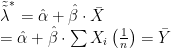
 

Categories
Carnegie Institute of Technology Chicago Economists Harvard Johns Hopkins M.I.T. Michigan

Harvard. Evsey Domar’s Ph.D. Thesis story. 1947

_______________________________

This post is the second in the series dedicated to the economists who trained me (the first post about John Michael Montias is here). In the Evsey Domar papers archived at Duke University I found the following two-page, undated typed note about my Doktorvater’s own experience with his dissertation. Let us just say that his thesis committee fell rather short of any reasonable standard of due diligence. 

_______________________________


M.I.T. Obituary

Professor Emeritus of Economics Evsey D. Domar died on April 1 [1997] in Emerson Hospital in Concord. He was 82.

Domar came to MIT in 1957 as a visiting professor from Johns Hopkins University; he received tenure a year later. In 1972, Domar became one of seven professors endowed by the Ford Foundation. He retired in 1984.

Among Domar’s pupils in macroeconomics was Robert William Fogel, winner of the 1993 Nobel Memorial Prize in Economics.

Domar was an expert on Soviet economics during the Cold War and an early proponent of Keynesian economic theory.

In recent years, Domar remained politically active in his field. Along with 1,100 other economists, he signed an Economic Policy Institute statement opposing the proposed balanced budget amendment.

Domar served as a consultant for the RAND Corp., the Ford Foundation, the Brookings Institution, the National Science Foundation, the Batelle Memorial Institute, and the Institute for Defense Analysis.

Domar was born in Lodz, Poland in 1914. He was raised in Manchuria and emigrated to the United States in 1936.

He received his bachelor of arts from UCLA in 1939, a master of science from University of Michigan in 1940, another MS from Harvard University in 1943, and his doctorate from Harvard in 1947.

Before coming to MIT, Domar taught at the Carnegie Institute of Technology, the University of Chicago, and Johns Hopkins.

Domar was a fellow of the American Academy of Arts and Sciences, the Econometric Society, and the Center for Advanced Study in the Behavioral Sciences.

He was on the executive committee of the American Economic Association from 1964—65, and became the organization’s vice president in 1970, when he was also president of the Association for Comparative Economics.

Domar is survived by his wife, Carola, of Concord, two daughters, Alice D. Domar, of Sudbury, and Erica D. Banderob, of Milton, and three granddaughters.

Source: MIT, The Tech, Vol. 117, No. 19 Tuesday, April 15, 1997.

Image Source: Joshua Domashevitsky (Evsey Domar). 1939 UCLA Yearbook Southern Campus portrait.

_______________________________


THE STORY OF MY THESIS

When I entered graduate school I knew that someday I would have to write a thesis but I did not have the slightest idea what it would be on. Once, browsing in the Harper Library at the University of Chicago I stumbled into Bronfennbrenner’s thesis. Its mathematics was overwhelming. I was in a panic: surely I would never be able to write anything like it.

Originally, I was supposed to write a thesis on post-war taxation, but as time went on I was finding the subject less and less interesting. In the meantime, I began to publish papers on growth models. Harvard rules permit the submission of several related articles instead of one book-like study. It took me several years to accumulate four papers, of which three, I believe, had been published. (A full time job, whether at the Federal Reserve or in teaching is not the best environment to write a dissertation.) Finally, the last paper was finished and all four were sent to Hansen at Harvard.

I needed the degree very badly. I was very unhappy at Carnegie Tech and anxious to find another job. Prospective employers appeared to lose all interest when informed that I had not yet received my degree. So in the letter accompanying the thesis I besieged (sic) Hansen to render his decision as soon as possible.

Weeks went by with no word from him. Finally I called him on the phone. (In those days long-distance phone calls were regarded as an exotic luxury particularly for an underpaid assistant professor.) “Thesis,” said he, in his gruff voice, “what thesis?” I explained. “Wait a moment, let me find it.” I heard the sound of an envelope torn open. “Fine,” he said, “Fine. Send it in.” And that was all the supervision I was to get.

When I arrived in Cambridge a day before my final examination, I noticed that the secretary of another member of the committee was just bringing my thesis to him. (She tried to hide it behind her back.) At least he had one day to take a look at it.

Schumpeter, who was the third member, never bothered to look at it at all. He invited me to lunch, and said: “You are coming up tomorrow, aren’t you? What shall we talk about?” I told him what I was working on. “Fine,” he said. When the committee met he turned to Hansen, the chairman: “Instead of talking about the thesis, why don’t we ask the candidate to tell us about his current work.” His suggestion was accepted at once, I thought, even with a sense of relief: as I was to find out repeatedly in my time, doctoral examinations can be quite boring for the examiners. And that was my doctoral examination.

Were our teachers guilty of neglect or were they sufficiently brave to pay no attention to rules? Would we have the courage to disregard them under similar circumstances?


Source:   Duke University, Rubenstein Library. Evsey Domar Papers. Box 18, Folder “Miscellaneous: Biographical “The Story of My Thesis.”

Categories
Columbia Economic History Economists Yale

Columbia Economics Ph.D. alumnus. John M. Montias, 1958

The history of economics would be duller fare should we fail to add a portion of ancestor worship as seasoning. Since my motto is “Economists are not born but they are made” and that for well over a century economists have been made in graduate schools, I would be remiss in not using Economics in the Rear-View Mirror to erect shrines from time to time to those economists who trained me.

During the academic year 1973-74 while an undergraduate at Yale, I took a graduate course taught by John Michael Montias on comparative economic systems.  Having been born in Paris, he volunteered out of interest in the topic to be the second reader of my senior essay about French mercantilism and the Physiocrats. I recall him as a thoughtful scholar and a kind man. He was one of four professors (the others were Raymond Powell, Abram Bergson and Evsey Domar) who in different courses valiantly tried to teach me the lessons of Richard H. Moorsteen’s article “On Measuring Productive Potential and Relative Efficiency” Quarterly Journal of Economics (1961) 75 (3): 451-467. The teaching efforts of Montias et al. did ignite in me a long professional interest in the economic theory of index numbers though I do not recall them exactly cracking the code in class for us. Montias’ own ambition was less on the bean-counting side of empirical comparative economics as on the theoretical side in pursuit of a formal systematization of a “macro”-institutional economics. We began his course by reading his essay co-authored with Tjalling Koopmans published in Comparison of Economic Systems: Theoretical and Methodological Approaches, Alexander Eckstein (ed.), Berkeley: University of California Press, 1971. I believe we can all agree that economic outcomes depend jointly on the economic environment, economic system and economic policies within the system. I also believe that the last sentence reads no better when expressed in mathematical notation. 

John Michael Montias’ greatest hits in economics were to appear after I had moved on. He had a passion for Dutch and Flemish art that led to seminal contributions in the history of 17th century Dutch art markets. Tulip bubbles are cool, but I’d say Vermeer is hot.

P.S.  Fun Fact: The U.S. Embassy official in Hungary who had to deal with Montias’ expulsion from Hungary in the early 1960’s, Edward Alexander, was in charge of the Press and Culture department of the U.S. Embassy in East Berlin during my  seven month IREX stay in 1978. There I fell in love and became engaged to an economist at the Central Institute of Economics in the GDR Academy of Sciences. Until my East German fiancée (Kerstin Rüdiger) was allowed to leave East Germany at the end of 1979 (and perhaps afterwards too), Edward Alexander had to deal with any diplomatic fall-out from our case.

_____________________________


From the 1989 Survey of AEA Members

Montias, John M.

Fields: 050, 110
Birth Yr:
1928
Degrees:
B.A., Columbia U., 1947; M.A., Columbia U., 1950; Ph.D., Columbia U., 1958
Prin. Cur. Position:
Prof. of Econs. Yale U., 1964
Concurrent/Past Positions:
Assoc. Prof., Yale U., 1963-64; Asst. Prof., Yale U., 1958-63.
Research:
 Economic systems

Source: American Economic Association. Biographical Listing of Members, American Economic Review, Vol. 79, No. 6, (Dec. 1989) p. 334.

_____________________________

New York Times obituary

John Montias, 76, Scholar of Economics and of Art, Is Dead
By KATHRYN SHATTUCKAUG. 1, 2005

John Michael Montias, an economist who became one of the foremost scholars on the painter Johannes Vermeer and a pioneer in the economics of art, died on Tuesday at a hospice in Branford, Conn. He was 76 and lived in New Haven.

The cause was complications from melanoma, said his son, John-Luke Montias.

Part of the Annales school of economists and historians, Mr. Montias was among those who, in the early and mid-20th century, promoted a new form of history by replacing the examination of major leaders and events with the microstudy of ordinary people and occurrences.

Through the scrupulous analysis of common documents ranging from notes and letters to receipts and legal papers, Mr. Montias peeled back the layers in the life of Vermeer, one of his favorite artists — and one of the world’s most enigmatic. His work opened the door for a new genre of art history in which artists were analyzed in the context of their societal and economic surroundings and not merely their works.

“I think he was important for all of us,” said Egbert Haverkamp-Begemann, the John Langeloth Loeb professor emeritus at New York University’s Institute of Fine Arts. “When he started this in the 1960’s and 70’s, there was no one who approached the history of art from that point of view. His work was pioneering — accurate, extremely convincing, with many novel insights. What was not considered to be relevant to the work of art in the past, we all have subsequently used.”

Mr. Montias’s research was a primary source for Tracy Chevalier’s 2000 novel “Girl With a Pearl Earring,” about Vermeer’s relationship with the model for his iconic work, and for the 2003 film adaptation.

Mr. Montias began teaching at Yale University in the late 50’s, where he specialized in the economic systems of the Soviet bloc during the 1960’s and 70’s and served as a consultant to high-ranking government officials. His analysis of the economies of Eastern European countries at times drew suspicion, perhaps never more so than during his visits to Czechoslovakia and Hungary from 1963 to 1965; he was shadowed and eventually expelled from Hungary on suspicion of espionage. But if his work was economics, his passion was art, particularly that of the 16th- and 17th-century Netherlands.

“I came to Vermeer ‘sideways,”‘ he said in a 2003 interview for the Essential Vermeer Web site (www.essentialvermeer.20m.com), explaining the genesis of his second career. Having won a summer grant in 1975 to write a comparative study of Dutch art guilds, he traveled to Delft, where he discovered that no in-depth study of a guild existed.

“In the course of this research, I realized that, contrary to my expectations, previous scholarship on Vermeer’s life had not exhausted the subject,” he said.

And so began his quest to uncover the life of one of the world’s most mysterious artists, with Mr. Montias unearthing and poring over 454 documents related to Vermeer and his family that lay, long undisturbed, in the archives of no fewer than 17 Dutch and Belgian cities.

In 1989 he published “Vermeer and His Milieu: A Web of Social History” (Princeton University Press), in which he revealed secrets of Vermeer’s life: that Vermeer’s grandfather was a convicted counterfeiter; that his grandmother ran illegal lotteries; and that the artist himself fathered 13 children and died at the age of 43, destitute.

Reviewing the book in The New York Times, the art critic John Russell wrote that Mr. Montias had previously “proved that there is a great deal more to art history than shuffling slides in a library.”

“His new book does not crack the code of Vermeer’s personality, let alone the code of his inner experience,” the review continued. “But as detective work, and as a portrait of an era, it ranks high.”

In fact, Mr. Montias’s midlife obsession had adolescent roots. Born on Oct. 3, 1928, in Paris, he was sent in 1940, alone and by ship, by his Jewish parents to the safety of the United States — and an Episcopalian baptism — just as the Germans were preparing to invade France. He boarded at the Nichols School in Buffalo, where as a 14-year-old volunteer in the small library of the Albright-Knox Art Gallery, he came across Wilhelm Bode’s gilt-edged folio volume of Rembrandt and was immediately captivated.

Mr. Montias’s curiosity resurfaced in 1954 when, as a Ph.D. candidate in the economics department at Columbia University, he considered writing his dissertation on the prices of Dutch paintings at auction. He failed to get financial support for his project, perhaps thought frivolous during the cold war.

Things changed when Mr. Montias met Mr. Begemann in the mid-1960’s, when they were both at Yale. A specialist in Dutch and Flemish art, Mr. Begemann gave Mr. Montias his first lessons in connoisseurship, and soon after he began to study the genre’s history methodically. His first project in the field — the 1975 summer grant — required Mr. Montias, already a gifted linguist, not only to learn modern Dutch but also to read 17th-century manuscript sources in old Gothic script.

“He decided to attack the archives in Delft, knowing that they had been scoured for information on Vermeer,” recalled Otto Naumann, a Manhattan art dealer who studied under Mr. Montias. “With the confidence that only a true genius can posses, he decided that he could do better, without first learning Dutch.”

It took Mr. Montias one week to find an unpublished document that mentioned Vermeer and but another to decipher it, Mr. Naumann said.

Mr. Montias published three more books about the 17th-century Dutch art market: “Artists, Dealers, Consumers: On the Social World of Art” (Hilversum: Verloren, 1994); “Public and Private Spaces: Works of Art in 17th-Century Dutch Houses” (Zwolle, 2000), with John Loughman; and “Art at Auction in 17th-Century Amsterdam” (Amsterdam University Press, 2003).

In addition to his son, of Manhattan, he is survived by his wife, Marie, of New Haven, and his mother, Giselle de la Maisoneuve, of Paris.

____________________________

Yale Bulletin & Calendar obituary

Yale Bulletin & Calendar. September 2, 2005. Vol. 34, Number 2.

John-Michael Montias, economist and expert on Vermeer

John-Michael Montias, one of the world’s foremost scholars on the life of 17th-century Dutch artist Johannes Vermeer and professor emeritus of economics at Yale, died July 26 of complications from melanoma. He was 76.

Montias, who joined the Yale faculty in the late 1950s, was a specialist in the economic systems of the Soviet bloc. He researched the economies of many Eastern European countries during the 1960s and 1970s. During the Cold War, he served as a consultant to some of the highest officials of the U.S. government. His publications from that period include “Central Planning in Poland” and “The Structure of Economic Systems,” both published by the Yale University Press.

Although his academic work was in the field of economics, Montias’ passion was art, specifically 16th- and 17th-century Dutch painting. While on a fellowship at the Netherlands Institute for Advanced Social Studies in 1978, he combined the two interests by writing a comparative study of Dutch art guilds during the 16th century, poring over 16th- and 17th-century archival records in the process of teaching himself gothic Dutch. The result was his 1982 book “Artists and Artisans in Delft, a Study of the 17th Century.”

During the course of his research, Montias was surprised to learn that the scholarship on one of his favorite artists, Vermeer, was far from exhausted. He began a quest to uncover the life of the artist, considered one of the most enigmatic and mysterious. In 1989 he published the critically acclaimed “Vermeer and His Milieu: A Web of Social History.” In this book, Montias traced the artist’s life through notary records, discovering that Vermeer’s grandfather was a convicted counterfeiter; that his grandmother ran illegal lotteries; and that the artist himself fathered 13 children and died at the age of 43, completely destitute. Today, it is estimated that there are only about 35 Vermeer paintings still in existence, and the most recent work sold at auction was purchased for $26 million in London last July.

Montias published three more books about the 17th-century Dutch art market: “Artists, Dealers and Consumers: The World of Social Art” (1994), “Public and Private Spaces: Works of Art in 17th-Century Dutch Houses” (2000) and “Art at Auction in 17th-Century Amsterdam” (2002).

Born Oct. 3, 1928 in Paris, France, Montias came to the United States when he was 12. At 16 he matriculated as an undergraduate at Columbia University. After serving in the Army during the Korean War, he returned to Columbia, earning both his M.A. and Ph.D. in economics. He was awarded a Guggenheim Fellowship in 1961.

Montias is survived by his wife, Marie, of New Haven; his mother, Giselle de la Maisoneuve, of Paris, France; and his son John-Luke, and his fiancé, Samantha, both of New York City.

The Yale economist was buried in Grove Street Cemetery.


Image Source: Montias as Guggenheim Fellow (1961) John Simon Guggenheim Memorial Foundation. Detail from “Montias at the launching party at Amsterdam University Press of his book Art at auction in 17th-century Amsterdam, 10 September 2002 (Photo: Gary Schwartz)

Categories
Economic History Exam Questions M.I.T.

MIT. Final Examinations for European Economic History. Kindleberger, 1970/74

The M.I.T. graduate economics program of my day (mid-1970s) still offered three courses in economic history: Peter Temin‘s American Economic History, Evsey Domar‘s Russian Economic History and Charles Kindleberger‘s European Economic History. I will confess here that little value-added from his lectures has survived the intervening decades for me  (I did read plenty!). That said, my personal take-away from Kindleberger’s class was that he represented the ideal balance of scholar-gentleman-economist. I suspect he felt as much a dinosaur when he taught us in the mid-1970s as I certainly do now when I eavesdrop on the conversation of graduate students when they mimic their elders, who are now sometimes a full generation younger than me. 

I posted a few of his favorite stories from his days at Columbia University. Here an outline biography of Charles Kindleberger at the MIT economics department.

__________________________

December 12, 1974
8:30-10:30

Informal Final Examination
14.733
European Economic History


Answer any three questions (forty minutes each), but be certain that not all your answers refer exclusively to Great Britain or the Continent of Europe.


  1. It was said that the Holy Roman Empire was neither Holy, Roman nor an Empire.
    to what extent was the Industrial Revolution a) Industrial? b) a Revolution?
    Explain at some length, and indicate which Industrial Revolution, if there are more than one, you are referring to.
  1. Compare and contrast one pair, at least twenty-five years apart, from the following list:
    1. financial crises in Europe
    2. economic booms
    3. recoveries from war
    4. reparation transfers
  1. Evaluate the role of tariff policy in the economic growth or the economic development of one or more countries of Europe over some period of time which you specify.
  1. Compare the profiles of economic development over the nineteenth century of one of the pairs of countries below, and account for the major differences:
    1. Netherlands — Britain
    2. Britain — Germany
    3. France — Germany
    4. Italy — other country of your choice

__________________________

14.733 FINAL EXAMINATION
December 23, 1970 9AM
Three hours


Answer any four questions […illegible…] but at least one from each group.


Group I

  1. Describe the course and causes of the Industrial revolution in one country in Europe.
  2. Compare and contrast Rostow’s Stages and Gerschenkron’s discontinuity in economic growth, illustrating your answer with material from European history.
  3. Discuss the role in the early industrialization of one country of Europe of a) labor; b) capital; or c) technology.


Group II

  1. To what do you ascribe the business cycle in the 19th century Europe? Explain.
  2. Argue for or against the advantage of backwardness and the penalty of the head start, illustrating your argument with 19th century economic data from Europe.
  3. How do you account for the limited movement toward free trade in Europe after 1869. what did it accomplish, and why did it end?


Group III

  1. Did Europe grow rich on imperialistic exploitation of the rest of the world in the last quarter of the 19th century? Support your answer fully.
  2. Compare German recoveries after World War I and after World War II.
  3. Discuss the role of Europe in the 1929 depression.
  4. Compare and contrast the role of London in world finance before and after 1913.


Source: Personal copies of Irwin Collier.


Categories
Economists M.I.T.

MIT. Suggestions for New Fields. Domar, Kuh, Solow, Adelman, 1967

The following set of memoranda from the MIT economics department is found in a folder marked “Correspondence: Peter Temin” in Evsey Domar’s papers. The bulk of the material in the folder are letters of support that Domar solicited for the committee he chaired (which consisted of Domar, Charles Kindleberger and Frank Fisher) to review Peter Temin for tenure. It thus appears that Domar’s proposal to strengthen economic history at MIT in February 1967 was seen (at least by him) to have led later to granting Peter Temin tenure at MIT. See Peter Temin’s reflections on “The Rise and Fall of Economic History at MIT.”

In response to a request by the Head of the department, E. Cary Brown, for input to a long-range plan (1967-1975), we have here not only Evsey Domar’s response but also memos from Edwin Kuh (more econometrics!), Robert Solow (“poverty-manpower” or “a really high-class macro-numbers man”) and M. A. Adelman (energy economics).

Even Robert Solow’s intradepartmental memos sparkle with wit!

_________________________________

February 7, 1967

MEMORANDUM


To: Members of the Economics Department
From: E. Cary Brown
Subject: Long-Range Departmental Plans

President H. Johnson has asked that Departments submit long-range plans – by two-year intervals through the academic year 1974-5. The basic constraints, other than budgetary, are that the undergraduate student body is to remain fixed at its present level and that graduate students at M.I.T. Grow at only a 3% rate per year. The projection desired is of the expansion in existing fields, into new fields, the population of the department – faculty, staff, students, post-doctorals, and administration and supporting staff.

In order to get a dialogue started, I suggest that each of you send me a note on the need for new fields, the expansion of existing ones, and your views about our undergraduate and graduate size. I can then prepare an agenda for a meeting or two on this matter.

_________________________________


[Evsey Domar response]

  1. New Fields, etc.
    1. Economic History. Could tie in very well with our economic developers. Also help to create a better balance in the Department.
    2. Economics and Technology (Mansfield, etc.) MIT should be just the place for it.
    3. I hope Max continues to be interested in South-East Asia. The US will be involved there for a long time. Any chances for a South-east. Asia Center or something?
  2. Number of Students
    No strong feelings. A larger number of both faculty and students allows us to offer a greater variety of courses.

As you know, Economic History is my main concern.

_________________________________


[Edwin Kuh response]

February 13, 1967

MEMORANDUM

TO:                 Professor E. Cary Brown
FROM:          Professor Edwin Kuh
SUBJECT:     Some Economics Department Needs in the Long Run

Let me first grind my own econometric axe. We need additional support in two econometric areas. The first pertains to support for quantitative theses; Frank Fisher, Bob Solow and I carry a heavy load in this connection, which is unlikely to diminish. Second, we ought to have more strength than we do in econometric time series analysis, an important topic not covered by existing faculty. Marc Nerlove, for instance, ranks high on both counts. Less senior individuals include David Grether who combines both aspects (Stanford Ph.D. going to Yale this fall) and possibly Joseph Kadane also at Yale, who is more the statistician. Jim Durbin and Bill Phillips would be fine, too, qua statisticians contributing to econometrics.

Next, suppose we are fortunate enough to attract both Ken Arrow and C. V. Wiesacker [sic] ; the net balance in favor of theory would then become heavy indeed. There will be no need to panic and for instance, proceed instantly to hire Arthur Burns. But even so, it will behoove the department to push relentlessly on expanding the more empirical side. Since all tenure slots by then will have been sewed up, I don’t see how this can readily be done.

Finally, the department ought to raise more finance for computation. The burden has been disproportionately assumed by the Sloan School, even though several Economics Department research projects have made highly welcome and substantial contributions to the installation downstairs. In this connection, the department should seriously consider acquiring the long run services of someone with a major interest [in] computer systems; very different and high qualified individuals such as Mark Eisner or Don Carroll come to mind. The department will lag behind seriously unless it expands in this direction.

This has not been a balanced presentation of needs. I shall leave that to more balanced individuals.


_________________________________


[Robert M. Solow response]

MEMORANDUM TO: E. Cary Brown, Head
FROM: Robert M. Solow
SUBJECT: Yours of February 7


  1. Undergraduate program. I suppose basically we just passively accept as many majors as come along. We might attract more by improving the teaching and brightening up the course offering. So far we have got along just fine with a pretty dreary undergraduate program, and previous attempts to Do Something have petered out. Is history trying to tell us something? The only reason I can think of for trying again is this: if the department faculty is going to state bigger, especially among assistant professors, then we probably need some decent undergraduate teaching for them to do. (Not only them – I would volunteer to do some too.) Why not let the assistant professors do the planning – they probably have more ideas. Suggestions: new undergraduate subjects in mathematical economics, econometrics, “poverty”, transportation (or public investment); cancel one of the current Labor subjects (or convert to “poverty”), maybe cancel 14.06, 14.09; organize research seminar on one-big-project basis; keep 3 or 4 of the best seniors on as PhD candidates as a matter of course.
  1. Graduate program. Does it have to expand to justify slightly enlarged faculty? If so, then accept universe, but fight like hell for adequate space, scholarships, research funds. If not, think carefully. If faculty enlarges and improves, we should be able to do better on admissions. There will always be some lemons admitted; but it is a question whether one would not prefer current size of enrollment with improved bottom half to enlarged enrollment with current quality. If we get Arrow and Weizsäcker, and keep half-dozen assistant professors, some growth of graduate student body probably inevitable. But I’d keep it slow, and in line with admission quality, space, scholarships, research money. Aim for entering class of 40 by 1975? Certainly no more.
  1. New fields. If MIT goes into Urban Studies, I think we ought to move too. This means some joint research, perhaps offering a few fellowships specifically in urban economics, some new appointments (transportation, poverty, local finance), probably young guys. (I’d like to see Mike Piore and Frank Levy free to start something.) (Would Bill Pounds like to hire Joe Kershaw?) Maybe we ought to start looking next fall. This complex could be a major counterweight to theory. We could make a senior appointment, but I doubt we could find a good enough man. We also lack a really high-class macro-numbers man – like Art Okun or Otto Eckstein or George Perry. Should we try Les Thurow? Or try eventually for Steve Goldfeld? Goldfeld would help with Money, but Thurow would fit into poverty-manpower bit. I think I might seriously favor going for Thurow now if we can afford it.

_________________________________


[M. A. Adelman response]

March 16, 1967

Memorandum to:     Professor E. Cary Brown
From:                         M.A. Adelman
Subject:  President H. W. Johnson’s request to submit long-range plans: industrial organization field

  1. Enrollment in the graduate course has declined to the point where it is best given in alternate years. Theses written have not decreased, and there are six now in preparation. I wish to use the time made available to teach the course on energy economics when Paul Rodan retires. The remaining time is best devoted to undergraduate teaching (see below).
  2. Undergraduate enrollment seems to be on the increase in 14.02, 14.04, and 14.22. With the appointment of Robert Crandall, we are fully staffed. I would wish to have 14.02 taught exclusively by lecture and sections (teaching assistants) except where the undergraduates’ program will not permit it. Where we are compelled to fill in with three-recitation sections, I strongly urge that they should not be taught by teaching assistants. Since the transfer to lectures economizes manpower, these two changes should be offsetting, but will take more of my own time.
  3. I have given a joint seminar with Harvard (Economics Department and Middle East Center) on Eastern Hemisphere Oil, and will repeat it next year. It is still an uncertain venture, however, in a sensitive area, and the fuss about CIA influence in academic research may kill it.
  4. I join in concern over our weakness in economic history. East European economics might best be treated as an expansion of our current offering in Soviet economics, since there is sufficient unity of geography and practice. I wish some encouragement could be given to East Asian especially Japanese studies, where English sometimes suffices, but would not care to have it as a field of specialization.


Source: Duke University, Rubenstein Library. Evsey D. Domar papers, Box 7, Folder “Peter Temin” [apparently misfiled].

Image Source: MIT 1959 Technique (Yearbook).

Categories
Economists M.I.T.

MIT. Department of Economics Group Photo, 1976

Back Row:  Harold FREEMAN, Hal VARIAN, Jerome ROTHENBERG, Peter DIAMOND, Jerry HAUSMAN

4th Row: Paul JOSKOW, Anne FRIEDLAENDER, JOHN R. MORONEY (VISITOR TO DEPARTMENT)

3rd Row: Stanley FISCHER, Jagdish BHAGWATI, Rudiger DORNBUSCH, Robert SOLOW, Robert HALL

2nd Row: Edward KUH, Morris ADELMAN, Abraham J. SIEGEL, Richard ECKAUS, Martin WEITZMAN

1st Row: Evsey DOMAR, Paul SAMUELSON, Charles KINDLEBERGER, E. Cary BROWN, Franco MODIGLIANI, Sydney ALEXANDER, Robert BISHOP

1976_MITEcon_blogCopy

Apparently didn’t get the memo and/or not pictured: Michael PIORE, Frank FISHER, Peter TEMIN.

Thanks to Robert Solow, the photo-bomber standing to Solow’s left in the picture has been identified as a guest from Tulane University, John Moroney. It is possible that I forgot some other person not included in this faculty picture.

I note that the entire front row has gone to that great Department of Economics in the Cloud.

Source: A graduate student buddy of mine who entered the MIT Ph.D. program in 1975/76.

______________________

If you find this posting interesting, here is the complete list of “artifacts” from the history of economics I have assembled of which this is the 250th. You can subscribe to Economics in the Rear-View Mirror below. There is also an opportunity for comment following each posting….

Categories
Chicago Exam Questions Suggested Reading Syllabus

Chicago. Theory of Income and Employment. Domar, 1948


Jacob Marschak’s course “The Theory of Income and Employment” was taught by the (visiting) assistant professor of economics and research associate in the Cowles Commission, Evsey D. Domar, in the Spring Quarter of 1948. The appointment must have taken place after the Announcements for 1947-1948 were published in May, 1947, so one presumes there was a relatively late change in plans.

For those interested in Domar’s early backstory,  Evsey (Joshua) Domashevitsky arrived in the U.S. on the S.S. Taizo Maru that departed 27 July 1936 from Kobe, Japan and arrived at the port of Los Angeles, California August 16. Domar (“race: Hebrew; nationality: White Russian”) was born April 16, 1914 in Lodz, Poland and last resided in Dairen, Manchuria (now Dalian or Talien, China) before he left for the U.S. He worked his way through UCLA and his graduation photo from the college yearbook graces this posting.

___________________

ECONOMICS 335
THE THEORY OF INCOME AND EMPLOYMENT

Spring, 1948
E. D. Domar

Required Reading List

It is assumed that the students are familiar with the contents of the first 20 chapters of A. P. Lerner’s Economics of Control.


PART I.   THE MEASUREMENT OF TOTAL OUTPUT.         March 30 – April 1

Simon Kuznets, National Income and Its Composition, V. I, Ch. 1.
J. R. Hicks and A. G. Hart, The Social Framework of the American Economy, ch. 3, 8, 10-13, 15, 16.
National Planning Association, National Budgets for Full Employment.
Survey of Current Business, National Income Supplement, July, 1947.


PART II.   THE ESSENCE OF THE THEORY.    April 3- 28.

J. M. Keynes, The General Theory of Employment, Interest and Money.
A. P. Lerner, Economics of Control, ch. 21-25.
American Economic Association, Readings in Business Cycle Theory, ch. 5-12.
S. E. Harris, editor. The New Economics, ch. 9, 11-15, 19, 33, 36.
Oscar Lange, Price Flexibility and Employment, pp. 1-90.
Milton Friedman, “Lange on Price Flexibility and Employment,” American Economic Review, Sept. 1946 (Reprints in Harper Reserve Room).
Lawrence Klein, The Keynesian Revolution, ch. 3-5.
Gottfried Haberler, Prosperity and Depression, Ch. 8, 13.
A. C. Pigou, “The Classical Stationary State,” The Economic Journal, December 1943.
J. E. Meade and P. W. S. Andrews, “Summary of Replies to Questions on Effects of Interest Rates,” and “A Further Inquiry into the Effects of Rates of Interest,” Oxford Economic Papers, No. 1, 1938 and No. 3, 1940.
Simon Kuznets, “Relation between Capital Goods and Finished Products in the Business Cycle,” in Economic Essays in Honor of Wesley Clair Mitchell.
R. F. Kahn, “The Relation of Home Investment to Unemployment,” Economic Journal, 1931.


PART III.   UNDERCONSUMPTION, MATURE ECONOMY, AND CAPITAL ACCUMULATION.        May 4-14.

A. H. Hansen, Fiscal Policy and Business Cycles.
A. H. Hansen, Economic Policy and Full Employment, ch. 15, 16, Appendix B.
E. D. Domar, “Expansion and Employment,” American Economic Review, 1947 (reprints on reserve).
E. D. Domar, “The Problem of Capital Accumulation,” (Mimeographed).
P. M. Sweezy, The Theory of Capitalist Development, ch. 10, 12.
J. A. Schumpeter, Capitalism, Socialism and Democracy, Part II.
G. Terborgh, The Bogey of Economic Maturity.
Readings in Business Cycle Theory, ch. 19-20.


PART IV.   POLICY          May 15- June 10.

(in addition to preceding readings)

Board of Governors of the Federal Reserve System, Public Finance and Full Employment, Postwar Economic Studies No. 3, pp. 1-21, 53-68.
A. H. Hansen, Economic Policy and Full Employment, parts IV, V, VI.
M. De Chazeau and others (Committee for Economic Development) Jobs and Markets: How to Prevent Inflation and Depression.
E. F. Burchard and others (Oxford University Institute of Statistics), The Economics of Full Employment.
Mints, Hansen and others. Symposium of Fiscal and Monetary Policy, The Review of Economic Statistics, May 1946.
J. Mosak and Arthur Smithies, “Forecasting Post-War Demand,” Econometrica, 1945.
H. Simons, “Hansen on Fiscal Policy,” The Journal of Political Economy, 1942.
National Budgets for Full Employment
Economic Report of the President
, January 1948.
A. P. Lerner and F. D. Graham, Planning and Paying for Full Employment.
M. Friedman, “A Monetary and Fiscal Framework for Economic Stability,” (Mimeographed).
W. H. Beveridge, Full Employment in a Free Society, a general survey, with emphasis on Appendix C.

___________________

Economics 335
Final Examination

June 17, 1948
One hour and fifteen minutes

Answer all questions. They carry equal weights.

  1. Ever since the end of the war, it has been asserted by various authorities that increased production is the best cure against inflation. But it can be also argued that while increased production enlarges the supply of goods, it also generates additional income and therefore demand. So in the end it may or it may not mitigate inflation.
    Analyze this question and try to find the correct answer. The quality and depth of your analysis will count more than its quantity.
  2. “In spite of his claims to the contrary, Keynes did not succeed in proving the possibility of underemployment equilibrium if wages and prices were flexible. That a long period of unemployment could persist as a result of wage and price rigidity we had known long before Keynes.”
    Comment on this statement and show what effects would flexible prices and wages have on elimination of unemployment (in a depression) and stabilization of the price level (in an inflation). Indicate clearly every step in your analysis. What practical recommendations follow from your discussion?
  3. You were employed by the U. S. Bureau of the Budget in 1941 to make an economic forecast and to recommend practical policy measures to prevent both unemployment and inflation in the year 1942, when large war expenditures were expected. Following roughly the method of national budgets (or an equally good alternative one) set up a hypothetical but reasonable numerical model for the year 1942. Show clearly (a) the information you will require; (b) the assumptions you will make; (c) how (a) and (b) are brought together; and (d) policy recommendations you will make. Indicate each step explicitly.
  4. Write for some twenty minutes on any subject covered in the course, but not included in the preceding questions and not studied in your term paper. Make sure you have something worth-while to say.


___________________

Source: Duke University. David M. Rubenstein Rare Book & Manuscript Library. Evsey D. Domar Papers, Box 15, Folder: “Macroeconomics, Old Reading Lists”; Box 16, Folder: “Final Exams. Johns Hopkins, Stanford, U of Michigan”.

Image Source: Joshua Domashevitsky (Evsey D. Domar), University of California at Los Angeles, Bruin Life Yearbook/Southern Campus Yearbook, 1939, p. 52. Caption to graduation picture: “Joshua Domashevitsky, A. B./Economics/ Transferred from State College of Law, Manchuria: Foreign Trade Club; Artus, Chancellor of the Exchequer 4.”
