Categories
Budgets Chicago Economist Market Economists

Chicago. Economics Department Budget Proposal for 1944-45 by Simeon Leland, Feb 1944

The 1944-45 budget file for the department of economics consists of a three page spreadsheet, is followed by fifteen pages of line item justifications for changes signed by the chairman of the department Simeon E. Leland and a one page budget memorandum by the assistant comptroller (Lincicome) to the Vice President (Filbey). This is an informationally rich document.

For this posting I have converted the item rows of the budget spreadsheet into individual columns for the items. The separate items have then been paired with the line item justifications.

An excerpt from a 1945 development plan by Chairman Leland for the department has been transcribed and posted.

___________________________________

Named in the Instructional Budget, 1944-45

Bloch, Henry S.

Buchanan, Daniel H.

Burns, Robert K.

Douglas, Paul H.

Harbison, Frederick H.

Johnson, Gale

Knight, Frank H.

Krueger, Maynard C.

Leland, Simeon E.

Lange, Oscar

Lewis, H. Gregg

Marschak, Jacob

McGuire, Christine H. (Mrs. Jules Masserman)

Meyer, Gerhard E. O.

Mints, Lloyd W.

Nef, John U.

Schultz, Theodore W.

Simons, Henry C.

Viner, Jacob

Wright, Chester W.

___________________________________

The University of Chicago
Budget and Appointment Recommendations
1944-45

Division of the Social Sciences
Department of Economics

February 21, 1944

Departmental Recommendations

In presenting the Budget for 1944-45, I am transmitting the recommendations of the Professors in the Department of Economics as decided upon at their meeting February 15, 1944. The specific recommendations, save as to dissents where their own welfare was involved, were unanimous. For convenience, the recommendations are presented in two divisions: (I) The college; (II) The Department. An attempt is also made to consider problems of the future development of the Department.

  1. The College

Recommendations concerning those members of the College staff who have status in the Department will be appended hereto when they are received from Dean Faust. As in the past, the Department has no responsibility in connection with the College and hence does not assume responsibility for recommendations in the College. The Department is glad to incorporate in its budget or transmit through customary channels any recommendations Dean Faust desires to make.

  1. The Department

The recommendations of the Professors in the Department can be classified under four convenient headings: (A) Advancements in Rank and Increases in Salaries Related Thereto; (B) Recommendations as to Changes in Salaries; (C) Appointments ;(D) Future Development of the Department; (E) Recommendations as to Service and Equipment.

Instructional Budget Account
Item No. 1-20
Account No. 2621 Instruction
Name and Proposed Rank
(Old rank in parenthesis if change recommended)
Tenure
Present Expira.
New appointment
From
Yrs.
Service Basis
Number of quarters
If part-time, approx. %
Salary Level
1943-44 $54,600)
Proposed
Chairman $65,550)
Dean
President’s Recommendation
Rank
Salary Level [….]
Amount 1944-45

___________________________________

Items requiring no change
in rank or salary

Professor Jacob Viner
Item No. 1
Account No. 2621 Instruction
Name and Proposed Rank
(Old rank in parenthesis if change recommended)
Viner, Jacob, Prof.
Tenure
Present Expira. Sept….
New appointment
From
Yrs.
Service Basis
Number of quarters 3
If part-time, approx. %
Salary Level
1943-44 $10,000
Proposed
Chairman $10,000
Dean
President’s Recommendation
Rank
Salary Level
Amount 1944-45

___________________________________

Professor T. W. Schultz
Item No. 4
Account No. 2621 Instruction
Name and Proposed Rank
(Old rank in parenthesis if change recommended)
Schultz, T.W., Prof.
Tenure
Present Expira. Sept….
New appointment
From
Yrs.
Service Basis
Number of quarters 3
If part-time, approx. %
Salary Level
1943-44 $9,000
Proposed
Chairman $9,000
Dean
President’s Recommendation
Rank
Salary Level
Amount 1944-45

___________________________________

Professor Jacob Marschak
Item No. 6
Account No. 2621 Instruction
Name and Proposed Rank
(Old rank in parenthesis if change recommended)
Marschak, Jacob, Prof.
([Paid by] Commission
Tenure
Present Expira. Dec….
New appointment
From
Yrs.
Service Basis
Number of quarters 3 [in Economics]
4 [in Cowles]
If part-time, approx. % 50% [Economics]
50% [Cowles]
Salary Level
1943-44 $7,500 Total
From Economics $3,750
From  Cowles $3,750
Proposed
Chairman $7,500 Total
From Economics $3,750
From  Cowles, $3,750
Dean
President’s Recommendation
Rank
Salary Level
Amount 1944-45

___________________________________

Professor Paul H. Douglas
Item No. 7
Account No. 2621 Instruction
Name and Proposed Rank
(Old rank in parenthesis if change recommended)
Douglas, P.H., Prof.
(On leave, 10/1/42—enlisted)
Tenure
Present Expira. Sept….
New appointment
From
Yrs.
Service Basis
Number of quarters 3
If part-time, approx. %
Salary Level
1943-44 ($7,000)
Proposed
Chairman ($7,000)
Dean
President’s Recommendation
Rank
Salary Level
Amount 1944-45

___________________________________

Assistant Professor Frederick H. Harbison
Item No. 13
Account No. 2621 Instruction
Name and Proposed Rank
(Old rank in parenthesis if change recommended)
Harbison, F. H., Asst. Prof.
(On leave [to 9/30/44] Government Service)
Tenure
Present Expira. Sept. 45
New appointment
From
Yrs.
Service Basis
Number of quarters 3
If part-time, approx. %
Salary Level
1943-44 ($4,000)
Proposed
Chairman $4,000
Dean
President’s Recommendation
Rank
Salary Level [4,000]
Amount 1944-45

___________________________________

  1. Advancements in Rank and Increases in Salaries Related Thereto

[Note: All departmental recommendations for an advancement in rank were rejected by the President’s Office.]

___________________________________

Associate Professor Lloyd W. Mints

[11] The Department recommends that the rank of Lloyd W. Mints be changed from Associate Professor to Professor of Economics. Mr. Mints has been a member of the staff since 1920, rising successively from Instructor to Assistant Professor to Associate Professor. He has earned the respect of students and colleagues for the thoroughness of his teaching and for his insight into economic and monetary theory. He has been a willing worker and has carried a heavy load of administrative routine for many years in connection with the advising of students. The Department has considered this recommendation on several occasions within the last few years and expected to make the recommendation at a time when Mints’ book on A History of Banking Theory would appear. Through no fault of his own the publication of this work — the fruition of several years’ research — has been delayed due to the war and the shortage of paper. Harper and Brothers have the manuscript in their possession and have agreed to publish it, but because of market difficulties plus rationing of paper stocks actual publication will probably be postponed for some time. It does not seem fair to delay this promotion in hope of finding a strategic occasion for its presentation. If one looks ahead to retirement and the possibility of accumulating a satisfactory annuity, the earlier this promotion is given the greater will be its worth to Mr. Mints. On the other hand, delay may tend to impair morale and produce discouragement, especially when the length of Mints’s service to the University is considered. It is recommended that Mr. Mints’s salary be increased $1,000.

Item No. 11
Account No. 2621 Instruction
Name and Proposed Rank
(Old rank in parenthesis if change recommended)
Mints, L. W., Prof.
(Assoc. Prof.)
Tenure
Present Expira. Sept. 45
New appointment
From 10/1/44
Yrs. [Ind]
Service Basis
Number of quarters 3
If part-time, approx. %
Salary Level
1943-44 $4,000
Proposed
Chairman $5,000
Dean Ac. Prof.
President’s Recommendation
Rank
Salary Level [$4,500]
Amount 1944-45

___________________________________

Associate Professor Henry C. Simons

[10] The Department recommends the promotion of Henry C. Simons from Associate Professor to Professor of Economics. Simons has earned the reputation here and among his peers at other institutions of being a brilliant economist. His powers of theoretical analysis are equaled by few men: his scintillating suggestions as to public policy in the fields in which he has written have been widely recognized and favorably quoted; his writings have an originality and style which matches the subjective contributions of his works. Simons’ opinions on many economic subjects are eagerly sought. The Department recommends that his salary be increased $1,500. The recommendations as to advancement in rank and increase in salary will also be supported by the Law School, to which Simons devotes ono-third of his time.

See the Law School recommendations, Item 12. Since the present contract for the Civil Affairs Training Program does not extend throughout the year 1944-45, provision must be made in the regular budget for the salary if a new appointment is to be made from the budget.

Item No. 10
Account No. 2621 Instruction
Name and Proposed Rank
(Old rank in parenthesis if change recommended)

Simons, H.C., Prof.
(Assoc. Prof)

Tenure
Present Expira. Sept….
New appointment
From 10/1/44
Yrs. [Ind]
Service Basis
Number of quarters 3
If part-time, approx. % 67 (Econ.)
33 (Law School)
Salary Level
1943-44

$4,500 (Total)

$3,000 (Econ.)
$1,500 (Law School)

Proposed
Chairman $6,000
$4,000 (Econ.)
$2,000 (Law School)
Dean [Ac. Prof]
President’s Recommendation
Rank [Ac. Prof]
Salary Level [$5,000 (Total)]
[$3,333 (Econ.)]
[$1,667 (Law School])
Amount 1944-45

___________________________________

Instructor H. Gregg Lewis

[14] The Department proposes that H. Gregg Lewis be promoted from Instructor to Assistant Professor and that his salary be increased $500, effective upon his return to the University at the close of the war. His work merits this recognition. By the time he returns, it is believed that Lewis will have received his Ph.D. His dissertation is in final stages of preparation.

The leave must be extended if the salary is not to be included in the budget totals.

Item No. 14
Account No. 2621 Instruction
Name and Proposed Rank
(Old rank in parenthesis if change recommended)

Lewis, H. G. Asst. Prof.

(Instructor)
(On leave, Govt. Serv. To 9-30-44 to be extended to 9/30/45)

Tenure
Present Expira. Sept. 44
New appointment
From 10/1/44
Yrs. 3
Service Basis
Number of quarters 3
If part-time, approx. %
Salary Level
1943-44 ($3,500)
Proposed
Chairman ($4,000)
Dean
President’s Recommendation
Rank [Instructor]
Salary Level
Amount 1944-45 [$4,000]

___________________________________

Lecturer Robert K. Burns

[15] The Department desires to recommend the appointment of Robert K. Burns as Assistant Professor, to serve the University on a half-time basis at a stipend of $2,000 per annum. Burns, who holds the title of Lecturer, has carried the bulk of the work of the Department in the field of labor during the past two years. Not only has he carried a heavy instructional load but he has supervised class research, and dissertations as well. Burns has been Regional Director of the War Labor Board in Chicago and has recently been transferred to the Washington office to direct certain new activities of the Board. This promotion came as a recognition of outstanding work. How soon Burns could assume increased responsibilities in the University is not known, but any time his services can be made available the Department is in a position to utilize them effectively. With Harbison and Douglas also in the field of labor, it is believed that a half-time appointment for Burns is all that is now required.

Item No. 15
Account No. 2621 Instruction
Name and Proposed Rank
(Old rank in parenthesis if change recommended)
Burns, R. E., Asst Prof.
(Lecturer, part time).
Tenure
Present Expira. June, 44
New appointment
From 7/1/44
Yrs. 3
Service Basis
Number of quarters 3
If part-time, approx. % 50
Salary Level
1943-44 $1,400
Proposed
Chairman $2,000
Dean
President’s Recommendation
Rank [Lect]
Salary Level [$2000]
Amount 1944-45

___________________________________

  1. Changes in Salaries

Professor Frank H. Knight

[2] The Department, over the protest of Frank H. Knight, recommends to the Division that Knight’s salary be increased $1,500 so as to place his compensation on the $10,000 level. If a Distinguished Professorship is available, Knight should receive it; if such a Professorship is unavailable, Knight should receive a stipend as though he were so honored. He is known throughout the world as one of its outstanding economists. His reputation and scholarship extend to the fields of philosophy, ethics, religion, and history, to name but a few. His fellow economists have honored him on many occasions; he has represented them for many years on learned societies. He has been tempted with offers from other institutions. He has been made a Professor of the Social Sciences in recognition of the breadth of his competence. Honor is bestowed on him everywhere; only the University can give him the freedom from financial ills he sorely needs and deserves. His present salary is an embarrassment to the Department, even though it is all charged against the Division.

Item No. 2
Account No. 2621 Instruction
Name and Proposed Rank
(Old rank in parenthesis if change recommended)
Knight, F. H., Prof.
(also Soc.Sci.Div.Instr.
Tenure
Present Expira. June….
New appointment
From
Yrs.
Service Basis
Number of quarters 3
If part-time, approx. %
Salary Level
1943-44 $8,500
From Econ. ….
From Soc.Sci.Div. $8,500
Proposed
Chairman $10,000
From Econ. ….
From Soc.Sci.Div. $10,000
Dean
President’s Recommendation
Rank
Salary Level From Soc.Sci.Div. [$9,000) 4]
Amount 1944-45

___________________________________

Professor John U. Nef

[5] The Department would like to recommend an increase in salary of $1,000 for John U. Nef, but Nef says that he will not hear of it nor accept an increase in compensation. The Department believes that such an increase is well deserved and wants its recommendation to be recorded even if Mr. Nef declines to receive what is manifestly his due.

Item No. 5
Account No. 2621 Instruction
Name and Proposed Rank
(Old rank in parenthesis if change recommended)
Nef, J.H., Prof.
(also History
Tenure
Present Expira. Sept….
New appointment
From [10/1/44]
Yrs. [Ind]
Service Basis
Number of quarters 3 [in Economics and History]
If part-time, approx. % 50% [Economics]
50% [History]
Salary Level
1943-44 $7,500 Total
From Econ. $3,750
From  Hist. $3,750
Proposed
Chairman $8,500 Total
From Econ. $4,750
From  Hist., $3,750
Dean
President’s Recommendation
Rank
Salary Level [$8,000 Total]
[From Econ. $4,250]
[From  Hist. $3,750 (4]
Amount 1944-45

___________________________________

Professor Oscar Lange

[9] The Department recommends an increase in salary of $500 for Oscar Lange. When Lange returned to the University of Chicago after a year’s leave at Columbia, he did so at a distinct financial sacrifice. Any continuation of that disadvantage should be removed. It is the opinion of the Department, too, that Simons and Lange should be treated equally with respect to salary and rank. In view of the salary proposed for Mr. Simons, this increase is doubly appropriate.

Item No. 9
Account No. 2621 Instruction
Name and Proposed Rank
(Old rank in parenthesis if change recommended)
Lange, Oscar, Prof.
Tenure
Present Expira. June….
New appointment
From [7/1/44]
Yrs. [Ind]
Service Basis
Number of quarters 3
If part-time, approx. %
Salary Level
1943-44 $5,500
Proposed
Chairman $6,000
Dean
President’s Recommendation
Rank
Salary Level [$6000]
Amount 1944-45

___________________________________

  1. Appointments

Professor Simeon E. Leland

The new appointment information should be inserted for the position of Chairman.

Item No. 3
Account No. 2621 Instruction
Name and Proposed Rank
(Old rank in parenthesis if change recommended)
Leland, S.E., Prof. and Chairman
(also Political Sci.
Tenure
Present Expira.

June….

[As Chairman Jun 44]

New appointment
From [7-1-44]
[As chairman 7-1-44]
Yrs. Ind [as Prof]
3 yrs [as chairman]
Service Basis
Number of quarters 3 [in Economics and Pol. Sci.]
If part-time, approx. % 50% [Economics]
50% [Political Sci.]
Salary Level
1943-44 $8,000 Total
From Econ. $4,000
From  Pol.Sci. $4,000
Proposed
Chairman $8,000 Total
From Econ. $4,000
From  Pol.Sci. $4,000
Dean $9,000 Total
From Econ. $4,500
From  Pol.Sci. $4,500
President’s Recommendation
Rank
Salary Level [$9,000 Total]
[From Econ. $4,500]
[From  Pol.Sci. $4,500 (4]
Amount 1944-45

___________________________________

Professor Chester W. Wright

[8] At the end of the present year Chester W. Wright becomes Professor Emeritus. Up to the present time the Department has been unable to fill Professor Wright’s post. Outstanding scholars of American Economic History are few; promising young men are scarce. Professor Wright’s health and energy are unimpaired. He is at the peak of his career. His recently completed Economic History of the United States is an outstanding achievement. The Department believes that Professor Wright should be invited to remain at the University during the coming year on a half-time basis. The continuance of his work and his presence here will make easier the finding as well as the appointment of a successor. As long aa Professor Wright is in the city the University will be the beneficiary of his work on Library acquisitions. His painstaking labors in the Library over a period of years is reflected in the excellence of the collections of books in Economics and Social Sciences — collections which include rare books, historic volumes and current issues, making our Library one of the best of university libraries.

The desirability of the renewal of Professor Wright’s appointment is strengthened by the fact that Mr. Harold Innis of the University of Toronto, to whom a Professorship in the Department has been offered, has declined our offer for the duration due to his feeling of responsibility toward his own institution in the present emergency. Innis has indicated that when the war is over he will be glad to reconsider our offer. Due also to his great regard for Professor Wright, the renewal of Wright’s appointment for the duration (on a year-to-year basis, as may be required) will be an important factor in inducing Innis to come to the University of Chicago. Probably more than any one person, Wright may be able eventually to induce Innis to join the staff.

If Innis does come to the University of Chicago, he will doubtless wish to devote his attention to Canadian economic history and only gradually devote his energies to continental developments. It will be necessary, therefore, to bring in a young man to teach United States economic history. As has been indicated, promising candidates are hard to find and the Department is unable to recommend a person for appointment at this time. Both Professors Wright and Nef emphasize the difficulties of this task. And, if a recommendation is to be made, the candidate must enjoy the support of senior professors in this field. All of which strengthens the recommendation of the Department for the continuance of Professor Wright’s teaching.

Is the proposed salary to be in addition to the retiring allowance at $3,000 per year?

Item No. 8
Account No. 2621 Instruction
Name and Proposed Rank
(Old rank in parenthesis if change recommended)
Wright, C. W., Prof. Emer.
(Prof.)
[(also Retiring Allowance
(Total Salary]
Tenure
Present Expira. Sept. 44
New appointment
From [10/1/44]
Yrs. 1
Service Basis
Number of quarters 3
If part-time, approx. % 50
Salary Level
1943-44 $6,500
Proposed
Chairman $3,250
Dean
President’s Recommendation
Rank [Retire 10/1/44]
Salary Level
Amount 1944-45 [$1625]

___________________________________

Instructor Henry S. Bloch

[16] It is recommended that the appointment of Henry S. Bloch as instructor be renewed. Bloch at present is devoting his time exclusively to the CATS program, where his salary is charged. Should that training program be liquidated, Bloch’s services can be transferred immediately to Departmental teaching, research, and assistance in advising students. During the past year such needs have arisen, but because of the demands of the military program Bloch has not been able to assist the Department in its civilian program. Attention is called to the fact that Bloch’s salary is on a four-quarter basis.

Our payroll department states that the present appointment for Mr. Bloch at $2,200 per year is charged to the Economics budget and expires June 30, 1944. There is no record of the appointment chargeable to the Civil Affairs Specialists Training Program. Will you please check your records. Also, since the Training Program contract does not cover 1944-45, it is assumed that any salary for next year must be included in the department totals.

Item No. 16
Account No. 2621 Instruction
Name and Proposed Rank
(Old rank in parenthesis if change recommended)
Bloch, H. S., Inst.
(also CATS).
Tenure
Present Expira. 9/30/44
New appointment
From 10/1/44
Yrs. 1
Service Basis
Number of quarters 4
If part-time, approx. %
Salary Level
1943-44 $3,600 (CATS)
Proposed
Chairman $3,600 (CATS)
Dean
President’s Recommendation
Rank
Salary Level [$3,600 (CATS)]
Amount 1944-45

___________________________________

Visiting Professor D. H. Buchanan

[12] D. H. Buchanan of the University of North Carolina is a Visiting Professor assisting in the military training program of the University. It is our understanding that his appointment is for the duration or during the continuance of the military training program. Mr. Buchanan’s salary has been charged against the CATS budget and I presume his appointment will continue at the same rate and so long as this program continues. Buchanan is included in this budget only for the sake of completeness.

Item No. 12
Account No. 2621 Instruction
Name and Proposed Rank
(Old rank in parenthesis if change recommended)
Buchanan, D. H., Vis. Prof.
(also CATS
Tenure
Present Expira. Aug. 44
New appointment 9/1/44 (CATS)
From 10/1/44
Yrs. 1
Service Basis
Number of quarters 4
If part-time, approx. %
Salary Level
1943-44 $8,000 (CATS)
Proposed
Chairman $8,000 (CATS)
Dean

[Do not appoint]

[illegible word]

President’s Recommendation
Rank
Salary Level
Amount 1944-45

___________________________________

Research Associate Gale Johnson

[18] The appointment of Gale Johnson as a Research Associate in Agricultural Economics at a four-quarter stipend of $3,700 was recommended during the current year to provide research assistance for Professor T. W. Schultz. Johnson’s appointment will commence as of April 1, 1944.

Item No. 18
Account No. 2621 Instruction
Name and Proposed Rank
(Old rank in parenthesis if change recommended)
Johnson, Gale, Res.Assoc. in Agri. Economics
Tenure
Present Expira. 6/30/44
New appointment
From 7/1/44
Yrs. 1
Service Basis
Number of quarters 4
If part-time, approx. %
Salary Level
1943-44 $3,700
Proposed
Chairman $3,700
Dean
President’s Recommendation
Rank
Salary Level
Amount 1944-45

___________________________________

Lecturer John K. Langum

[17] The Department recommends the appointment of John K. Langum, Vice President of the Federal Reserve Bank of Chicago in charge of the Bank’s economic research and statistics, as Lecturer in Banking and Banking Policy. The Department would like to appoint Langum as a Lecturer, with the expectation that the arrangement would continue for many years to the mutual advantage of both institutions. A stipend of $500 is proposed, in return for which Langum would be invited during two Quarters of the academic year to give a seminar or series of evening lectures on current topics in banking and banking policy. These lectures should greatly strengthen the work of the University in the field of banking, a defect in our training and research of which we have long been cognizant. We are anxious to make the appointment at an early date, but will make the expenditure of funds contingent upon adequacy of registrations.

The Langum appointment should bring credit to the University. He is well and favorably known in economic and banking circles. He holds his Ph.D. from the University of Minnesota. He is the author of numerous articles in his field. Recently he has prepared a monograph which the Committee on Economic Development is to publish.

Item No. 17
Account No. 2621 Instruction
Name and Proposed Rank
(Old rank in parenthesis if change recommended)
Langum, J.K., Lecturer
Tenure
Present Expira.
New appointment
From 1/1/45 (Winter and Spring Quarters)
Yrs.
Service Basis
Number of quarters 2
If part-time, approx. % Pt.
Salary Level
1943-44
Proposed
Chairman $500
Dean
President’s Recommendation
Rank
Salary Level [$500]
Amount 1944-45

___________________________________

Items 12a, 13a, 15, 1, and 16a are inserted since the individuals have appointments extending beyond June 30, 1944.

Professor Maynard C. Krueger
Item No. [12a]
Account No. 2621 Instruction
Name and Proposed Rank
(Old rank in parenthesis if change recommended)
[Krueger, M. C. As Prof.
(also College]
Tenure
Present Expira. [Sept. 44]
New appointment
From
Yrs.
Service Basis
Number of quarters
If part-time, approx. %
Salary Level
1943-44 [$4,000]
Proposed
Chairman [$4,000) 4]
Dean
President’s Recommendation
Rank
Salary Level [$4,000]
Amount 1944-45

___________________________________

Assistant Prof. Gerhard E.O. Meyer
Item No. [13a]
Account No. 2621 Instruction
Name and Proposed Rank
(Old rank in parenthesis if change recommended)
[Meyer, G.E.O. As. Prof.
(also College]
Tenure
Present Expira. [Sept. 44]
New appointment
From
Yrs.
Service Basis
Number of quarters
If part-time, approx. %
Salary Level
1943-44 [$2,700]
Proposed
Chairman [$3,500) 4]
Dean
President’s Recommendation
Rank
Salary Level [$4,000]
Amount 1944-45

From the spreadsheet it is not clear about the breakdown of source of funding between the Department of Economics and the College.

___________________________________

Instructor/Dean of Students Christine McGuire Masserman

Note: items 15a and 16a refer to the same person. Christine H. McGuire (who married the psychiatrist Jules H. Masserman).  Christine H. McGuire is listed in the U.S. National Register of Scientific and Technical Personnel, 1921-1970 as having received a master’s degree in 1938. She later moved from teaching economics to

Item No. [15a]
Account No. 2621 Instruction
Name and Proposed Rank
(Old rank in parenthesis if change recommended)
[McGuire, Christine (Mrs. Jules H. Masserman), Inst.
(also College and Dean of Students]
Tenure
Present Expira. [Sept 44]
New appointment
From
Yrs. 1
Service Basis
Number of quarters 4
If part-time, approx. %
Salary Level
1943-44 [$2,000
Proposed
Chairman
Dean [$2,000 Total
College (?) $1,500 )4
Economics (?) $500)4]
President’s Recommendation
Rank
Salary Level [$2,000 Total
College (?) $1,500 )4
Economics (?) $500)4]
Amount 1944-45
Instructor C. H. Masserman
Item No. 16a
Account No. 2621 Instruction
Name and Proposed Rank
(Old rank in parenthesis if change recommended)
[Masserman, H. H., Inst.]
Tenure
Present Expira. [Sept 44]
New appointment
From
Yrs.
Service Basis
Number of quarters
If part-time, approx. %
Salary Level
1943-44 [$2,000]
Proposed
Chairman
Dean
President’s Recommendation
Rank
Salary Level
Amount 1944-45


___________________________________


  1. The Future Development of the Department


From time to time the Department has called attention to its future needs. It has appraised its deficiencies and has projected problems certain to arise with the retirement of its staff. Some of the problems are still unsolved; one has been solved with brilliance and good fortune.

1. Agriculture

During the past year one of the long standing weaknesses of the Department was cured with the appointment of T. W. Schultz as Professor of Agricultural Economics. With his coming, two important developments can be undertaken. First, a plan for joint degrees in Agricultural Economics cooperatively undertaken by a few selected land grant colleges can be developed. Already we are negotiating with Purdue University to see if we can agree on the details and administration of such a plan. Second, we hope to introduce Agricultural Economics as a field to be studied by undergraduates in the typical four-year college program. At the present time economics departments throughout the country do not call the attention of students to the problems of agriculture either in the so-called “applied economics” courses or in their general survey courses. This is partly due to the fact of specialization, in which work in agriculture and in agricultural economics has been developed almost exclusively in the land grant colleges. It is also due to the fact that few students as part of their graduate education have been exposed to courses In Agricultural Economics. The Department is offering courses in Agricultural Economics to students as part of a general educational program and as part of their training for advanced degrees. Eventually this should bring to the student in urban colleges of liberal arts, where our students are employed, a better understanding of the problems of agriculture. Sooner or later the general courses in economics should deal with agricultural questions just as they now give attention, for example, to the problems of labor, capital, transportation, taxation, or business organization. It is believed that our Department is pioneering in this field, thanks to the active support and encouragement of the University.

2. Transportation

In times past the Department has called attention to the need for strengthening the work offered in Railroads and Transportation. Chicago is the strategic place for the development of advanced training and research in these related fields. It is the railroad center of the United States; it is its central airport; it is a dominant market for railroad equipment and supplies, and during the war has become an important airplane parts manufacturing center. Motor bus and truck-line activities teem in and around Chicago. To meet this opportunity, the University boasts of but one professor whose interests are largely centered in railroad freight rates and who in recent years has typically been on leave. More emphasis in the future should be given to transportation by motor vehicles and airplanes. A major professorial appointment should be contemplated in the field of transportation.

3. Trusts and Monopolies

The retirement of Professor Wright raises the question as to what should be done with respect to teaching and research in the field of Trusts, Monopolies and Business Combinations. Once each year Professor Wright has given a course in Trusts which from the point of view of training of graduate students has been adequate. The decrease in student enrollment during the war has not made the problem critical. The renewal of Professor Wright’s appointment will solve the question for another year.

The field of Trusts alone is not one of sufficient importance, It is believed, to justify a full-time staff appointment. It could easily be combined with Public Utilities or the Control of Business, depending upon the interests of possible candidates for appointment, but some provision should be made to cover this field in the near future.

4. Public Utilities and Control of Business

The offerings of the Department in the field of Public Utilities has been scant, if courses and research over the years are listed. This is true even if the offerings of other Departments and Schools are taken into account. Prior to the depression, efforts were made to make a professorial appointment in this field. Unfortunately, the nominees of the Department could not be induced to join the faculty. Visiting professors were employed on several occasions but with the advent of the depression this practice had to be discontinued. It may be doubted whether Public Utilities is as important a field as it was over a decade ago. Emphasis now has shifted to the Control of Business, with the regulation of public utilities, the dissolution of trusts and the reduction of competition as phases of larger general problems. The control of business by government (and perhaps by other institutions) has long been of interest to economists and political scientists, as well as business men. It has likewise been the concern of lawyers.

The field is of increasing importance in the future. An outstanding professorial appointment would greatly strengthen the University as a whole.

5. Advanced Statistical Theory

In proposing a joint professorship with the Mathematics Department for Professor Abraham Wald, the Department gave expression to a long-felt desire to expand the work of the University in the field of advanced mathematical theory as applied to statistics. Such an appointment with mathematical advice and consultation available to the faculty on their own research and teaching problems would be invaluable. On the whole, the training of students is secondary to this need and service. By such an appointment our research could be strengthened greatly. It offers the opportunity, too, to develop graduate work in the field of statistics far beyond present limits. It is believed that this view and this conception is shared by the Mathematics Department.

As a matter of University policy a closer integration of courses, training and research in the field of statistics would seem to be desirable. The Institute of Statistics has made progress in this direction. More and more the foundations and advanced training in the field should center in the Mathematics Department, with applications being taught in other Departments and Schools. A major appointment such as the one proposed for Wald would strengthen and facilitate these developments.

Although Wald declined our offer, the Department hopes to join Mr. Bartky, Professor of Applied Mathematics, Associate Dean and Dean of Students in the Division of the Physical Sciences and Chairman of the Institute of Statistics, and Mr. Lane, Chairman of the Department of Mathematics, in presenting another recommendation for an outstanding appointment in this field. Such an appointment is a University need which the Department of Economics shares. The Department will help in any way it can to bring about a noteworthy appointment.

6. Joint Appointments with Other Departments

In suggesting appointments in the fields of Trusts and Monopolies, Railroads and Transportation, Public Utilities and the Control of Business, Advanced Mathematical and Statistical Theory, the Department is cognizant of the fact that University resources are limited and that at any time only the most urgent or most important things can be done. Other Departments and Schools, as well as our own, have problems and claims for financial support. Without attempting to weigh the importance of alternative claims or uses for funds, the recommendations of the Department have been made because we think they are important. They represent a portion of a program oriented toward the future.

In making the suggestions enumerated, appointments to the Department of Economics are not being urged per se. Most of the problems also concern other Departments and Schools. In these fields joint appointments are in order. Thereby other parts of the University as well as our own Department would be strengthened. An appointment in Trusts and Monopolies concerns both the Law School and the Department of Political Science, as well as Economics; Railroads and Transportation also concerns the School of Business; Public Utilities and Control of Business should involve Law, Political Science, Business, and Economics; Urban Planning involves the Departments of Geography, Political Science, Economics and the Schools of Law and Business; Social Legislation affects Social Service Administration, Law and Economics. If the University is interested in furthering this suggested development, the Department is ready to take the initiative. Joint appointments will help us improve our Department, its research and teaching.

7. Visiting Professors

Whenever a need arises or a deficiency becomes evident, the easy solution is to suggest “an outstanding appointment.” This may also be the most costly solution even though it may temporarily increase the size, the number of course offerings or the ego of particular departments. It tends to increase the emphasis on less important aspects of particular branches of knowledge. It expends the applications, or the applied courses, rather than the basic elements of theory or science. The growth and strength of certain departments may be increased by concentrating on the development of the fundamental aspects of their subject matter by the regular full-time members of their faculty and by funds spent on increasing the eminence of this central group, the requisite diversification of teaching or research being secured by means of visiting professorships, continuously utilized to cover first one peripheral subject and then another. By bringing to the Department various men for one or two quarters a year, the best they have to offer both in instruction of students and stimulation of faculty colleagues can be secured at relatively low cost. As different men are brought to the Department the gains from this policy can be extended first to one field and then to another. If it is pursued regularly, it will soon become a tradition that new people with unique contributions to supplement those of the regular staff are always in residence in the Department of Economies at the University of Chicago. The Visiting Professorships should be chosen quite as much for their ability to stimulate and educate their faculty colleagues as to enrich the graduate program, though it is hard to see how one could take place without the other.

Next year may not be the time to inaugurate this policy due to difficulties connected with the war and the possible decrease in exceptional graduate students who would profit most from it, but it is urged that the plan be given a careful trial over a period of several years, within which the Department be allowed to experiment freely to see what could be accomplished. It is suggested that $5,000 per annum be placed at the disposal of the Department for 3 to 5 years to see what it can do for itself and the University in the execution of this policy. If it can not demonstrate the gains from this policy, it should be held to account for its failure.

8. Departmental Lectures

A similar line of thought prompts the Department to ask in addition for the sum of $600 per annum for expenditure on occasional lectures to be given by individuals doing new and unique things about which staff members and their best students would otherwise remain ignorant. Such lectures would have little popular appeal and would attract few outside of the Department, but they would give the faculty the benefit of discoveries, hypotheses an ideas before they become current in the profession. Such Iectures could find their way into print via the Journal of Political Economy, Econometrica, or otherwise, as might be determined. The $600 requested would probably provide only two or three such lectures a year due to the payment of expenses and honoraria.

9. A Special Fund for Student Assistance

The suggestion has been made that there be included among the worthy projects to be submitted to prospective donors proposals for the creation of Departmental Funds for the Assistance of Brilliant Students, such as the Littauer Fund now available at Harvard. This would not be a loan fund but a source of grants-in-aid to supplement fellowships, scholarships, loans and other assistance and would be administered by the respective departments which are close to students, and are, therefore, familiar with their needs. A study of the results attained by the Littauer Center might well justify the search for a similar fund.

  1. Recommendations as to Service and Equipment

The Department is unanimous in recommending an increase in salary of at least $35.00 per month for Mrs. Margaret Finnamore who by vote of the faculty has been acting as Secretary of the Department. If it is possible to have this title confirmed and a new salary classification adopted so as to give effect to the work now being performed by Mrs. Finnamore, the wishes of the Department will be carried out. [“]In running the Department, Mrs. Finnamore is the most essential person.”

The Department feels that it is appropriate to increase the salary of Mrs. Marian Woodyard from $145 to $150 per month.

With the continued increase in members of the Department and the increase in their scholarly output, present clerical and stenographic facilities are inadequate. The situation was eased somewhat last year by the addition of $500 to our Equipment and Expense Account. This sum has been utilized to provide additional typing service for staff members but the need can only be met by the addition of one full-time clerk-stenographer. To provide this assistance and to take care of the salary changes recommended above an increase of $2,040 is needed in our Service Account. (I have reduced our Equipment and Expense Account by $500.)

Item No. 21
Account No. 2624 Service
Name and Proposed Rank
(Old rank in parenthesis if change recommended)
Tenure
Present Expira.
New appointment
From
Yrs.
Service Basis
Number of quarters
If part-time, approx. %
Salary Level
1943-44 $3,960)
Proposed
Chairman $6,000
Dean
President’s Recommendation
Rank
Salary Level [$6,000]
Amount 1944-45

Equipment and Expense

Item No. 22
Account No. 2625 Equipment and Expense
Name and Proposed Rank
(Old rank in parenthesis if change recommended)
Tenure
Present Expira.
New appointment
From
Yrs.
Service Basis
Number of quarters
If part-time, approx. %
Salary Level
1943-44 $1,360
Proposed
Chairman $860
Dean
President’s Recommendation
Rank
Salary Level
Amount 1944-45

An independent check on the present volume of office and stenographic work, as well as its work-program for the future, would be welcomed to test the reasonableness of this recommendation.

Respectfully submitted,
[signed] Simeon E. Leland

___________________________________

Three items crossed out of economics departmental budget by President

Visiting Professors

Item No. 19
Account No. 2621 Instruction
Name and Proposed Rank
(Old rank in parenthesis if change recommended)
Visiting Professors
Tenure
Present Expira.
New appointment
From  
Yrs.
Service Basis
Number of quarters
If part-time, approx. %
Salary Level
1943-44
Proposed
Chairman $600
Dean
President’s Recommendation
Rank
Salary Level [….]
Amount 1944-45

Lecturers

Item No. 20
Account No. 2621 Instruction
Name and Proposed Rank
(Old rank in parenthesis if change recommended)
Lecturers
Tenure
Present Expira.
New appointment
From
Yrs.
Service Basis
Number of quarters
If part-time, approx. %
Salary Level
1943-44
Proposed
Chairman $5,000
Dean
President’s Recommendation
Rank
Salary Level [….]
Amount 1944-45


Agricultural Economic Research & Development

Item No. 23
Account No. 2626 Agricultural Economic Research & Development
Name and Proposed Rank
(Old rank in parenthesis if change recommended)
Tenure
Present Expira.
New appointment
From
Yrs.
Service Basis
Number of quarters
If part-time, approx. %
Salary Level
1943-44 $5,000
Proposed
Chairman $5,000
Dean
President’s Recommendation
Rank
Salary Level
Amount 1944-45 [In Division Budget]

 ___________________________________

Source: University of Chicago Library. Department of Special Collections. Office of the President. Hutchins Administration Records. Box 284, Folder “Economics, 1943-1947”.

Image Source: Portrait of Simeon E. Leland. University of Chicago Photographic Archive, apf1-03716, Hanna Holborn Gray Special Collections Research Center, University of Chicago Library. Image colorized by Economics in the Rear-view Mirror.

Categories
Chicago Cowles Economist Market Economists Stanford

Cowles Commission. Arrow declines offer for joint appointment of research director and professor of economics. 1953


Tjallings Koopmans declared his intention to resign his research directorship of the Cowles Commission for Economic Research at the University of Chicago effective June 30, 1954, having served in that position for six years. This necessitated a search for an economist who could satisfy the needs of both the Cowles Commission and the Chicago Department of Economics. Kenneth Arrow, a Cowles alumnus so-to-speak, was the first target of the search. In this post you will find transcriptions of some of the relevant correspondence in the matter. Arrow was offered a salary of $12,000 (approximately $140,000 at today’s prices) which was equal to that of Koopmans and $1000 less than that of the more senior Jacob Marschak.

For a history of the Cowles Commission and Foundation for Research in Economics, see Robert W. Dimand’s Cowles Working Paper (November 2019).

Plot-spoiler: Arrow declined the offer, “The activity of administration represents for me, I feel, a violation of the principle of comparative advantage, especially if one takes account of my strong subjective preferences,” to which Economics in the Rear-view Mirror can only add, “Good Choice!”

Postscript: Economics in the Rear-view Mirror has appended the September 30 announcement of Arrow’s being appointed executive head of the Stanford economics department. OK, so the comparative advantage argument could have played a role in his Chicago decision, assuming he believed a move would have increased the productivity of both the Stanford and Chicago faculties! Now I’ll  bet that having experienced winters in Chicago and Stanford, the family simply decided to stay in California.

Posted earlier: a mini c.v. for Arrow as of 1951.

________________________

COWLES COMMISSION
FOR RESEARCH IN ECONOMICS

THE UNIVERSITY OF CHICAGO
CHICAGO 37, ILLINOIS

July 21, 1953

Professor T. W. Schultz
c/o Hotel Maury
Casilla Correo 1385
Lima, Peru

Dear Mr. Schultz:

                  The Central Administration and the Board of Trustees have now approved our recommendation with respect to Arrow. Please find enclosed a copy of my letter to Arrow. I presume that Dean Tyler will send you a copy of his letter. May I ask you, if you can find time, to write to Arrow to support this offer, and to indicate the participation the Economics Department? In case you have secretarial assistance, may we have a carbon of your letter?

                  It may be winter in South America just now, but here it is mid-summer, with all that that means. Hoping that you find your trip interesting and profitable,

Sincerely yours,
[signed]
Tjalling C. Koopmans

TCK:lb

Enclosure

*  *  *  *  *  *  *  *  *  *  *  *  *

[COPY]

July 21, 1953

Professor Kenneth J. Arrow
c/o The RAND Corporation
1700 Main Street
Santa Monica, California

Dear Ken:

                  In this letter, which will reach you simultaneously with a letter from Dean Tyler, I am writing to express the gratification of the Cowles Commission research staff in general, and of myself in particular, at the action of the University and of the Executive Committee of the Commission, in extending to you an invitation to join our staff as Director of Research. The Executive Committee has acted on the unanimous recommendation of our faculty, which reflects our great confidence in you as an intellectual leader. We believe that, above all others in the field, you are the person capable of giving the Commission the research leadership it needs during the years just ahead. Needless to say, we hope that you will decide to accept.

                  I well remember your statement this April that you wished not to be considered for a position which like this one has administrative aspects. As illustration you mentioned that you did not wish to become chairman of your department at Stanford either.  The fact that you are now taking another view of the latter task gives us the courage to ask you to reconsider your attitude toward the former. The administrative aspects of this position are adjustable in terms of your own preferences. I think you will find Ross Cardwell capable of discharging those administrative functions which you may wish to avoid. He brings to this a real understanding and sympathy for the objectives of the group.

                  Mr. Schultz will write to you concerning the participation of the Economics Department in this offer. Since he is currently in South America, some time will go by before his letter can reach you. Let me say only that the Department is likewise unanimous in its support for a joint offer, and hopes that you will regard participation in its teaching and other activities an compatible with your primary responsibility with regard to the Commission. A tentative ratio, two-thirds Commission, one-third Department, is proposed for your consideration.

                  I am writing to Jascha [Jacob Marschak], who is currently at the Institute for Numerical Analysis, to inform him that this offer has now been approved. Please feel free to discuss the matter with him and to regard him as an additional source of information. We also hope that you will find it possible to visit Chicago some time in September so that you may inform yourself fully with regard to the opportunities and challenge of this position. The best timing of this visit depends somewhat on Mr. Schultz’ plans, on which I am not fully informed.

                  In conclusion, I want you to know that I look forward with great anticipation to the prospect of a reintensified contact with you, both in research and in a personal way. We all hope that our proposal is challenging enough to you to earn your serious consideration and, ultimately, your acceptance.

                  Please give our best regards to Selma. We hope that she will look with sympathy on our trying to get you both back to Chicago.

Cordially yours,

Tjalling C. Koopmans

cc: Executive Committee (A. Cowles, R. L Cardwell, T. W. Schultz, R. W. Tyler)
J. Marschak

________________________

COPY

The University of Chicago
Chicago 37, Illinois
The Division of the Social Sciences

Office of the Dean

July 21, 1953

Professor Kenneth J. Arrow co The RAND Corporation
1700 Main Street
Santa Monica, California

Dear Mr. Arrow:

                  I take great pleasure in inviting you to become Professor of Economics of the University of Chicago and Director of Research in the Cowles Commission. This is a regular tenure position as a full professor at a salary of $12,000 per year effective for 1954-55, on a 4-E contract. As you may have heard, the provisions of the 4-E contract have recently been liberalized so that the faculty member retains his earnings from royalties, from occasional lectures, and other occasional short-term assignments.

                  The interest in your appointment is indicated by the fact that you were the unanimous selection of the Executive Committee of the Cowles Commission, as well as the research staff of the Commission and the faculty of the department of economics. We are all anxious to have you join us and feel sure that we can provide you with excellent conditions for making an important intellectual contribution. We hope that you will come to Chicago at our expense sometime in September to look into the situation as fully as you wish and to work out conditions that are satisfactory, including the time when you would be able to join our staff.

Sincerely yours,
[unsigned copy]
R. W. Tyler
Dean

RWT:rk

________________________

[COPY]

August 24, 1953

Professor Kenneth J. Arrow
c/o The RAND Corporation
1700 Main Street
Santa Monica, California

Dear Mr. Arrow:

                  I have returned from my field work in Peru and Mexico and learned with great pleasure from Dean Tyler and Professor Koopmans that the Chancellor has approved our recommendation to invite you to come to the University of Chicago as Professor of Economics and Director of Research in the Cowles Commission. Dean Tyler has already formally extended to you this invitation and Professor Koopmans has written to you at some length. May I convey to you the fact that this invitation is rare in that it is the unanimous view and wish of the members of the Department of Economics. This expresses in the strongest possible terms our own very high regard for your professional achievements as an economist and our firm wish to have you become one of us.

Sincerely yours,
[unsigned copy]
Theodore W. Schultz

TWS:jw

________________________

[COPY]

September 11, 1953

Professor Kenneth J. Arrow
c/o The RAND Corporation
1700 Main Street
Santa Monica California

Dear Ken:

                  This is further to my handwritten letter of about a month ago, in which I indicated that I would write again upon returning to Chicago. Let me again express the hope that you may be able to visit us at a time convenient to you. I continue to believe that this is the most effective procedure for you to obtain clarification on points such as those ou have raised in conversation with Jascha. However, in case you should prefer to seek clarification by correspondence, may I suggest that you write to Dean Tyler if you have questions relating to the Cowles Commission (with a carbon copy to me) and to Mr. Schultz for questions relating to the Department.

                  We had an interesting and fruitful meeting at Kingston, in which high temperature and a light program contributed to a relaxed atmosphere.

                  Looking forward to hearing from you.

Cordially,
[unsigned copy]
Tjalling C. Koopmans

TOK:lb

Cc: J. Marschak, T.W. Schultz, R.W. Tyler

________________________

The RAND Corporation
1700 Main St. • Santa Monica • California

15 September 1953

Professor Theodore W. Schultz
Department of Economics
The University of Chicago
Chicago 37, Illinois

Dear Professor Schultz:

Thank you very much for your letter of August 24. I am indeed thrilled by the evidence of approbation by my former colleagues at the University of Chicago.

However, for reasons set forth in the enclosed letter to Dean Tyler, I feel that I should not accept the offer. The activity of administration represents for me, I feel, a violation of the principle of comparative advantage, especially if one takes account of my strong subjective preferences.

Best regards to all members of the Department.

Sincerely yours,
[signed]
Kenneth J. Arrow

KJA: ge
encl.

________________________

[COPY]

15 September 1953

Dean R. W. Tyler
The Division of the Social Sciences
The University of Chicago
Chicago 37, Illinois

Dear Dean Tyler:

I have thought over very seriously the kind and flattering offer to serve as Research Director of the Cowles Comission. It is with a great deal of regret that I feel that I must decline.

The stimulating and vital intellectual atmosphere at the University of Chicago and the high salary offered were very strong inducements, but I feel that I am not temperamentally qualified to assume the administrative responsibilities called for. I would feel strongly the conflict between pursuing my individual research and the responsibilities of leadership, and I do not feel that I would make a satisfactory resolution. I wish to thank you again, not least, for your willingness to wait this long for me to come to a decision.

Sincerely yours,
[unsigned copy]
Kenneth J. Arrow

KJA:ge
cc: Prof. T. C. Koopmans, Prof. T. W. Schultz [checkmark]

________________________

[COPY]

The University of Chicago
The Division of the Social Sciences

Office of the Dean

September 21, 1953

Mr. Kenneth J. Arrow
The RAND Corporation
1700 Main Street
Santa Monica, California

Dear Mr. Arrow:

                  We are greatly disappointed that you feel it unwise to accept our invitation to become Director of Research for the Cowles Commission. We think you have an important contribution to make to our University. Hence, I hope we can work out some other position here that would appeal to you.

Sincerely yours,
R. W. Tyler
Dean

RWT:rk

cc:  Mr. T. W. Schultz  [checkmark], Mr. T. C. Koopmans

Source: University of Chicago Archives. Department of Economics, Records. Box 42, Folder 4.

________________________

Postscript

New Economics Executive Named

Kenneth J. Arrow, professor of economics and statistics at Stanford, has been appointed executive head of the University’s Department of Economics, President Wallace Sterling announced yesterday.

Nationally known for his work in the analysis of criteria for economic decisions, Dr. Arrow has been on the Stanford faculty since 1949. As department head he replaces Professor Edward S. Shaw, who has resigned to devote full time to teaching and research.

Dr. Arrow heads a project at Stanford supported by the Office of Naval Research to study the efficiency of economic decision-making.

As a post-doctoral fellow of the Social Science Research Council, Dr. Arrow traveled extensively in Western Europe for nine months of 1952, studying statistical problems of national economic planning.

He lectured at Oxford University and the Institute of Applied Economics in Paris and was one of a small group of distinguished American economists invited to participate in a colloquium on the theory of risk. The colloquium was conducted in Paris by the National Center of Scientific Research of the French Ministry of Eduaction.

Professor Arrow was graduated by the College of the City of New York in 1940 with Phi Beta Kappa honors and as winner of the Pell medal for highest scholastic proficiency.
He served as assistant professor at the University of Chicago in 1948-49. Appointed acting assistant professor at Stanford in 1949, he became associate professor in 1950 and this year was promoted to full professor.

[Note: the promotion was announced April 28, effective September 1, 1953.]

Source: The Stanford Daily, 1 October 1953.

Image Source:  Kenneth J. Arrow as Guggenheim Fellow (1972)  John Simon Guggenheim Memorial Foundation.

Categories
Chicago Exam Questions Suggested Reading Syllabus

Chicago. Course outline, readings, examination for introduction to econometrics. Marschak, 1949

The following course material was transcribed from copies found in Franco Modigliani’s papers at the Economists’ Papers Archive in the David M. Rubenstein Rare Book & Manuscript Library of Duke University. These items are also available in a scanned .pdf file at the Cowles Foundation website at Yale. Modigliani’s original mimeographed copy is for the most part much more legible than the on-line scanned copy at the Cowles Foundation. This is particularly true for the “terminal examination” questions. Over forty pages of typescript for the lectures are also found in the original Cowles Commission Discussion paper.

More on Jacob Marschak can be found in Robert W. Dimand’s “Keynesian Economics at the Cowles Commission” (Review of Keynesian Studies, vol. 2, 2020, pp. 22-25).

________________________

J. Marschak. INTRODUCTION TO ECONOMETRICS
Economics 314
Spring 1949.

314. Introduction to Econometrics: Statistical testing of economic theories. Numerical estimation of demand and cost functions and other functions occurring in the theory of the firm and household, the theory of markets and the theory of national income. Estimation of economic models. Statistical prediction under conditions of changing economic structure and policy. Prerequisites: Econ 310, 311, 312 or equiv. Win [sic] TuTh 3-4:30; Marschak.

Source: University of Chicago.The College and the Divisions, Sessions of 1948-1949. In Announcements Vol. XLVIII (May 25, 1948) No. 4, p. 250.

________________________

INTRODUCTION TO ECONOMETRICS
20 Lectures given at the University of Chicago in Spring, 1949*

Cowles Commission Discussion Papers, Economics: 266

[*To be used jointly with 24 Lectures (same title) given at the University of Buffalo in Spring, 1948.]

Part I. Non-stochastic economics [11 lectures]

  1. Best policy. Goal variable; non-controlled, controlled, strategic variables.
  2. Exogenous variables and structural parameters. Types of prediction.
  3. Determining the structure from theory and data.
  4. An example.
  5. Econometric “pitfalls” due to disregarded variables or relations. Non-idenifiable structures.
  6. [continued]
  7. The identification, continued
  8. Why does the identification problem arise in non-experimental sciences?
  9. Discussion of earlier problems.
  10. Discussion of earlier problems. [continued]
  11. When need we know the structure?

Part II. Stochastic economics: Population properties [8 lectures]

  1. Joint distributions, non-parametric.
  2. Mid-term examination.
  3. Parameters of joint distributions.
  4. Least-squares property of coefficients of linear regression. Properties of normal distributions.
  5. Exogenous and endogenous variables in stochastic economics.
  6. Identification and determination of structure by the method of reduced form: examples.
  7. More examples.
  8. Motion of an economic variable. Dynamic models. The assumption of independent successive disturbances and its implication.

Part III. Stochastic economics: Sample properties [1 lecture]

  1. Useful properties of certain least squares and maximum likelihood estimators. Obtaining maximum likelihood estimates of structure from those of reduced form.
Recommended reading.
Attached Materials**

J. Marschak, “Economic Structure, Path, Policy and Prediction”

__________, “Statistical Inference from Non-Experimental Observations—an Economic Example”

G. Hildreth, “Problems in the Estimation of Agricultural Production Functions”

[**As far as available.]

*     *     *

READING MATERIAL TO BE USED IN COURSE ON INTRODUCTION TO ECONOMETRICS,
SPRING QUARTER, 1949

  1. Allen, R. G. D., Mathematical Analysis for Economists.
  2. American Economic Association, “Survey of Contemporary Economics” (Blakiston Co., 1949).
  3. Haavelmo, T., “The Probability Approach to Econometrics” (Supplement to Econometrica, 194) .
  4. Haavelmo, T., “Quantitative Research in Agricultural Economics,” Journal of Farm Economics, Vol. 29, No. 4, November, 1947.
  5. Girshick, M. A., and T. Haavelmo, “Statistical Analysis of the Demand for Food,” Econometrica, Vol. 15, No. 2. April, 1947.
  6. Klein, Lawrence R., “The Use of Econometric Models,” Econometrica, April, 1947.
  7. Haavelmo, T., “Methods of Measuring the Marginal Propensity to Consume,” Journal of the American Statistical Association, March, 1947.
  8. Klein, Lawrence R., “A Post-Mortem on Transition Predictions,” Journal of Political Economy, August, 1946.
  9. Marschak, J., L. Hurwicz, Abstracts of papers: Econometrica, April, 1946, pp. 165-170.
  10. Koopmans, T., “Statistical Estimation of Simultaneous Economic Relations,” Journal of the American Statistical Association, Vol. 40, December, 1945.
  11. Marschak, J. and William H. Andrews, “Random Simultaneous Equations and the Theory of Production,” Econometrica, Vol. 12, No. 3-4, July-October, 1944.
  12. Marschak, J., “Money Illusion and the Demand Analysis,” The Review of Economic Statistics, 25, February, 1943.
  13. Marschak, J., “Economic Structure, Path, Policy, and Prediction,” American Economic Review, Vol. 37, May, 1947, pp. 81-84. Lil.
  14. Marschak, J., “Statistical Inference from Non-Experimental Observations,” Econometrica, January, 1948, p. 53.
  15. Hurwicz, L., “Some Problems Arising in Estimating Economic Relationships,” Econometrica, Vol. 15, July, 1947.
  16. Tinbergen, J., “Business Cycles in the U.S.A. 1919-1932” (Statistical Testing of Business-cycle Theories. II), League of Nations, Geneva, 1939.
  17. Koopmans, T., “Measurement without. Theory,” Review of Economic Statistics, 29, August, 1947.

*     *     *

J. Marschak.
INTRODUCTION TO ECONOMETRICS
Economics 314, Spring 1949.

Terminal Examination

Note: Try to answer all 4 problems first, omitting the questions (III) in problems 1 and 4. Answer the questions (III) if time remains.

Problem 1. The quantity x and the price p of a perishable farm product (each measured from its population mean) are determined as in the following model (subscripts indicate time):

(1.1) Demand: xt = αpt + ut

(1.2) Supply: xt = βpt-1 + ut

(1.3) The disturbance ut is not autocorrelated; nor is vt.

Show

(I) How to estimate α for a long time series.

(II) What other structural parameters are present?

(III) (If time remains): How would you estimate those other parameters?

Problem 2. The model of the previous problem is modified as follows:

(2.1) Demand: xt = αpt + ut  (ut not autocorrelated)

(2.2) Price fixation: p_{t}=p^{\ast }_{t} , a level fixed every year by decree.

Show

(I) How to estimate α and σuu?

(II) Is the estimate of α the same as in the previous problem?

Problem 3. National income y, consumption c, and annual (saving) investment i are all measured in dollars of constant purchasing power, and

(3.1) c = αy + β + u ;

(3.2) E(u);

(3.3) i = y – c (an identity);

(3.4) i is exogenous.

(I) Show how to estimate α, β, σuu from a long time series of data on y, c, i.

(II) Suppose y, c, i denote the income, consumption and saving of an individual family which can control its savings but not its income. How does this modification affect the model and the estimation procedure from a time series of family data, or from a survey of a large number of families?

Problem 4. A survey of very large number T of firms belonging to the same industry but located in places with different wage-rates w1, …, wT has been made. The price p of the product is the same for all firms. Wage-rates and price are fixed independently of the firms’ action. The output Xt of each firm depends on labor used only, Nt, according to the formula

(4.1) {X_{t}=B_{t}N^{A}_{t}}C , t = 1, …, T

(the elasticity A being the same for all firms.) Hence,

(4.2) xt = bt + Ant, t = 1, …, T

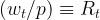
where the small letters (except for t) stand for the logarithms. Further assume that each firm pushes its output to the point where, apart from a random deviation, the ratio \left( w_{t}/p\right)  \equiv R_{t} equals the labor’s marginal product,

(4.3) Rt = (dXt/dN)⋅Ct, t = 1, …, T

where Ct is a random percentage deviation. Hence

(4.4) Rt = R_{t}=AN^{A-1}_{t}\cdot B_{t}C_{t} , t = 1, …, T

(4.5) rt = a + bt + ct + (A-1)nt, t = 1, …, T,

where again small letters indicate logarithms.

Questions:

(I) How to estimate A?

(II) What other structural parameters are present?

(III) (If time remains): How to estimate those?

Source: Duke University. David M. Rubenstein Rare Book & Manuscript Library. Economists’ Papers Archive. Franco Modigliani Papers, Box T1, Folder “Jacob Marschak’s Courses, 1940-1949.”

Image Source: Carl F. Christ. History of the Cowles Commission, 1932-1952

Categories
Chicago Economics Programs Faculty Regulations

Chicago. Economics A.M. requirements amended to become “Consolation Prize”. Lewis and Schultz, 1950


In 1950 the Chicago economics department voted to convert its master’s degree into an award for the successful partial completion of its Ph.D. program. It was to serve as a “consolation prize” for good graduate students but those found not to have the right “Ph.D. stuff” (H. Gregg Lewis’ words in his memo of Sept. 29, 1950 to chairman T. W. Schultz, transcribed below). I have also included the relevant portion of the distributional and examination requirements for the Ph.D. that had already formed part of the so-called “alternate departmental master’s degree”. H. Gregg Lewis’ proposal was largely accepted by the department (minutes from the meeting of November 2, 1950 transcribed below), thereby eliminating distinct tracks for its A.M. and Ph.D. degree programs, respectively.

_______________________

ALTERNATIVE DEPARTMENTAL MASTER’S DEGREE
[1950-51 regulations]

Upon request the Department will consider recommending for the Master’s degree candidates who have satisfied the distribution requirement for the Ph.D. degree and have passed with satisfactory standing the three written field examinations for the Ph.D. degree. One modern foreign language is required. In place of a thesis such candidates may present an acceptable paper or report on a problem approved by the Department.

[…]

Distributional requirement [Ph.D.]. The candidate is expected to have familiarity with the subject matter equivalent to that covered in at least one course (200 or 300 level of reasonable comprehensivenss in each of ten fields (five required and five elected), satisfactory evidence of which can be provided by course credit or by passing a special examination. The required fields are: (a) economic theory, (b) accounting, (c) statistics, (d) economic history, and (e) money, banking, and monetary policy. The fields from which five may be elected are: (f) consumption economics, (g) industrial relations, (h) monopoly and public utilities, (i) agricultural economics, (j) government finance, (k) international economic relations, and (l) substitute fields, but not in excess of two, proposed by the candidate and approved by the Departmental counselor or the Department. One or both of these substitute fields may be outside the Department of Economics, and in general some work outside the Department is recommended with a view to rounding out a program appropriate for the individual student. In case of students transferring from other institutions, adequate training in general history may be substituted for economic history upon the written recommendation of the Departmental counselor.

Preliminary written field examinations [Ph.D.]. In each of three fields of specialization, in addition to presenting course credit or special examinations to show satisfactory preparation, the candidate will be required to pass a written examination.

The candidate is expected to select the three fields of specialization—a primary field and two secondary fields—for intensive graduate work. The primary field is that in which the [Ph.D.] thesis will be written. One of the three fields (primary or secondary) must be that of economic theory, including monetary theory. The fields from which selection is to be made are listed above under the heading “Distributional Requirement,” except that accounting may not be chosen as a field without approval of the Department. One secondary field of specialization may be a field named by the candidate outside the list above, and this may be in a department other than Economics. A secondary field may also be developed under one of the interdepartmental committees of specialization International Relations, Human Development, Planning or Social Thought. The program of work proposed, which ordinarily will include four to five courses, must be approved by the Department. No other secondary field may replace the required field in economic theory.* Students should consult with the Departmental counselor with respect to appropriate programs of work in preparation for the field examinations. The field examinations are given by the Department in the sixth and seventh weeks of the Winter and summer quarters. Application for any field examination should be made not later than the end of the first week of the quarter in which the examination is to be taken.

*Students who take the field examination in money, banking, and monetary policy will not be required to write the monetary theory part of the economic theory examination.


Source: University of Chicago, Announcements. The Division of the Social Sciences, Sessions of 1950-1951, Vol. L, Number 9 (July 20, 1950), pp. 25-26.

_______________________

ECONOMIC COURSES LISTED IN THE LEWIS MEMO (29 Sept 1950) AND INCLUDED IN THE DEPARTMENTAL MINUTES (2 Nov 1950)

209. Intermediate Economic Theory. (Procter Thomson/Harold Gregg Lewis) Designed for students majoring in economics. Deals with factors controlling production, value and relative prices, and distribution.

211. Introduction to Statistics. (Harold Gregg Lewis) Elementary principles of statistics. Main topics: frequency distributions, averages, dispersion, index numbers, elements of the theory of statistical inference.

220. Economic History of the United States. (Earl J. Hamilton) Facts and factors in American’s economic growth from the Colonial period to World War II, including the development of agriculture, industry, commerce, finance, and transportation; economic effects of wars; role of the entrepreneur; rise in living standards; unrest and utopias in periods of stagnation; commercial crises and economic basis of cultural progress.

222. The Rise of Industrial Civilization in Europe. (John Ulrich Nef) Economic development in its relation to religious, political, intellectual and artistic history since the seventeenth century.

230. Introduction to Money and Banking. (Milton Friedman/Lloyd Wynn Mints) Factors which determine the value of money in the short and in the long run; and operation of the commercial banking system and in relation to the price level and general business activity.

240. Introduction to Industrial Relations. (Albert E. Rees) The nature of the labor market; government regulation of wages; social security; the history, structure, and functions of American labor unions; and collective bargaining. Special attention is given to current problems of public policy.

255. Introduction to Agricultural Economics. (D. Gale Johnson). Nature of resources used in agriculture. Prices, production, resource allocation, and income distribution. Analysis of government programs, subsidies, storages, crop control, soil conservation, food-stamp plan.

260. Introduction to Government Finance. (Richard B. Goode) Survey of institutions and theories of government finance. Effects of public expenditures; functions of public revenue; forms of taxation; tax criteria; determination of tax policy; public borrowing; debt management; fiscal policy.

270. International Economics. (Bert F. Hoselitz) The nature of international payments and receipts; foreign trade and banking system. The gold standard in the interwar period. The breakdown of the gold standard and the period of fluctuating exchange rates. Exchange controls, clearing agreements and payments agreements. The second world war and the foreign exchange markets. The position of the International Monetary Fund and the International Bank for Reconstruction and Development in the present world economy.

271. Economic Aspects of International Politics. (Bert F. Hoselitz) An introductory survey, with particular reference to the United States, of the economic policies and activities of governments. Topics: international specialization of production and the distribution of world resources, structure of international exchanges and the mechanism of international transfer of goods and services; tariffs and other regulatory measures; trade agreements and the most-favored nation clause; international flow of capital and investment; the position of the ITO, the IMF, the ECA and other official agencies in international trade and exchange.

300A, 300B. Price Theory. (W. Allen Wallis 300A/Lloyd A. Metzler 300B/Milton Friedman 300B) A systematic study of the pricing of final products and factors of production under essentially stationary conditions. Covers both perfect competition and such imperfectly competitive conditions as monopolistic competition, oligopoly, and monopoly. 300A deals primarily with the pricing of final products; 300B, with the pricing of factors of production.

Source: University of Chicago, Announcements. The Division of the Social Sciences, Sessions of 1950-1951, Vol. L, Number 9 (July 20, 1950), pp. 27-28.

_______________________

THE UNIVERSITY OF CHICAGO

September 29, 1950

To        T. W. Schultz

From   H.G. Lewis

In Re: Requirements for the Master’s Degree

This is an elaboration of comments made to you this summer concerning the Master’s degree.

I should like to recommend the following changes in our requirements for the A.M. degree:

  1. That the distinction between the “regular” A.M. and the “alternative” A.M. be abolished.
  2. That the departmental requirements for the A.M degree consist of the following alteration of the present alternative A.M. requirements:
    1. A distribution requirement covering five (rather than the present eight) fields of economics of which theory, statistics, and money and banking shall be mandatory. Students who do not hold the traditional A.B. degree must meet the requirement by passing satisfactorily a qualifying examination coving the subject matter of Economics 209, 211 (unless the student has passed the Divisional qualifying examination), 230, and two courses chose from 220, 222, 240, 255, 260, 270, 271.1/ Students holding the traditional A.B. may meet the requirement by showing equivalent course credit.
    2. The passing of two Ph.D. field examinations (with Part I of the Theory exam counting as a full exam) at a satisfactory level (that is, at either the Ph.D. level or at a level somewhat lower but not so low as not to warrant blessing the candidate with a Master’s degree).2/
    3. A showing of competence in economic principles; made either by passing (at the A.M. level or higher) Part I of the Theory examination, by course credits or course examinations in Economics 300A and 300B, or by equivalent course credit.

I would recommend that the changes in requirements become effective as of the beginning of the Summer Quarter, 1951 for students entering the Department in that and later quarters.

1/ This qualifying examination is now offered every quarter. This is an extravagant use of faculty. I should like to see the exam offered only once a year. Furthermore, I should like to permit students to substitute course grades for all or part of the exam provided the course grades are for courses taken here and provided they are not at a level lower than B.

2/ There would be therefore no special examinations for A.M.’s, but the examinations would be graded into three levels: passing for the Ph.D. and A.M. degrees, passing for the A.M. degree but not for the Ph.D., failing for both.

I would urge students to give requirement (b) high priority in preparing their programs of study.

Since the ends sought by these changes can be reached in other ways, I specify below what these ends are.

I view our principal instructional purpose as that of training high-level (Ph.D. and beyond) professional economists. I think we ought to view our training of “junior” economists and the awarding of the A.M. degree only as an incident arising from the fact that at the time a student applies for admission to the department, we cannot predict accurately either his calibre as a student or his academic goals.

It seems to me that the requirements for the Master’s degree should meet these tests:

  1. They should include no requirements which the Department would not make for the Ph.D. degree. Otherwise both student and faculty time will be spent in activities extraneous to the training of high-level economists. The present alternative A.M. meets this test but the regular A.M. does not.
  2. The requirements should be at a level high enough to be respected by the academic world. Both present degrees meet this test, I believe.
  3. But the standards for the degree should not be so high that potentially able Ph.D. candidates will be deterred from entering because of the considerable risk that if they fail to meet Ph.D. standards they will also fail to meet A.M. standards. If we set standards for the A.M. that are almost as likely not to be met as the Ph.D. standards we hold out no “consolation prize” to those good students who are fearful of not being able to meet Ph.D. standards. The present alternative A.M. requirements do not meet this test.

One of the ways by which we can raise the calibre of our Ph.D. candidates without reducing our enrollment is to increase the number of students who are given an opportunity to show at close hand their potentialities to us and to screen out at an earlier date those who are not of Ph.D. stuff. I am confident that quite accurate screening can take place ordinarily by the end of the first year of graduate residence. I contemplate our using the A.M. requirements as a screening device; the present alternative A.M. is not satisfactory from that point of view since it postpones too long the screening decision.

Source: University of Chicago Archives. Department of Economics Records. Box 41, Folder “41.8”.

_______________________

MINUTES
Meeting of the Department

Time and Place: Thursday, November 2, 1950, at 1:00 p.m. in Room 424, Social Science Research Building.

Present: T. W. Schultz (chairman), H. G. Lewis, A. Rees, R. Goode, G. Tolley, D. G. Johnson, F. H. Harbison, J. Marschak, C. Hildreth, F. Knight, L. Metzler.

  1. Handling of Student Business
    It was agreed that all bona fide applications for admission to candidacy filed this quarter would be considered as falling under present degree requirements even though Departmental action does not take place until Winter quarter.
  2. Ford Foundation
    Schultz stated that as a Department we have an obligation to ourselves, to the University, and to the community more largely to think through carefully the problem of making the best use of the Ford Foundation’s present grant of $300,000 to the University as well as possible later grants. There was a brief general discussion of the problem.
  3. Departmental Rules Governing Residence and Availability to Students
    Schultz pointed out that in the current year we have been able for the first time to reduce direct teaching loads for most of our members to four courses per year or less. This reduction, he pointed out, makes it desirable that the Department impose upon itself rules governing residence and availability to students and others in the university community lest they be imposed upon us from outside. The problem of rules for residence involves not only a rule stipulating in some way minimum residence, but also the question of whether “free” quarters out of residence should be considered a matter of a right accruing to an individual from his residence or a privilege dependent upon ad hoc decisions made by the Department chairman and the Dean. Schultz expressed himself as being in favor of a rule somewhat similar to the rules for accumulating sabbatical leave under a 3Q contract. In addition there is the problem of insuring, perhaps by rule, “availability” when in residence. The formulation of appropriate rules is to come before the Department for its consideration in the Winter quarter.
  4. The Department considered Lewis’ recommendations for changes in the A.M. requirements. (See attached memo. [above]) the following amendment of Lewis’ recommendation was passed:
    1. That the distinction between the regular A.M. and the “alternative” A.M. degrees be abolished.
    2. That the Departmental requirements for the A.M. degree consist of the following:
      1. A distribution requirement to be met by passing a “Qualifying” examination covering the subject matter of Economics 209, 211 (unless the student has passed the Divisional qualifying examination) 220 or 222, 230 and two courses chosen from 240, 255, 260, 270, and 271. Students holding the traditional A.B. may satisfy the requirement by equivalent course credit.
      2. The passing of two Ph.D. field examinations (with Part I of the Theory examination counting as an examination) at a satisfactory level of A.M. candidates.
      3. A showing of competence in economic principles; made either by (at the A.M. level or higher) Part I of the Theory examination, by course credits or examinations in Economics 300A and 300B, or by equivalent course credit.
      4. An acceptable paper or report on a problem approved by the Department. The paper will be read by two members of the Department of which the course instructor will be one in the event the student submits a term paper prepared for a course.

The above changes in requirements are to become effective as of the beginning of the Summer quarter, 1951 for students entering the Department in that and later quarters.

It was understood that the above motion in no way changes present preliminary examinations or other requirements for the Ph.D. degree. Professor Knight asked the minutes to show his objection to dropping Economics 210 (Accounting) from the requirements for the A.M. degree.

  1. Student Business
    1. Petitions

Lawrence Bostow’s petition for approval of French and Russian as languages for the Ph.D. was approved.

Mr. H. M. Herlihy’s petition for the field of “Social Organization” (Sociology Department) as his third field for the Ph.D. degree was approved.

Mr. John Holsen’s petition for a third Ph.D. field in Planning (Planning Department) was approved. Mr. Johnson, his counselor, was asked to inform Mr. Holsen, however, that this approval does not entitle Holsen to shorten his total program in Economics for the Ph.D.

Mr. Edward Mishan’s petition for approval of Spanish as a Ph.D. language was denied.

    1. Admission to Candidacy

Mr. Howard Ammerman’s application for admission and for approval of a thesis topic was moved to the bottom of the list of applications.

Mr. Rondo E. Cameron’s application for admission to candidacy for the Ph.D. degree was recommended to the Division for approval, contingent upon his passing the Theory examination (written Summer, 1950) and his proposed thesis topic, “French Foreign Investment, 1815-1870,” was approved. Thesis committee: E. J. Hamilton, chairman, L. Metzler, P. Thomson.

After some discussion, Mr. Clifford Clark’s application was moved down the list. Lewis was instructed to advise Clark to consult with Hamilton concerning the latter’s misgivings about the proposed thesis topic, and in addition to confer with Hayek, Knight, and other members of the Department concerning the thesis topic.

Mr. George P. Coutsoumaris’ application for admission to candidacy for the Ph.D. degree was recommended to the Division for approval, contingent on his passing the Theory examination (written Summer, 1950), and his proposed thesis topic, “Possibilities of Increasing Economic Efficiency in Greek Agriculture,” was given qualified approval, the Department suggesting that he limit the topic somewhat preferably to a topic approximately the same as that covered in the sections (VII and VIII) of his outline dealing with capital in Greek agriculture. Thesis committee: D. G. Johnson, chairman, C. Harris, J. Margolis (planning).

Mr. David Fand’s proposed thesis topic, “Monetary Theory of the Federal Reserve Board,” was discussed. It was agreed to come back to it at the next meeting after several more of the members of the Department had an opportunity to discuss the topic with Fand.

The meeting was adjourned at 3:05 p.m.

Source: University of Chicago Archives. Department of Economics Records. Box 41, Folder “41.8”.

Images:  University of Chicago Photographic Archive, H. Gregg Lewis [apf1-03861] and T. W. Schultz [apf1-07479], Hanna Holborn Gray Special Collections Research Center, University of Chicago Library.

Categories
Chicago Economics Programs Economists Fields

Chicago. Schedule of the preliminary economics exams for the Ph.D. and A.M., Summer 1951


The following schedule for preliminary examinations in economics at the University of Chicago from the summer quarter of 1951 comes from Milton Friedman’s papers at the Hoover Institution Archives. We see that he was on the two economic theory examination committees along with Lloyd Metzler and Frank Knight. Besides providing the names of the faculty members serving on the nine committees, the schedule also provides the names of the sixty students registered for the examinations during that quarter.

____________________

DEPARTMENT OF ECONOMICS

SCHEDULE FOR PRELIMINARY EXAMINATIONS
FOR THE PH.D. AND FOR THE A.M.

Summer Quarter, 1951

The schedule below shows the examinations requested for the current quarter. Will the chairman of each committee please be responsible for turning in the complete examination at least one week before the date on which it is to be given?


Date

Examination Committee

Students Registered

Thurs., Aug. 2
8:30
Law Court

Agricultural Economics

D.G. Johnson, chr.
C. Hildreth
T.W. Schultz
Dunsing, Marilyn (A.M.)
Fox, Kirk (Ph.D)
Hughes, Rufus (Ph.D.)
Taylor, Maurice (Ph.D.)

Tues., July 31
8:30
Law Court

Economic Theory I

L. Metzler, chr.
M. Friedman
F. Knight
Baskind, Irwin (Ph.D.) in abs.
Bassett, Marjorie (Ph.D.-A.M.)
Blumberg, Lionel (Ph.D.-A.M.)
Chen, Ho-Mei (Ph.D.)
Chen, Sze-te (Ph.D.-A.M.)
Chien, Chih Chien (Ph.D.)
Cleaver, George (Ph.D.)
Dunsing, Marilyn (A.M.)
Emmer, Robert (Ph.D.)
Fox, Kirk (Ph.D.)
Frank, Andrew (Ph.D.-A.M.) in abs
Gustus, Warren (Ph.D.)
Heizer, Raymond (Ph.D.)
Herlihy, Murray (Ph.D.)
Hoch, Irving (Ph.D.)
Hughes, Rufus (Ph.D.)
Krawczyk, Richard (Ph.D.-A.M.) in abs
Lerner, Eugene (Ph.D.)
Liang, Wei K. Liang (Ph.D.)
Lininger, Charles (Ph.D.)
Lurie, Melvin (Ph.D.)
McGuire, Charles (Ph.D.)
Malhotra, Man Mohan (Ph.D.)
Malone, John (Ph.D.)
Mitcham, Clinton (Ph.D.-A.M.)
Morrison, George (Ph.D.-A.M.)
Sonley, Lorne (Ph.D.)
Taylor, Maurice (Ph.D.)
Terrell, James (Ph.D.-A.M.)
Toscano, Peter (Ph.D.)
Traeger, Gordon (Ph.D.-A.M.)
Viscasillas, Felipe (Ph.D.)
Waldorf, William (Ph.D.)
Weir, Thomas (Ph.D.)
Weiss, Roger (Ph.D.-A.M.)
Zelder, Raymond (Ph.D.)

Tues., Aug. 7
8:30
Law Court

Economic Theory II

L. Metzler, chr.
M. Friedman
F. Knight
Chen, Ho-Mei (Ph.D.)
Herlihy, Murray (Ph.D.)
Hoch, Irving (Ph.D.)
Toscano, Peter (Ph.D.)
Weir, Thomas (Ph.D.)

Thurs., Aug. 9
8:30
Law Court

Government Finance

P. Thomson, chr.
J. Marschak
D.G. Johnson
Frank, Andrew (Ph.D.-A.M.) in abs
Haskell, Max (Ph.D.) in abs
Henry, Edward L. (Ph.D.)
Horwitz, Bertrand (Ph.D.-A.M.)
Lininger, Charles (Ph.D.)
Selden, Richard (Ph.D.)

Thurs., Aug. 9
8:30
Law Court

Industrial Relations

F. Harbison, chr.
E. Hamilton
H.G. Lewis
Barghout, Saad (Ph.D.)
Bechtolt, Richard (Ph.D.)
Hoch, Irving (Ph.D.)
Liang, Wei K. (Ph.D.)
Mullady, Philomena (Ph.D.)
Ness, David (Ph.D.)

Thurs., Aug. 2
8:30
Law Court

International Economics

L. Metzler, chr.
B. Hoselitz
A. Rees
Alberts, William (Ph.D.)
Anderson, Edwin (Ph.D.) in abs
Chen, Sze-te (Ph.D.-A.M.)
Chien, Chih Chien (Ph.D.)
Cleaver, George (Ph.D.)
Frank, Andrew (Ph.D.-A.M.)
Glick, Milton (Ph.D.-A.M.)
Gustus, Warren (Ph.D.)
Lukomski, Jesse (Ph.D.-A.M.)
Mitcham, Clinton (Ph.D.-A.M.)
Morey, Donald J. (Ph.D.-A.M.)

Tues., Aug. 7
8:30
Law Court

Money, Banking, and Monetary Policy

L. Mints, chr.
E. Hamilton
J. Marschak
Alberts, William (Ph.D.)
Bauer, Milton (Ph.D.)
Blumberg, Lionel (Ph.D.-A.M.)
Chen, Sze-te (Ph.D.-A.M.)
Chien, Chih Chien (Ph.D.)
Cleaver, George (Ph.D.)
Conomikes, George (Ph.D.-A.M.)
Davis, George (Ph.D.) in abs
Emmer, Robert (Ph.D.)
Heizer, Raymond (Ph.D.)
Horwitz, Bertrand (Ph.D.-A.M.)
Hughes, Rufus (Ph.D.)
Krawczyk, Richard (Ph.D.-A.M.) in abs
Lerner, Eugene (Ph.D.)
Liang, Wei K. (Ph.D.)
Lukomski, Jesse (Ph.D.-A.M.)
Meckling, William (Ph.D.)
Mitcham, Clinton (Ph.D.-A.M.)
Morey, Donald (Ph.D.-A.M.)
Ogawa, George (Ph.D.)
Smulekoff, Suzanne (Ph.D.-A.M.)
Sonley, Lorne (Ph.D.)
Taylor, Maurice (Ph.D.)
Terrell, James (Ph.D.-A.M.)
Traeger, Gordon (Ph.D.-A.M.)
Zelder, Raymond (Ph.D.)
Zingarelli, Carla (Ph.D.-A.M.)
Rayack, Elton  (Ph.D.) in abs

Thurs., Aug. 2
8:30
Law Court

Statistics

T. Koopmans, chr.
C. Hildreth
H.G. Lewis
Cagan, Phillip (Ph.D.)
Hogan, Lloyd (Ph.D.)
Katzman, Irwin (Ph.D.)
Malhotra, Man Hohan (Ph.D.)
Waldorf, William (Ph.D.)

Thurs., Aug. 2
8:30
Law Court

Economic History

E. Hamilton Mullady, Philomena (Ph.D.)
Toscano, Peter (Ph.D.)

Source: Hoover Institution Archives. Papers of Milton Friedman. Box 76, Folder “University of Chicago ‘Economic Theory’”.

Categories
Chicago Economists Salaries

Chicago. Selected salaries. Hayek visiting, Friedman as associate professor, 1946


Since economists put much store in the notion of people putting their (own or other people’s) money where their mouths are, Economics in the Rear-view Mirror provides from time to time some historical faculty salaries to shine a little light on where those professors of economics before us stood in the willingness-to-pay of their respective departments and university administrations. In this post we see how the brief visiting professorship of Friedrich Hayek and the tenured associate professorship of Milton Friedman fit into the 1946 salary structure at the Univerity of Chicago’s department of economics.

Note: For his half-quarter service Hayek was offered $2,000 (quoted in a January 23, 1945 note  from the director of the U of Chicago Press to VP E. C. Colwell). I presume the $4,000 figure includes $2,000 compensation from (or on behalf of) Stanford University.

_______________________

Comparison: Selected 1945-46 Chicago Salaries
(and recommendations for 1946-47)

Jacob Viner. $10,000
Frank Knight. $9,000 ($10,000)
S.E. Leland. $9,000 ($9,500 Note: resigned to go to Northwestern)
T.W. Schultz. $9,000 ($9,000)
John U. Nef. $8,000 ($8,000)
Jacob Marschak. $8,000 ($8,500)
Paul H. Douglas. $7,000 ($8,000)
Oscar Lange. ($6,000) ($6,000) on leave 1 Oct 1945 to 30 June 1947
Henry Simons. $6,000 ($6,000)
L. W. Mints. $5,500 ($6,000)
Tjalling Koopmans $5250 ($6,740. Note: new salary effective 1 January 1946)

Source:  “Budget and Appointment Recommendations 1946-47 (December 7, 1945)”

_______________________

Hayek’s Half-Quarter, Spring 1946


May 10, 1946

Mr. Robert Redfield Social Sciences
R. G. Gustavson Central Administration

On May 9, 1946 the Board of Trustees approved the following recommendations:

It is recommended that Friedrich A. Hayek be appointed Visiting Professor of Economics in the Department of Economics for the period April 8, 1946 to May 11, 1946. For this service and a similar period of service at Stanford University it is recommended that an honorarium of $4,000 be approved.

cc:
Mr. T. W. Schultz
Mr. L. A. Kimpton)      Salary not mentioned
Mrs. K. Turabian)        Salary not mentioned


Board—5/9/46:

It is recommended that Friedrich a. Hayek be appointed Visiting Professor of Economics in the Department of Economics for the period April 8, 1946 to May 11, 1946. For this service and a similar period of service at Stanford University it is recommended that an honorarium of $4,000 be approved.

Form sent to Comptroller—5/13/46

*  *  *  *  *  *  *  *  *

Milton Friedman’s tenured associate professorship
Effective October, 1946

March 19, 1946

Mr. Robert Redfield Social Sciences
R. G. Gustavson Vice President

On March 28, 1946 the Committee on Instruction and Research approved the following recommendation:

It is recommended that Milton Friedman be appointed Associate Professor of Economics in the Department of Economics on indefinite tenure on a 4E Service basis at an annual salary of $6,000 effective October 1, 1946.

cc:
Mr. T. W. Schultz
Mr. L. A. Kimpton)      Salary not mentioned
Mrs. K. Turabian)        Salary not mentioned


I & R. 28 March 1946:

It is recommended that Milton Friedman be appointed Associate Professor in the Department of Economics on indefinite tenure on a 4E service basis at an annual salary of $6,000 effective October 1, 1946.


Source: University of Chicago Library. Department of Special Collections. Office of the President. Hutchins Administration Records. Box 284. Folder “Economics, 1943-1947”.

Image Source: National Portrait Gallery. Photographs Collection. NPG x187289. Friedrich August von Hayek by Walter Stoneman, half-plate glass negative, June 1945. The portrait has been cropped to fit the format of this webpage.
Creative Commons License Creative Commons license. Attribution-NonCommercial-NoDerivs 3.0 Unported (CC BY-NC-ND 3.0).

Categories
Chicago Economics Programs Economist Market

Chicago. Draft memo of a program to rebuild the department of economics by T.W. Schultz, 1956


The following draft memo by T. W. Schultz outlines the serious faculty replacement needs of the University of Chicago department of economics in the mid-1950s. Particularly noteworthy, aside from the impressive list of lost faculty, is the appended table listing the sponsored research/3rd party funders of the economics department at that time. One also sees that the department had been authorized to make offers to Kenneth Arrow, Robert Solow and Arthur F. Burns. So much for the best-laid plans of mice and men. A better historian of economics than I might spin a counterfactual tale of a post-Cowles Chicago with Arrow and Solow on the faculty.

Regarding the ICA Chile Enterprise: Economic Research Center, Schultz wrote “The Chilean enterprise will give us a fine ‘laboratory’ in which to test ourselves in the area of economic development– a major new field in economics.” This reminds me of the old Cold-War Eastern European joke about whether Marx and Engels were scientists (“No, real scientists would have tried their experiments on rats first”). What a “fine ‘laboratory'” for testing oneself!

_________________________

A Program of Rebuilding the Department of Economics
(first draft, private and confidential – T. W. Schultz, May 22, 1956)

Your Department of Economics has been passing through a crisis. Whether it would survive as a first rate department has been seriously in doubt, with one adversity following another as was the case up until last year. It is now clear, however, that we have achieved a turning point in that we can rebuild and attain the objective which is worth striving for – an outstanding faculty in economics.

The crisis came upon us as a consequence of a combination of things: (1) the department, along with others in the University, had been denied access to undergraduate students of the University who might want to become economists; (2) Viner left for Princeton, Lange for Poland, Yntema for Ford and Douglas for the Senate; (3) the Industrial Relations Center drained off some of our talent and when it jammed, Harbison left for Princeton; (4) Mr. Cowles’ arbitrary decision to shift “his” Commission to Yale was a major blow; (5) Nef been transferring his talents to the Committee on Social Thought, and (6) add to all these the retirement of Knight.

Meanwhile, there were several external developments which did not reduce our difficulties: (1) a number of strong (new) economic centers were being established – at Stanford, Johns Hopkins, Yale, Vanderbilt, M.I.T. and with public funds at Michigan and Minnesota; (2) our salaries were falling behind seriously relative to some of the other places, and (3) recruiting of established, highly competent economists became all but impossible given the crisis that was upon us and the (then) low repute of the University neighborhood.

The ever present danger of the past few years has been that we would be in the judgment of competent colleagues elsewhere, in the beliefs of oncoming graduate students and in the eyes of the major foundations – not recover our high standing but instead sing to a second or even a third-rate department and in the process lose the (internal) capacity to recruit and rebuild.

We now have achieved a turning point distinctly in our favor.

The major efforts which have contributed most have been as follows:

  1. We have taken full advantage of our unique organization in combining real research with graduate instruction. Our research and instruction workshops are the result. The Rockefeller Foundation gave us three grants along the way – agricultural economics, money and public finance – to test this approach and advanced graduate work. The Ford Foundation has now financed our workshops with $200,000 (eight 5-year grant) (our proposal of January 1956 to The Ford Foundation states the theory and argues the case for this approach on the basis of the experiences we have already accumulated).
  2. We set out aggressively to recruit outstanding younger economists. The workshops were a big aid to us in doing this; so was the financial support of the University. We had the ability to “spot them”. We now have the best group of talented young economists, age 30 and less, to be found anywhere. This achievement is rapidly becoming known to others in keen “competition” is already upon us as a consequence.
  3. We need urgently to run up a lightning rod, a (rotating) professorship with a salary second to none, to attract talent and make it clear we were in business and would pay for the best. The Ford Foundation took favorably to the idea. (Thought so well of it that they will do the same for 3 other privately supported Universities – Columbia, Harvard and Yale!)
    The $500,000 endowment grant from them for a rotating research professorship is our reward.
  4. The foundations have given us a strong vote of confidence: grants and funds received by the Department of Economics during 1955-56 now total $1,220,000. (A statement listing these is attached).
  5. The marked turn for the better in the number and the quality of students applying for scholarships and fellowships is, also, an affirmative indication.
  6. The Economics Research Center is filling a large gap in providing computing, publishing and related research facilities which was formally a function of the Cowles Commission.
  7. The Chilean enterprise will give us a fine “laboratory” in which to test ourselves in the area of economic development – a major new field in economics.

There remains, however, much to be done. We must, above all, not lose the upward momentum which is now working in our favor.

Faculty and University Financial Support

To have and to hold a first rate faculty in economics now requires between $225,000 and $250,000 of University funds a year.

To have a major faculty means offering instruction and doing research in 8 to 10 fields. Up until two years ago we came close to satisfying the standard in our graduate instruction. We then had 11 (and just prior to that, 12) professors on indefinite tenure.

Then, Koopmans and Marschak were off to Yale, Harbison to Princeton and Knight did reach 70. And, then there were 7. On top of these “woes” came the serious illness of Metzler which greatly curtailed his role; and, Nef having virtually left economics. Thus, only 5 were really active in economics with Wallis carrying many other professional burdens. Meanwhile we added only one – Harberger was given tenured this year.

Accordingly at the indefinite tenure level we are down to about one-half of what is required to have a major faculty. Fortunately, several younger men have entered and have been doing work of very high quality.

It should be said that the Deans and the Chancellor have stood by, prepared to help us rebuild.

Major appointments were authorized – Arrow, Stigler, Solow and others. We still are hoping that Arthur F. Burns will come.

The resignations and the retirement, however, did necessarily reduce sharply the amount of financial support from the University.

In rebuilding, at least five additional tenure positions will be required:

  1. Labor economics (from within)
  2. Trade cycle (we hope it will be Arthur F. Burns, already authorized).
  3. Money
  4. Econometrics and mathematical economics.
  5. Business organization
  6. Consumption economics (when Miss Reid retires; next 3 years we shall have the extra strength of Dr. D. Brady with finances from The Rockefeller Foundation)
  7. International trade (pending Metzler’s recovery)
  8. Economic development.

The faculty and the University financial support recommended is as follows:

Tenured positions (for individuals fully committed to economics).

    1. Now in the harness

6: Friedman, Johnson, Harberger, Hamilton (Metzler), Wallis (Nef), Schultz

    1. To be added

5: Burns pending, (labor), (money), and two other fields, most likely econometrics and business organization


Budget:

11 [tenured positions]


$165,000

Metzler and Nef $15,000
$180,000
III. Supplementary non-tenure faculty $45,000
Altogether $225,000


Outside Financial Support for the Department of Economics

Grants

Amount of grant Available 1956-57

A. Received during 1955-56.

1.     Sears Roebuck Fellowships

$4,000

$4,000

2.     National Science Foundation (2 years)

$13,000

$6,500

3.     Conservation Foundation (2 years)

$33,000

$16,500

4.     Rockefeller Foundation: consumption economics (3 years)

$45,000

$15,000

5.     American Enterprise (2 years)

$17,250

$8,625

6.     Ford Foundation: research and instructional workshops (5 years)

$200,000

$30,000

7.     Earhart Fellowships.

$6,000

$6,000

8.     S.S.R.C. Student Grants

$5,000

$5,000

9.     Ford Foundation: 3 pre-doctoral grants

$10,200

$10,200

10.  Ford Foundation: faculty research grant (Hamilton)

$12,500

$8,000

11.  ICA Chile Enterprise: Economic Research Center Fellowships, research support (3 yrs)

$375,000

$125,000

12.  Ford Foundation: endowment for rotating research professor

$500,000

$25,000

13.  Rockefeller Foundation: Latin America (Ballesteros)

$5,000

$5,000

Sub-totals

$1,225,950

$264,825

B. Received prior to 1955-56 where funds are available for 1956-57.

1.     Rockefeller Foundation: workshop in money (3 years with one year to go)

$50,000

$20,000

2.     Rockefeller Foundation: workshop in public finance (3 years with one year to go)

$50,000

$20,000

3.     Resources for the Future (3 years with one year to go)

$67,000

$27,000

4.     Russian Agriculture (2 years with one to go)

$47,000

$22,000

B sub-totals

$214,000 $89,000

A and B totals

$1,439,950

$353,825


Source:  University of Chicago Archives. Department of Economics Records. Box 42, Folder 8.

Image Source: 1944 photo of T.W. Schultz from University of Chicago Photographic Archive, apf1-07479, Special Collections Research Center, University of Chicago Library. Cf. Wikimedia Commons, same portrait (dated 1944) from Library of Congress.

Categories
Economists Methodology New School

New School for Social Research. Conference on Mathematics and Social Science, 1958


While searching for traces of Jacob Marschak in the digitized archives on-line for the New School for Social Research, I came across the following press release about a one-day conference on mathematization of the social sciences that featured R. Duncan Luce, William S. Vickrey, Tjalling C. Koopmans and Jacob Marschak among others. Perhaps papers or notes from the conference can be located by a fellow historian of social sciences?

_______________________

Conference on “The State of Mathematization of the Social Sciences”
Press release from The New School for Social Research

THE NEW SCHOOL FOR SOCIAL RESEARCH.
66 West Twelfth Street, New York 11, New York

From: Agnes de Lima
Director of Information
Regon 5-2700

FOR RELEASE

May 21, 1958
MAILED May 21 to city editors of dailies


Mathematical methods in the social sciences—in psychology, sociology and economics—will be discussed by nine leading scholars at an all-day conference to be held at the New School for Social Research, Sunday, May 25. Scholars drawn from Columbia, Harvard, Princeton and Yale will address the conference which meets at 10:30 A.M. and again at 2:30 P.M. Dr. Henry Margenau, Eugene Higgins Professor of Natural History and Physics at Yale, will preside.

Dr. William Gruen, associate professor of philosophy at New York University, will introduce the speakers. He described the conference, which bears the rather formidable title, “The State of Mathematization of the Social Sciences,” as in the nature of a progress report on the application of the game theory, and related theoretical techniques developed by the late distinguished mathematical physicist John von Neumann of Princeton University. Much of the conference, he said, will deal with the extension of the line of research begun by the epoch-making work of Drs. Von Neumann and Oscar Morgenstern, also of Princeton, on “The Theory of Games and Economic Behavior.”

Speakers at the morning session include Robert R. Bush, associate professor of applied mathematics, New York School for Social Work, Columbia; R. Duncan Luce, lecturer, Department of Social Relations, Harvard; and William S. Vickrey, associate professor of economics, Columbia. Carl G. Hempel, professor of philosophy, Princeton, will comment.

In the afternoon session addresses will be made by Tjalling C. Koopmans, professor of economics, Yale; Jacob Marschak, professor of economics, Yale; Paul F. Lazarsfeld, professor of sociology and chairman of the Department of Sociology, Columbia. Ernest Nagel, John Dewey Professor of Philosophy, Columbia, and Orville G. Brim, Russell Sage Foundation, will comment.

The meeting is sponsored by the Conference on Methods in Philosophy and the Sciences organized in 1957 by a group of top-ranking scholars from leading universities. This is the 43rd [sic, probably “3rd”] semi-annual gathering at the New School.

Dr. Margenau is chairman of the conference and Dr. Gruen is secretary-treasurer. Dr. Horace M. Kallen, research professor in social philosophy and professor emeritus of the Graduate Faculty of Political and Social Science of the New School, is honorary president.


Note to Editor: While next Sunday’s Conference on Methods in Philosophy and the Sciences is a scholar’s conference and some of the papers will be technical in nature your reporter can we believe gain some highly interesting material on the light thrown on human motivation and behavior by the application of mathematical methods in the fields of psychology, sociology and economics. Leading corporations in the country in recognition of this fact are increasingly employing mathematicians on their staffs. We suggest that your reporter get in touch with Dr. William Gruen at the conference.

Above “Note to Ed” added to copies of release for NY Times and Herald Trib.


Source: New School for Social Research (New York, N.Y.: 1919-1997). Announcement of a conference “The State of Mathematization of the Social Sciences“. May 21 1958. New School press release collection. New School Archives and Special Collections Digital Archive. Web. 07 Mar 2019.

Image Source: Exterior of 66 West 12th Street Building of The New School. 1930 – 1960. New School photograph collection; Buildings and campus (NS040101.SII). New School Archives and Special Collections Digital Archive. Web. 07 Mar 2019.


Categories
Chicago Regulations

Chicago. Committee on Ph.D. Outlines & Requirements, 1949-50 (4)


This post adds to a series of  items related to the University of Chicago Department of Economics’ Committee on Ph. D. Outlines and Requirements chaired by Milton Friedman (1949-50). The first installmentsecond installment, and third installment were previously posted. This version of the Ph.D. Outlines and Requirements was filed in a different folder in Milton Friedman’s papers at the Hoover Institution Archives from the first three installments. It is essentially the same as seen in the carbon copy dated February 2, 1950 that was transcribed for the third installment. However at the very end of the memo below we now have an explicit sequence of 14 steps required for every successful economics Ph.D. candidate at the University of Chicago going into the second half of the twentieth century.

___________________________

[MEMO #9, February 6, 1950]

[Mimeographed copy. Additions to/changes of the text from the February 2, 1950 carbon draft]

THE UNIVERSITY OF CHICAGO

TO:   T. W. Schultz                                                                  DEPARTMENT: Economics
FROM: R. Blough, M. Friedman, D. G. Johnson              DEPARTMENT: Economics
[handwritten addition: “J. Marschak”]

DATE:   February 6, 1950

IN RE: SUPPLEMENTARY REPORT OF COMMITTEE ON PH. D. OUTLINES AND REQUIREMENTS

The following summary of specific recommendations is a revision of the summary on pp. 4 and 5 of our earlier report, incorporating comments and suggestions made at the department discussion of the problem. It is proposed that the department approve the following actions and rules:

(1) A Ph.D. Thesis submitted for final approval will ordinarily contain a central core not in excess of 15,000 words in length. This central core must be self-contained but may be supplemented by supporting material. In scope and quality, the central core shall be comparable to first-rate journal article.

(2) Preparation of a statement on the role of the thesis and the standards to which it is expected to conform for distribution to candidates.

(3) Establishment of a thesis seminar. Regular participation in this seminar is to be expected of all candidates writing theses in residence. One or more faculty members is to have directresponsibility for the organization and scheduling of this seminar. A session of the seminar will ordinarily be conducted by the chairman of the tentative or final thesis committee of the student presenting a report (see point 7 below). All other faculty members shall be encouraged to attend.

(4) A Ph.D. candidate, whether or not he writes his thesis in residence, shall be expected to make at least two appearances before this seminar.

(5) The candidate’s first appearance before the seminar shall be prior to his admission to candidacy. In advance of this appearance, the candidate shall prepare a brief report (on the scale of a term paper) explaining his thesis topic, the existing state of knowledge on the topic, its potentialities, and his projected plan of attack on the problem. This report shall be duplicated and circulated to all members of the seminar an all members of the faculty in advance of the meeting of the seminar.

(6) A candidate shall be permitted to make this first appearance preparatory to admission to candidacy if he has passed at least two of the three Ph.D. preliminary examinations.

(7) The candidate shall have responsibility for applying for the appointment of a tentative thesis committee prior to his first appearance at the seminar. He shall be permitted to make such application at any time after he has passed at least two of the three Ph.D. preliminary examinations. The chairman of the department shall name a tentative faculty committee for each candidate, and this committee shall be expected to attend the meeting of the seminar at which it takes place. At least one member of the tentative committee shall be a person whose major field of interest is outside of the field of the proposed thesis. If admission to candidacy is granted, a final thesis committee shall be appointed by the chairman of the department.

(8) The candidate’s final appearance before the seminar shall be a definitive report of his findings. A brief resume of this report shall be duplicated and circulated to all members of the seminar and all members of the faculty in advance of the meeting of the seminar. The candidate’s thesis committee shall be expected to attend this final appearance before the seminar. [Handwritten comment: “This resume may be the central core referred to in 9.”]

(9) The central core of the thesis or its equivalent shall be circulated to all members of the faculty before the final acceptance of the thesis. Final acceptance of the thesis shall be by vote of the members of the faculty upon the recommendation of the thesis committee. [handwritten addition: “This vote may take place prior to the final appearance of the candidate before the thesis committee, if the central core has been circulated prior to such appearance.”]

(10) The final examination by the department shall be on the candidate’s major field. The examination shall be a function of the whole department but in any event shall be attended by members of the thesis committee and other faculty members specializing in the field.

(11) The new procedure [for admission to candidacy]should shall apply to all students [in residence at the time of its adoption, and to students not in residence] who have not been admitted to candidacy prior to July 1, 1950 December 31, 1951. [handwritten addition: “It shall however be optional to students between the date of adoption and December 31, 1951.”]


The steps involved in the successful completion of Ph.D. work under the above procedure may be summarized in [handwritten addition: “usual”] chronological order as follows:

  1. Student passes 2 or more preliminary examinations
  2. Student applies for tentative committee
  3. Department chairman appoints tentative committee
  4. Student circulates a brief report on his projected thesis
  5. Student appears before thesis seminar
  6. Advisor certifies that student has satisfied all requirements for admission to candidacy
  7. Department admits student to candidacy
  8. Department chairman appoints final thesis committee
  9. Student gets approval of his committee to circulate resume of findings of his thesis
  10. Student makes final appearance before thesis seminar
  11. Thesis committee recommends acceptance of thesis
  12. Central core of thesis or equivalent is circulated to all members of faculty (this may be identical with step 9)
  13. Faculty by vote concurs in recommendation of thesis committee
  14. Student passes final examination on his major field.
    [hand-drawn arrow to move 14. between 11. and 12.]


Source:  Hoover Institution Archives. Papers of Milton Friedman, Box 70, Folder “79.2, University of Chicago. Minutes, Economics Department, 1949-1953”.


Image Source: Social Science Research Building from University of Chicago Photographic Archive, apf2-07466, Special Collections Research Center, University of Chicago Library.


Categories
Chicago Duke Economic History Economists Harvard Northwestern

Harvard. Economics Ph.D. alumnus (1929), later Chicago professor, E.J. Hamilton.


In an earlier post Economics in the Rear-view Mirror provided the undergraduate and graduate academic transcripts of Earl J. Hamilton, who besides having gone on to a distinguished career as a leading economic historian also served as the editor of the Journal of Political Economy for seven years. For this post I have transcribed c.v.’s from ca. 1948 and from Hamilton’s emeritus years, presumably from the 1970s, but he did live for nearly another two decades.

The previous post was dedicated to a long-time professional colleague and friend, Jacob Marschak, with whom Hamilton had overlapped at the Universidad Internacional (Santander, Spain) during the summer of 1933, and to whom Marschak had written for some advice regarding an application for a possible University of Chicago job.

Earl Hamilton died May 7, 1989. [Find-a-Grave link]

____________________

On Hamilton’s research on economic history

John H. Munro. “Money, Prices, Wages, and ‘Profit Inflation’ in Spain, the Southern Netherlands, and England during the Price Revolution era: ca. 1520-ca. 1650”. História e Economia—Revista Interdisciplinar. Vol. 4, No. 1 (1° semester 2008), pp. 13-71.

John H. Munro’s eh.net review of Hamilton’s American Treasure and the Price Revolution in Spain, 1501-1650 (1934).

See:  Earl J. Hamilton Papers on the Economic History of Spain 1351-1830.

____________________

Hamilton’s unfinished John Law Project

“John Law has attracted the interest of many writers. In the twentieth century two of the most active scholars researching on John Law were Paul Harsin and Earl Hamilton…Hamilton, who devoted some fifty years of his life to Law, never produced his promised biography and left only a couple of short articles on the man he so passionately studied…

Unfortunately, there is little order in the Hamilton papers. It will take the librarians of Duke University, assisted by experts on Law and his System, many years to classify them…As such, Earl and Gladys Hamilton will have left a very rich legacy for future generations of scholars.”

Source:    Antoin E. Murphy, John Law: Economic Theorist and Policy-maker.  Clarendon Press, (1997), especially Chapter 2 “Law’s Writings and his Critics”, pp. 8-13.

____________________

Earl J. Hamilton c.v., ca. 1948

THE UNIVERSITY OF CHICAGO
Chicago 37, Illinois
DEPARTMENT OF ECONOMICS

EARL. J. HAMILTON, Professor of Economics, University of Chicago

Previous and Present Positions: Assistant professor of economics, 1927-29, professor, 1929-44, director of graduate study in economics, 1938-44, Duke University; professor of economics, 1944-47, Northwestern University; professor of economics, 1947—, University of Chicago. Delegate for Spain, International Scientific Committee on Price History, 1930-36; lecturer, Universidad Internacional (Santander, Spain), summer, 1933, Colegio de Mexico, summer, 1943; rapporteur, Committee on World Regions, Social Science Research Council, spring, 1943; director of civilian instruction, Army Finance School, 1943-44. Editor of the Journal of Political Economy, August, 1948—.

Degrees: B.S., with Honors, 1920, Mississippi State College; M.A., 1924, University of Texas; Ph.D., 1929, Harvard University.

Affiliations: Economic History Association (Vice-President, 1941-42, Bd. Editors, 1941—); American Association of University Professors; American Historical Association; Economic History Society (Engl.); Corresponding Member, Hispanic Society of America; Fellow, Royal Economic Society, American Association for the Advancement of Science, and American Academy of Arts and Sciences.

Publications: American Treasure and the Price Revolution in Spain, 1501-1650 (1934); Money, Prices, and Wages in Valencia, Aragon, and Navarre, 1351-1500 (1936); War and Prices in Spain, 1651-1800 (1947); El Origen del Capitalismo y Otros Ensayos de Historia Económica (1948). Articles on history of economic thought, economic history, money, and prices.


Source: Duke University. David M. Rubenstein Rare Book and Manuscript Library, Economists’ Papers Archive. Earl J. Hamilton Papers, Box 2, Folder “Correspondence-Misc. 1930’s-1940’s and n.d.”.

____________________

Earl J. Hamilton c.v.
early 1970s[?]

THE UNIVERSITY OF CHICAGO
DEPARTMENT OF ECONOMICS

1126 East 59thStreet
Chicago, Illinois 60637


Earl J. Hamilton

Born at Houlka, Mississippi on May 17, 1899

B.S. with Honors, Mississippi State University 1920
M.A. University of Texas 1924
Ph.D. Harvard University 1929

Docteur Honoris Causa, University of Paris 1952; LL.D. Duke University 1966; Doctor Honoris Causa University of Madrid 1967.

Have held Thayer Fellowship and Frederick Sheldon Traveling Fellowship, Harvard University; Social Science Research Council Fellowship; Guggenheim Memorial Fellowship; and Faculty Research Fellowship from the Ford Foundation.

Have spent a total of more than twelve years gathering research data in the archives and manuscripts divisions of libraries in France, Italy, Holland, Spain, Belgium, England, Scotland and Latin America.

Speak, read, and write French, Italian, German, Spanish and Dutch.

Assistant Professor of Economics, Duke University, 1927-1929
Professor of Economics, Duke University, 1929-1944
Professor of Economics, Northwestern University, 1944-1947
Professor of Economics, University of Chicago, 1947-1968
Distinguished Professor of Economic History, State University of New York at Binghamton, 1967-1969
Now Professor Emeritus of Economics, University of Chicago and Distinguished Professor of Economic History Emeritus, State University of New York Binghamton.

Editor of the Journal of Political Economy for seven years.

President of the Economic History Association, 1951-1952.

Have determined from original manuscript sources the volume of precious metals imported into Europe from Mexico and Peru in the first hundred and seventy years after the discovery of America and have written a history of price in Spain from 1350 to 1800 based on contemporaneous account books, published in three volumes by the Harvard University Press. I have published a book of essays in Spanish entitled El Florecimiento del Capitalismo y Otros Ensayos de Histoira Económica [1948].

Am now writing from manuscript sources in the archives of France, Italy, Belgium, Holland, England and Scotland, to be published in four or five volumes a definitive history of John Law’s System, one of the greatest inflationary and deflationary episodes in history, popularly known as the Mississippi Bubble, and a biography of John Law of Lauriston.


Source: Duke University. David M. Rubenstein Rare Book and Manuscript Library, Economists’ Papers Archive. Earl J. Hamilton Papers, Box 2, Folder “Various Financial Correspondence (Personal) (1930s-1960s)”.

Image Source:  University of Chicago Photographic Archive, apf1-02446, Special Collections Research Center, University of Chicago Library.