Serendipity struck again during an unrelated search of hathitrust.org. This time I stumbled across Harvard class reports (i.e. B.A. cohorts) irregularly submitted by the secretaries of the respective classes and published as part of the annual Harvard commencement exercises (e.g. for the Class of 1879). I decided to sample the reports for the biggest gun in the Harvard economics department at the turn of the 20th century, Frank W. Taussig, and was delighted to find what turns out to be essentially personal notes written to his classmates about the course of his post-undergraduate career. Today I provide Taussig’s notes from the second through eighth reports of the Class of 1879.
In a later post I shall provide information about Taussig’s undergraduate life from information culled from the Class of 1879/Secretary’s Report/No. I./1879.
________________________________
1882
[p. 98-99]
FRANK WILLIAM TAUSSIG.
“In September, 1879, I went abroad with E. C. Felton. After spending a few weeks together in London, we separated. I went to Germany, and spent a winter, from October till March, at the University of Berlin, studying Roman Law and Political Economy. In March, I left Germany, and rejoined Felton in Italy. We spent two months together in Italy, and then went to Paris, by way of Geneva. In Paris, in May, we again separated, Felton going to England, on his way home, while I travelled in different parts of Europe, chiefly in Austria and Switzerland. I returned to America in August, 1880. In September, 1880, I went to Cambridge, intending to enter the Law School. The position of secretary to President- Eliot was offered me and accepted. Since this time, I have continued to act as secretary to the President, and have, at the same time, studied for the degree of Ph.D., which I hope to obtain in June, 1883. The special subject which I have studied for the degree has been the History of the Tariff Legislation of the United States. In March, 1882, was appointed instructor in Political Economy, in Harvard College, for the year 1882-83. While in Europe, wrote some articles, which were published in the New York Nation.”
Source: Harvard College. Class of 1879. Secretary’s Report. No. II. Commencement, 1882.
________________________________
1885
[pp. 34-35]
EDGAR CONWAY FELTON.
(April 26.)—” You will remember that my communication for the last Triennial Report reached you too late for insertion, so I will begin my contribution to your second report with my graduation.
“In September, 1879, Frank Taussig and I started for Europe together. We stayed in London about a month enjoying ourselves hugely, and among other short excursions going to Oxford, where I had a cousin, an undergraduate in New College, who gave us rather exceptional facilities for observing this the oldest of the English Universities. In London we separated, I going to Paris where I stayed about six weeks, sight-seeing and attending occasional lectures at the University. From Paris I went to Vienna, stopping on the way at Munich. Christmas and New Year’s I was in Vienna with my uncle, who has lived there for about thirty years. Then I went south to Rome, where I found Ned Hale, and many a pleasant walk and talk we had together in the Eternal City. Here Frank Taussig joined me again, having finished a semester at the University, and we started off together, going though the Italian cities, making the tour of the Italian lakes, and crossing into Switzerland by the Simplon. After a short stay in Paris I started for home, taking a run through some of the cathedral towns of England and into Scotland on the way…
[pp. 65-66]
FRANK WILLIAM TAUSSIG.
(February 8.)—” I have lived in Cambridge since the date of the last Class Report. In 1882 I was appointed instructor in Political Economy in Harvard College, and devoted my time for the year 1882-3 entirely to teaching, and work of that kind. In the course of that year I published an essay on ‘Protection to Young Industries as Applied in the United States,’ which gave the results of investigations in the economic history of the country in the years 1789-1830. In June, 1883, I received the degree of Doctor of Philosophy from Harvard University.
“In the fall of 1883 I entered the Harvard Law School with the intention of taking the regular three years course, and of practising after I got through the school. At the same time I continued my connection with the college as instructor in Political Economy, having been re-appointed to that office. I gave a course on the Tariff History of the United States, a subject to which I have given special attention. During the past year (1884-5) I have continued my studies in the Law-School as a second-year student, and have also continued as instructor in the college, giving the same course as in the previous year.
“In 1884, I wrote an introductory notice to the English translation of Laveleye’s ‘Elements of Political Economy,’ and added a supplementary chapter on some economic questions of present practical importance. In 1885 I published a second small volume on economic history, this being a ‘History of the Existing Tariff. It gives an account of the tariff legislation of the country from 1860 to 1883, with more or less comment from the point of view of one who adheres to the principle of free trade. I have written occasionally for the newspapers, on economic questions, chiefly for the Boston Herald and Advertiser, and a little for the New York Nation. I have been, and am still, a member of the committee to edit the Civil Service Record, a monthly paper published for the promotion of civil service reform, and have written regularly for it.”
Is a member of the Massachusetts Reform Club, and of the Cobden Club. Since April 1 has conducted the course on American History in the college during the absence of Hart.
Source: Harvard College. Class of 1879. Secretary’s Report. No. III. Commencement, 1885.
________________________________
1890
[p. vi-viii]
…In 1886 our classmate Taussig was appointed Assistant Professor of Political Economy, a signal honor for so young a man, the next to the youngest in the class. In April of that year a movement was started in the class to raise funds to equip a special library and reading-room for the Political Economy department of the college, the money to be used under Taussig’s direction. Six hundred and seventy-five dollars and seventy cents was raised and formally presented to the President and Fellows of Harvard College, and gratefully accepted by them.
The names of the subscribers are as follows, the subscriptions ranging from one to one hundred dollars: Almy, Andrews, Amen, Baily, Baylies, Bissell, Brooks, Burr, Carey, Cary, Churchill, R. W. Ellis, Evans, Felton, Gilbert, Hale, S. H. Hill, Hoadly, Holmes, Hubbard, Hudson, Hyde, Keene, Kidder, C. J. Mason, McLennan, Rindge, Sheldon, Somerby, St. John, H. Stetson, Taussig, Thorp, Trimble, Urquhart, Warren, Wright.
In June, 1887, Taussig furnished the following account of the way the money had been used and the practical working of the room:
“Of the sum contributed by members of the class ($675.70), about $400 has so far been expended for books. We have gone slowly in buying books, as needs change from time to time and better selection was likely to be got by buying when a want arose, rather than by anticipating wants. A considerable number of books will probably be added next year, but even as it stands, the collection is fairly complete for certain courses, and is exceedingly useful. It contains the works of the classic economists, like Adam Smith, Ricardo, Malthus most of them in duplicate; and also the works of the leading economists of more recent times, such as Cairnes, Sidgwick, Marshall, Jevon, Rogers, Walker, among English writers; Wagner, Cohn and Schoenberg, among German; and Bastiat and Leroi-Beaulieu among French. Many of these also are duplicated. There is a good working collection on tariff and financial matters for the United States, on railroads and on economic history in general. A considerable number of dictionaries and books of reference have been put in, such as ‘Lalor’s Political Science Cyclopaedia,’ the French ‘Dictionnaire d’Économie Politique,’ McCulloch’s “Commercial Dictionary,’ Kolb’s ‘Condition of Nations.’
“In addition there are a number of government publications, which are by no means the least useful part of the library. Besides the statistical abstracts of the United States, England and France, there are sets of United States Census Reports (including a full set of the census of 1880), Massachusetts Census Reports, the Finance Reports (U. S.) since 1870, Reports of the Comptroller of the Currency since 1876, the Statutes at Large, a full set of the Massachusetts Labor Reports, documents and reports on railroads and tariff legislation, and important foreign documents, such as the well-known British Reports on the Depreciation of Silver (1876) and on Railroads (1881). Among the periodicals kept on file are the Financial Chronicle, The Railroad Gazette, The Political Science Quarterly and our own [Quarterly] Journal of Economics.
“The library has undoubtedly been of great service to instructors and students. It has been very freely used by the latter, and it has been a frequent and pleasant experience to hear their expressions of acknowledgment of the aid and pleasure it has given them.
“It is interesting and significant that a similar plan is to be put in operation next year in the department of American History and Politics. A Working Library is to be provided, and will probably be put in the room now used for the Political Economy Library, so that the two will be used together. The money comes in a way from our class, being given in memory of our classmate, Glendower Evans, whose death last year made so sad a gap in our ranks.”
Each volume bears a neat book plate stating that it is given by members of the Class of 1879 to the Political Economy Department.
[pp. 86-88]
FRANK WILLIAM TAUSSIG
(Cambridge, April 2.)—”In 1885-86 I took my third year at Harvard Law School, receiving the degree of LL. B. in June, 1886. But some months before this I had been offered and had accepted an appointment as Assistant Professor of Political Economy in Harvard University, and in the fall of 1886 entered on the duties of that position. Since then I have lived the uneventful life of a college teacher. I was so fortunate as to be appointed just in time to take part in the celebration of the 250th anniversary of the founding of the University, and, being then the youngest member of the faculty, seem to have a better chance than any other member of taking part in the 300th anniversary when that comes around.
“On June 29, 1888, I was married at Exeter, N. H., to Edith Thomas Guild, of Boston, daughter of George Dwight Guild, of the class of ’45, and of Mary Thomas Guild (now Mrs. William H. Gorham). On May 3, 1889, we had born a son, William Guild Taussig. During the past summer (1889) we have built a house on land formerly belonging to Professor Norton, off Kirkland Street, and hope to live here in peace and quiet for many years to come.
“In connection with my teaching work, I have written and published on economic topics. Most of my writing has been for the Quarterly Journal of Economics, which was established by the University in 1886. In 1888 I published a volume entitled, ‘The Tariff History of the United States,’ made up, with revisions and additions, of the two smaller books published previously (on ‘Protection to Young Industries’ and on the ‘History of the Present Tariff’), and of the two other essays on tariff history mentioned in the subjoined list, which I have prepared at the request of our inquisitive Secretary. During the year 1889-90, in the absence of Professor Dunbar, I have edited the [Quarterly] Journal of Economics.
“In 1888 I was elected a fellow of the American Academy of Arts and Sciences. I am also a member of various scientific societies, to which my work naturally leads me, such as the American Economic and Historical Associations and the Political Economy Club. The list of my publications since 1885, not including minor articles in periodicals, is, in chronological order:
( 1) “Translation, with comment, of Wagner on the Present State of Political Economy; Quarterly Journal of Economics, October, 1886.
(2) “The Southwestern Strike of 1886; ibid., January, 1887.
(3) “Translation of Soetbeer’s Materials on the Silver Question, undertaken for the government, and published in Mr. Edward Atkinson’s Report on Bi-metallism, 1887.
(4) “A Suggested Re-arrangement of Economic Study; Quarterly Journal of Economics, January, 1888.
(5) “The Tariff of 1828; Political Science Quarterly, March, 1888.
(6) “The Tariff, 1830-1860; Quarterly Journal of Economics, April, 1888.
(7) “The Tariff History of the United States; New York, G. P. Putnam’s Sons, 1888.
(8) “How the Tariff Affects Wages; The Forum, October, 1888.
(9) “Some Aspects of the Tariff Question; Quarterly Journal of Economics, April, 1889.
(10) “Political Economy and Business; The Harvard Monthly, June, 1889.
(11) “Workmen’s Insurance in Germany; The Forum, October, 1889.
(12) “The Silver Situation in the United States; Quarterly Journal of Economics, April, 1890.
“I have also done a good deal of miscellaneous editorial work on the Quarterly Journal of Economics in arranging letters and appendix matter, and in writing notes and memoranda, and have written occasionally for the Nation and other papers. My address is 2 Scott Street, Cambridge, Mass.”
Source: Harvard College. Class of 1879. Secretary’s Report. No. IV. Commencement, 1890.
________________________________
1895
[pp. 95-8]
FRANK WILLIAM TAUSSIG.
(Florence, Italy, April 9.)—Since our last report, my life has moved in the easy current of the University stream, in which it seems likely to remain for the rest of my days. In 1892 I was promoted from the Assistant Professorship, which I then held, to a Professorship of Political Economy, and in the following year was made Chairman of the Department of Economics. As the tenure of a professorship is for good behavior, and as I trust I shall neither behave ill nor become useless to the University, I may hope to live in Cambridge and work for Harvard until I die.
“Among domestic happenings, I can report the birth of a second child, Mary Guild Taussig, on May 8, 1892.
“Becoming entitled, under the University regulations, to a sabbatical year, I determined to take advantage of the opportunity, and accordingly am spending this year (1894-95) in Europe. We left home in early October, and sailed direct for the Mediterranean. After a stop at Gibraltar and a glimpse of Spain, we proceeded to Naples, and remained for over two months in Southern Italy. I took a flying trip to Sicily, but spent most of the time with my family at the Island of Capri, which I can recommend to weary travelers in search of quiet and peace, beautiful scenery, healthful air, and quaint people. Thence we moved to Rome, where another two months passed pleasantly and where I learned something of Italian public affairs and of Italian economic literature. During the winter I have added to my professional equipment by acquiring a reading knowledge of Italian. We are in Florence at this writing and shall move north with the season.
“Among other happenings which have left an impression in my memory, I mention a trip to Washington in 1892, as member of a committee sent from Boston to protest against threatened legislation for free silver. I got a glimpse of President Harrison and of other prominent public men, which was interesting and instructive. Of a very different sort, but no less interesting, and much more satisfactory in its tangible results, was a trip to the woods of Maine in the summer of 1894, with R. W. Lovett, ’91, during which I first experienced the delights of trout fishing.
“In University politics, I am a firm advocate of the shortening of the College course to three years, and of the modification of the admission requirements in such manner as no longer to give Greek any preference or premium among the subjects that may be offered by candidates. On the vexed athletic question I have made a confession of my faith in an article in the Graduate Magazine for March of this year. In University finances I am a firm believer in the endowment of higher education in general, of Harvard University in particular, and of the Political Economy Department of Harvard University in special particular. In politics I am a disgusted independent, awaiting the appearance of a new party that shall stand squarely on the platform of a moderated tariff, sound money, and, above all, civil service reform and honest government. I may mention here that in 1893-94 I was a member of the School Committee of the City of Cambridge, and should have gladly continued to fill that modest public office had not the sabbatical vacation made it necessary for me to resign.
“The tale of my interests and activity is best told by my publications. Residing, as I do, far away from home, I cannot give any such a complete list of them as the ever methodical Almy would wish, but can recall enough to indicate what subjects have occupied my attention. In 1892 a second edition of my ‘Tariff History of the United States’ was published, in review and much enlarged form. In 1891 (I am not sure of the exact date) appeared a monograph on the ‘Silver Situation in the United States,’ first issued by the American Economic Association, and afterwards published in a second and enlarged edition by the firm of Putnam’s. I have contributed freely to periodicals, and especially to the Quarterly Journal of Economics, published by the University. In that journal I recall the following papers: ‘A Contribution to the Theory of Railway Rates,’ 1891; ‘Reciprocity,’ 1892; ‘The Duties on Wool and Woolens,’ 1893; ‘The Wages-Fund Doctrine at the Hands of German Economists,’ 1894. I gave aid and comfort to the enemy in 1893 by contributing to the Yale Review an article on ‘Recent Investigations on Prices in the United States.’ In 1894 there appeared, simultaneously in the Economic Journal of England and the Political Science Quarterly of New York, a paper on ‘The Tariff of 1894.’ My very last article is on ‘II Tesoro degli Stati Uniti’ (The Treasury of the United States), which appeared in the Giornale degli Economisti in March, 1895. This I will confess not to have written in Italian; it was translated from my manuscript. I may mention that in 1890-91 this same Italian Giornale degli Economisti had an article of mine on the McKinley tariff act, which was afterwards translated in the English Economic Journal, and finally became the basis of the chapter on the tariff of 1890 in the second edition of my ‘ Tariff History.’ During this winter (1894-95) I have been at work completing a book on ‘Some Aspects of the Theory of Wages,’ which I hope to give to the press on my return home in the autumn.
“I am the American correspondent of the British Economic Association, and in that capacity have contributed various shorter articles to the journal published by that Association. I am told that the position as correspondent has caused me to be regarded in some quarters as a suborned and traitorous enemy to American prosperity, but I am content to accept it as an honorable appointment from a body of distinguished men of science.
“My address is 2 Scott street, Cambridge, off Kirkland street, where classmates who may pilgrimize it to Cambridge will always be welcome.”
[pp. 134-5]
Taussig.—
“The Tariff History of the United States.” First edition, New York, 1888; second revised and enlarged edition, New York, 1892. (Of this volume, two parts had previously appeared in independent form; an essay on “Protection to Young Industries, as Applied in the United States,” in two editions, Cambridge, 1883, and New York, 1884; and a “History of the Present Tariff, 1860-1883,” New York, 1885. The other parts of the volume had also been previously published in the form of periodical articles for the Quarterly Journal of Economics and for the Political Science Quarterly. All were revised for the first and second editions of the book.)
“The Silver Situation in the United States.” First edition, Baltimore, 1892 (in the publications of the American Economic Association); second revised and enlarged edition, New York, 1893.
“Introductory Note and Supplemental Chapter to Laveleye’s Elements of Political Economy,” New York. 1884.
“Translation of Soetbeer’s Materials toward the Elucidation of the Economic Questions Affecting the Precious Metals,” undertaken for the Department of State. U. S. Senate Executive Documents, Fiftieth Congress, first session, No. 34, pp. 57-286, 1888.
“The Southwestern Strike of 1886,” Quarterly Journal of Economics, January, 1887.
“Prices in Great Britain, Germany, France and the United States,” (with J. L. Laughlin), Quarterly Journal of Economics, April, 1887.
“The Tariff Literature of the Campaign of 1888,” Quarterly Journal of Economics, January. 1889.
“A Contribution to the Theory of Railway Rates,” Quarterly Journal of Economics, July, 1891.
“Reciprocity,” Quarterly Journal of Economics, October, 1892.
“Recent Literature on Protection,” Quarterly Journal of Economics, January, 1893.
“The Wages Fund Doctrine at the Hands of German Economists,” Quarterly Journal of Economics, October, 1894.
“Recent Discussions on Railway Management in Prussia,” Quarterly Journal of Economics, October, 1894.
“How the Tariff Affects Wages,” Forum, October, 1888.
“Political Economy and Business,” Harvard Monthly, June, 1889,
“Workmen’s Insurance in Germany,” Forum, October, 1889.
“The Working of the New Silver Act of 1890,” Forum, October, 1890.
“La Tarifa McKinley,” Giornale degli Economisti, January, 1891. “The McKinley Tariff Act,” a translation of the preceding; Economic Journal, July, 1891.
”The Homestead Strike,” Economic Journal, June, 1893.
“Why Silver Ceases to be Money,” Popular Science Monthly, Sept., 1893.
“Results of Recent Investigations on Prices in the United States,” Yale Review, November, 1893. Also printed in the Bulletin of the International Statistical Institute.
“The United States Tariff of 1894,” published simultaneously in the British Economic Journal for December, 1894, and in the Political Science Quarterly of New York, for December, 1894.
“II Tesoro degli Stati Uniti,” Giornale degli Economisti, April, 1895.
In addition various articles and book reviews in the Nation, book reviews in the Political Science Quarterly, and notes and memoranda in the Quarterly Journal of Economics.
Source: Harvard College. Class of 1879. Secretary’s Report. No. V. Commencement, 1895.
________________________________
1900
[pp. 99-100]
FRANK WILLIAM TAUSSIG.
(Cambridge, May 4.)—”My last biographical instalment for our reports was written in April, 1895, at Florence, Italy, in the course of a sabbatical year spent abroad. I returned to Cambridge in September of 1895, and since then have been steadily in academic harness; and the happenings in my life have been such as naturally come to a University Professor. I have had plenty of work to do in teaching, for the resort of students to the department of political economy is large and growing. The introductory course (what used to be Political Economy —now Economics) has over 500 students, and the more advanced courses have numbers in proportion. The lectures to these 500 men — the instruction is now in good part by lectures — I find a serious tax on my strength, but also a great source of satisfaction, since they give an inspiring opportunity of reaching the mass of the undergraduates.
“A good part of my time of late years has been given to my editorial duties on the Quarterly Journal of Economics, the University’s publication in my subject. In 1896, Professor Dunbar resigned from the post of editor, to which I was appointed by the corporation. The Journal attained high repute among students of economics under Professor Dunbar’s management, and it is my endeavor to maintain the standard which he set. I have also acted, since 1896, as Chairman of the Publication Committee of the American Economic Association, and in that capacity have had still further editorial and administrative work to do. In 1897 I was appointed by Governor Wolcott member of a commission to examine and report upon the laws on taxation in the State of Massachusetts, and, being chosen Secretary of the commission, gave much time and labor to its investigations. Indeed, the report of the commission, though it presented, of course, not my own conclusions but those of the commission as a whole, was drafted almost entirely by myself, and occupied me throughout the summer of 1897. In the winter of 1897, and again in 1898, I was sent to the Indianapolis Monetary Convention as delegate from the Boston Merchants’ Association. In 1896 I was elected a member of the School Committee of the City of Cambridge, and have served on the committee since that date.
“This year (1900) wrote three considerable articles in consecutive numbers of the Quarterly Journal of Economics,— two on the ‘Iron Industry of the United States,’ one on the ‘New Currency Act’ wrote another article on the ‘Currency Act’ for the British Economic Journal; prepared an article on ‘Tariffs’ for the new edition of the Cyclopedia Britannica; and delivered a Commencement Address on ‘Education for the Business Man’ before the University of Missouri, on July 4th.
“I append a list of my writings [see Bibliographical Record], which indicates what subjects have chiefly engaged my attention.”
Married in 1888: one son, three daughters.
[p. 130]
Taussig.—
“Wages and Capital: An Examination of the Wages Fund Doctrine,” New York, D. Appleton & Co., 1896.
Also, new editions of older books:
“The Silver Situation in the United States,” third enlarged edition, New York, Putnam’s, 1896.
“The Tariff History of the United States.” Fourth enlarged and revised edition, New York, G. P. Putnam’s Sons, 1898.
Articles in the Quarterly Journal of Economics, published for Harvard University:
“The Employer’s Place in Distribution” ; Vol. X., October, 1895.
“Rabbeno’s ‘American Commercial Policy'”; Vol. X., October, 1895.
“The International Silver Situation”; Vol. XI., October, 1896.
“The Tariff Act of 1897”; Vol. XII., October, 1897.
“The United States Treasury in 1894-96” ; Vol. XIII., January, 1899.
“The Iron Industry in the United States: I. A Survey of Growth; II. The Working of Protection”; Vol. XIV., February and August, 1900.
“The Currency Act of 1900 ” ; Vol. XIV., May, 1900.
”Bond Sales and the Gold Standard,” Forum, November, 1896.
“The United States Tariff Act” (of 1897), British Economic Journal, December, 1897.
“The Taxation of Securities” (an address delivered at the University of Michigan), Political Science Quarterly, March, 1899.
“The Problem of Secondary Education, as Regards Training in Citizenship,” Educational Review, May, 1899.
“Charles Franklin Dunbar” (an obituary sketch), Harvard Monthly, February, 1900.
[p. 137]
MARRIAGE AND BIRTH RECORD
| TAUSSIG |
EDITH THOMAS GUILD |
Exeter, N.H., June 20, 1888 |
|
William Guild |
Cambridge, Mass., May 3, 1889. |
|
Mary Guild |
Cambridge, Mass., May 8, 1892. |
|
Catharine Crombie |
Cambridge, Mass., Dec. 8, 1896. |
|
Helen Brooke |
Cambridge, Mass., May 24, 1898. |
Source: Harvard College. Class of 1879. Secretary’s Report. No. VI. Commencement, 1900.
________________________________
1905
[pp. 112-3]
FRANK WILLIAM TAUSSIG (Cambridge, Massachusetts, May 10). “I am sorry to say that I have not much to show for the last five years. In 1901 I felt seriously the strain of overwork, and was compelled to spend two years in complete idleness. I went abroad with my family in the autumn of 1901, expecting to need only one year for recovery; but a second year proved to be needed, and it was not until 1903 that we returned. We spent the first winter at Meran, in the Austrian Tyrol, the summer of 1902 in Switzerland, and the greater part of the winter of 1902-03 on the Italian Riviera. In the autumn of 1903 I resumed my work in the University, and was able to carry on my teaching work, but not to do a great deal besides. During the current academic year (1904-05), I have been able to accomplish more, but do not yet feel that I have recovered full working strength.
“In the course of 1899-1900 I published in the Quarterly Journal of Economics two articles on the ‘Iron Industry in the United States,’ and a third article on the ‘Currency Act of 1900.’ These were the last things I was able to achieve for a considerable time. In 1904 I was elected President of the American Economic Association, and prepared a presidential address, which was delivered at the meeting of the Association at Chicago in December, 1904, on the ‘Present Position of the Doctrine of Free Trade.’ Having been re-elected President of the Association, I am now preparing a second address, to be delivered in 1905. I resumed the editorship of the Quarterly Journal of Economics, which continues to flourish, and holds, I believe, no unworthy place among the publications of the University.
“In 1901 the title of my post in the University was changed, or rather my appointment was changed. Having previously simply been Professor of Political Economy, I was made Henry Lee Professor of Economics. The Lee professorship was founded by the widow and children of the late Colonel Henry Lee, and is the first endowed professorship established at the University in my subject.”
Source: Harvard College. Class of 1879. Secretary’s Report. No. VII., 1905.
________________________________
1914
[pp. 293-8]
FRANK WILLIAM TAUSSIG, son of William and Adèle (Würpel) Taussig, was born at St. Louis, Missouri, December 28, 1859. He entered Harvard from Washington University in October, 1876, as a sophomore.
In September, 1879, he went abroad with E. C. Felton. After a few weeks together in London they separated, and Taussig went to Germany, where he remained until March, 1880, studying Roman law and political economy at the University of Berlin. In March he again joined Felton, and spent the next two months with him in Italy and at Paris. In May they again separated, and Taussig traveled for a time in Europe, chiefly in Austria and Switzerland. During his stay in Europe he wrote several articles for the New York Nation. He returned to America in August, and in September went to Cambridge, intending to enter the Law School; but the position of secretary to President Eliot was offered him, and he accepted it and at the same time began study for the degree of Ph.D., selecting as his special subject the history of the tariff legislation of the United States. In March, 1882, he was appointed instructor in political economy at Harvard for the year 1882-83. He resigned his secretaryship and during the next year devoted all his time to his teaching and the work connected with it. “In the course of that year,” he wrote, “I published an essay on ‘ Protection to Young Industries as Applied in the United States,’ which gave the results of investigations in the economic history of the country in the years 1789-1830. In June, 1883, I received the degree of Ph.D. from Harvard University.” In the fall of 1883 he entered the Harvard Law School, “with the intention of taking the regular three years’ course and of practising after I got through the School.” At the same time he continued his work as instructor in political economy, giving a course on the tariff history of the United States. “In 1884 I wrote an introductory notice to the English translation of Laveleye’s ‘Elements of Political Economy’ and added a supplementary chapter on some economic questions of present practical importance. In 1885 I published a second small volume on economic history, this being a ‘ History of the Existing Tariff.’ It gives an account of the tariff legislation of the country from 1860 to 1883, with more or less comment from the point of view of one who adheres to the principle of free trade.” He wrote at this time occasionally for the Boston Herald and Advertiser and for the Nation and was a member of the committee to edit the Civil Service Record, a. monthly paper published for the promotion of civil service reform, and wrote regularly for it. He joined the Massachusetts Reform Club and the Cobden Club. During the spring of 1885 he conducted the course on American history at Harvard in the absence of A. B. Hart, ’80, the regular instructor.
In June, 1886, he graduated from the Law School, with the degree of LL.B. Meanwhile he had been offered and had accepted an appointment as assistant professor of political economy at Harvard, and in the fall of 1886 entered on the duties of that position. “Since then,” he wrote in 1890, “I have lived the uneventful life of a college teacher. … In connection with my teaching work, I have written and published on economic topics. Most of my writing has been for the Quarterly Journal of Economics, which was established by the University in 1886. In 1888 I published a volume entitled ‘The Tariff History of the United States,’ made up, with revisions and additions, of the two smaller books published previously . . . and of the two other essays on tariff history” (on “The Tariff of 1828,” published in the Political Science Quarterly for March, 1888, and “The Tariff, 1830-1860,” published in the Quarterly Journal of Economics for April, 1888). During the year 1889-90, in the absence of Professor Dunbar, he edited the [Quarterly] Journal of Economics. In 1888 he was elected a fellow of the American Academy of Arts and Sciences. He had also become a member “of various scientific societies, to which my work naturally leads me, such as the American Economic and Historical associations and the Political Economy Club.”
In 1892 he was made professor of political economy at Harvard and, in the following year, chairman of the department of economics. In 1892 he went to Washington as a member of a committee sent from Boston to protest against threatened legislation for free silver. “I got a glimpse of President Harrison and of other prominent public men, which was interesting and instructive. Of a very different sort, but no less interesting and much more satisfactory in its tangible results, was a trip to the woods of Maine in the summer of 1894 with R. W. Lovett, ’91, during which I first experienced the delights of trout fishing.” The year 1894-95 he spent in Europe with his family, remaining for two months in southern Italy and then passing two months in Rome before going further north. He continued to contribute freely to various periodicals, especially to the Quarterly Journal of Economics. “I gave aid and comfort to the enemy in 1893 by contributing to the Yale Review an article on ‘Recent Investigations on Prices in the United States.’ . . . My very last article,” he wrote from Florence, Italy, in April, 1895,” is on ‘ II Tesoro degli Stati Uniti’ . . . which appeared in the Giornale degli Economisti in March, 1895. This I will confess not to have written in Italian; it was translated from my manuscript.” In 1890-91 he had published an article in the Giornale on the McKinley tariff act, which was afterwards translated in the English Economic Journal, and finally became the basis of the chapter on the tariff of 1890 in the second edition of his
“Tariff History.” As the American correspondent of the British Economic Association he had contributed various articles to the journal published by the association. “In politics,” he wrote at this time, “I am a disgusted independent, awaiting the appearance of a new party that shall stand squarely on the platform of a moderated tariff, sound money and, above all, civil service reform and honest government…. In 1893-94 I was a member of the school committee of the city of Cambridge, and should have gladly continued to fill that modest public office had not the sabbatical vacation made it necessary for me to resign.”
In 1896 Professor Dunbar resigned as editor of the Quarterly Journal of Economics, and Taussig was appointed by the President and Fellows to succeed him. In the same year he was made chairman of the Publication Committee of the
American Economic Association, involving much editorial and administrative work. In 1897 he was appointed by Governor Wolcott member of a commission to examine and report upon the laws on taxation in the State of Massachusetts, and as secretary of the commission gave much time and labor to its investigations. The drafting of its report was almost entirely his work and occupied him throughout the summer of 1897. In the winter of 1897, and again in 1898, he was sent to the Indianapolis Monetary Convention as delegate from the Boston Merchants’ Association. In 1896 he had been elected again a member of the school committee of Cambridge, and was still serving on the committee when he wrote for the Class Report of 1900. Besides articles in the Quarterly Journal of Economics, he had written an article on the “Currency Act” for the British Economic Journal, had prepared an article on “Tariffs” for the new edition of the Encyclopedia Britannica and had delivered a commencement address on “Education for the Business Man” before the University of Missouri, July 4, 1900. In 1901 he was appointed to the newly established Henry Lee professorship of economics, founded in memory of the late Colonel Henry Lee by his widow and children, and the first endowed professorship established at Harvard in the department of economics. That year the strain of overwork compelled him to go abroad for rest. After two years in Europe with his family he returned, and in the fall of 1903 resumed work in the University. In 1904 he was elected president of the American Economic Association, and at its annual meeting at Chicago in December, 1904, delivered an address on ” The Present Position of the Doctrine of Free Trade,” which was printed in the Publications of the Association, February, 1905. He was reelected president of the Economic Association, and at the annual meeting in December, 1905, delivered an address on “The Love of Wealth and the Public Service,” which was printed in the Publications of the Association, February, 1906, and also in the Atlantic Monthly for March, 1906.
He writes, July 28, 1912, “My life during the past seven years has been quiet, the winters at work in Cambridge, the summers spent at our house at Cotuit. I continue to conduct nearly the same courses as in previous years, and give a large part of my energy to Economics I, the first course in the subject, and now the largest elective course on the College list. It is the policy of our department, and indeed of the College in general, not to put the much frequented general courses into the hands of young instructors, but to keep them under the older and more experienced members of the teaching staff. Not a few descendants of ’79 have sat under me during the past decade. In the spring of 1912 I took a brief journey to Europe as representative of the Boston Chamber of Commerce at an international meeting at Brussels. There is to be an International Congress of Chambers of Commerce in Boston in September, 1912, and I have been asked to act as chairman of the Committee on Programme for that congress. For the settlement of the programme it was necessary that some one should meet the representatives of the other countries taking part in the congress, and I was asked to appear for the Boston Chamber. I had a pleasant journey, spending a couple of weeks in London and there seeing something of men in public life. Among publications the chief has been my ‘Principles of Economics,’ in two volumes, published by Macmillan in the autumn of 1911. It is the result of many years of teaching and reflection, and its writing has occupied most of my spare time since our last report.”
He was married at Exeter, New Hampshire, June 20, 1888, to Edith Thomas Guild of Boston, daughter of George Dwight Guild of the Class of ’45 and Mary Thomas Guild, now Mrs. William H. Gorham. She died April 15, 1910. Their children are: William Guild, born at Cambridge, May 3, 1889; Mary Guild, born at Cambridge, May 8, 1892; Catharine Crombie, born at Cambridge, December 8, 1896; and Helen Brooke, born at Cambridge, May 24, 1898.
Taussig’s address is 2 Scott Street, Cambridge, Massachusetts.
Source: Harvard College. Class of 1879. Secretary’s Report. No. VIII. Commencement, 1914.
Image Source: Frank Taussig from Harvard Album 1900.


 means that “investment decisions are always carried out”, so that when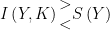
 and interpret and analyze the resulting model. Compare its behavior with the case analyzed in class.
 where m is the real per capita stock of money, k is the capital-labor ratio, and
  is the expected rate of inflation which is equal to the actual rate
  in the steady state.
 is the rate of inflation in (b) that maximizes steady state consumption per head. Would a higher rate of inflation lead to a higher or lower long-run capital-labor ratio?
![\dot{k}=sf\left( k \right)-nk-\left( 1-s \right)\left[ \dot{m}+nm+{{\pi }_{m}}m \right]{{p}_{m}}](https://s0.wp.com/latex.php?latex=%5Cdot%7Bk%7D%3Dsf%5Cleft%28+k+%5Cright%29-nk-%5Cleft%28+1-s+%5Cright%29%5Cleft%5B+%5Cdot%7Bm%7D%2Bnm%2B%7B%7B%5Cpi+%7D_%7Bm%7D%7Dm+%5Cright%5D%7B%7Bp%7D_%7Bm%7D%7D&bg=ffffff&fg=000&s=0&c=20201002)
![{{p}_{m}}m=L\left[ {{p}_{m}}m+k,{{\pi }_{m}},{f}'\left( k \right),f\left( k \right) \right]](https://s0.wp.com/latex.php?latex=%7B%7Bp%7D_%7Bm%7D%7Dm%3DL%5Cleft%5B+%7B%7Bp%7D_%7Bm%7D%7Dm%2Bk%2C%7B%7B%5Cpi+%7D_%7Bm%7D%7D%2C%7Bf%7D%27%5Cleft%28+k+%5Cright%29%2Cf%5Cleft%28+k+%5Cright%29+%5Cright%5D&bg=ffffff&fg=000&s=0&c=20201002)
 , that is that the government always vary its deficit to produce a constant rate of deflation
  (which would, of course, be an inflation if .)
![\dot{k}=\frac{sf\left( k \right)-nk-\left( 1-s \right)n\left( {{p}_{m}}m \right)}{\left[ 1+\left( 1-s \right)C \right]}](https://s0.wp.com/latex.php?latex=%5Cdot%7Bk%7D%3D%5Cfrac%7Bsf%5Cleft%28+k+%5Cright%29-nk-%5Cleft%28+1-s+%5Cright%29n%5Cleft%28+%7B%7Bp%7D_%7Bm%7D%7Dm+%5Cright%29%7D%7B%5Cleft%5B+1%2B%5Cleft%28+1-s+%5Cright%29C+%5Cright%5D%7D&bg=ffffff&fg=000&s=0&c=20201002)
![C={\left[ {{L}_{1}}+{{L}_{3}}{f}''+{{L}_{4}}{f}' \right]}/{\left( 1-{{L}_{1}} \right)}\;>0](https://s0.wp.com/latex.php?latex=C%3D%7B%5Cleft%5B+%7B%7BL%7D_%7B1%7D%7D%2B%7B%7BL%7D_%7B3%7D%7D%7Bf%7D%27%27%2B%7B%7BL%7D_%7B4%7D%7D%7Bf%7D%27+%5Cright%5D%7D%2F%7B%5Cleft%28+1-%7B%7BL%7D_%7B1%7D%7D+%5Cright%29%7D%5C%3B%3E0&bg=ffffff&fg=000&s=0&c=20201002)

 the same regardless of
  on the stable steady-state stock of capital?