Categories
Agricultural Economics Chicago Economists

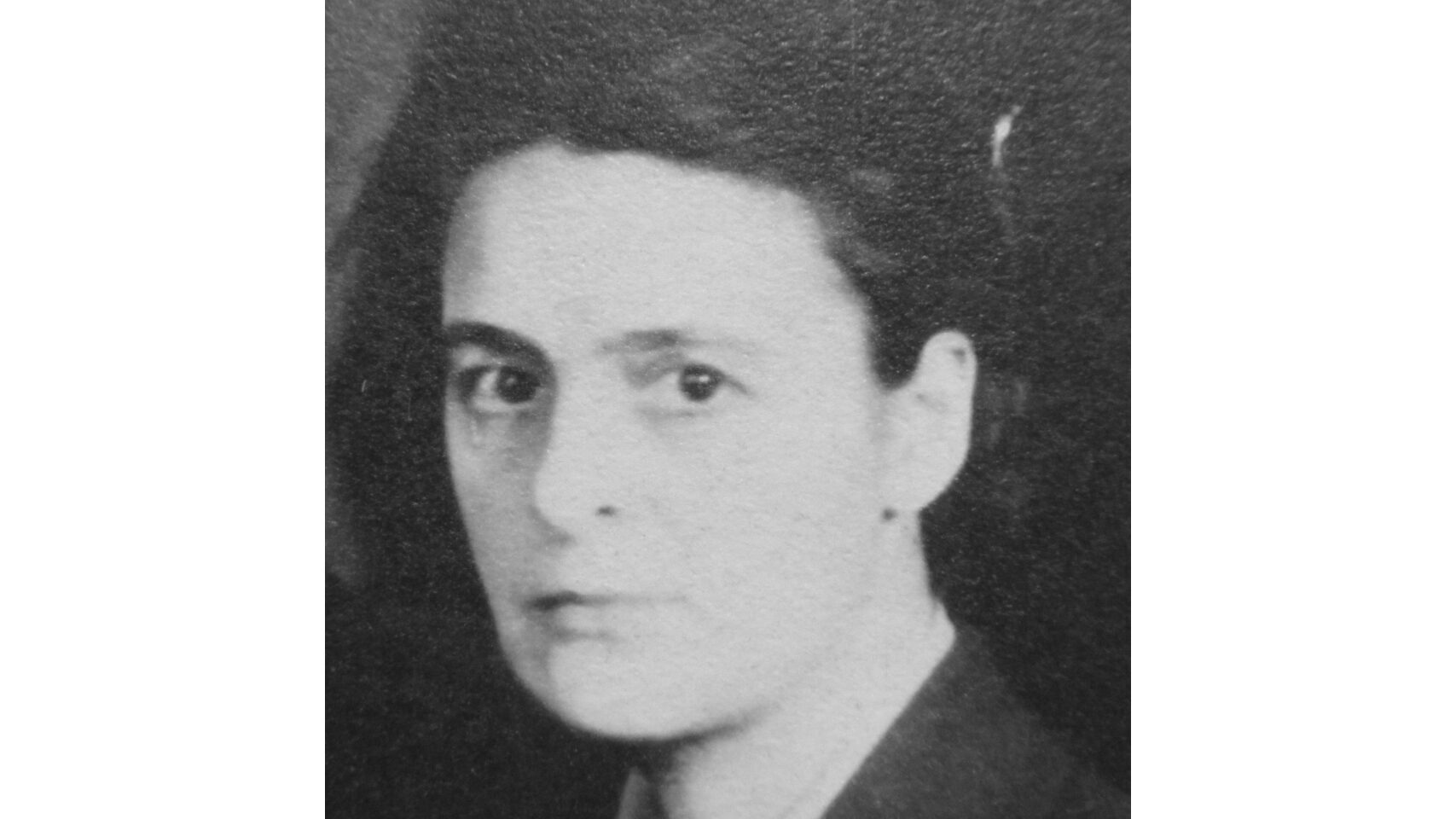
Chicago. Economics Ph.D. alumnus, Edwin Ferdinand Dummeier, 1926


From the University of Chicago economics department records we can assemble a fairly complete account of the process of earning a doctorate in economics for the agricultural economist Edwin F. Dummeier who entered the Chicago program with a year’s worth of graduate credit. Dummeier’s five quarters in Chicago (from Summer 1925 through Summer 1926) in residence seems to be a lower bound at a time when the official regulations had been changed to state that as a general rule three years residence in graduate studies were expected of Ph.D. degree candidates. 

It appears to me that Dummeier’s undergraduate degree at L.S.U. was the result of regular summer school attendance while teaching/administering during the regular school year. His collection of graduate credits from the Universities of California, Wisconsin, and Colorado also show a considerable portion of summer school credit. It is interesting to see that he could apparently be appointed the principal of a Louisiana high school without having a completed college education. 

________________________

Brief c.v. of Edwin Ferdinand Dummeier

1887, April 4. Born in Metropolis, Illinois.

1910-1917. Principal of Leesville, Louisiana High School

1917-1918. Principal of Minden High School, Webster Parish, Louisiana.

1918. A.B. Louisiana State University

1921. M.A. University of Colorado.

1921-23. Instructor in economics, Washington State College (Pullman, WA).

1923-1925. Assistant Professor, Washington State College (Pullman, WA).

1926. Ph.D. University of Chicago. Thesis: The marketing of Pacific coast fruits in Chicago.

1926-46. Professor of Economics, State College of Washington, Pullman, Wash.

1944, June 19. Married Binna Mason, school teacher

1946, June 17. Died in Salt Lake City, Utah.

Biggest publication:

Edwin F Dummeier and Richard Brooks Heflebower. Economics: with applications to agriculture. New York: McGraw-Hill, 1940.

________________________

Dummeier’s application for graduate credit towards an economics Ph.D. from Chicago

The University of Chicago
The Graduate School of Arts and Literature
Office of the Dean

August 19, 1925

Mr. J. A. Field
Faculty Exchange:

I enclose application for graduate credit from Mr. Edwin F. Dummeier who is a graduate student in residence this quarter. While he is doing most of his work in Commerce and Administration at present, he wishes to go into Political Economy, and so I am asking you to estimate the amount of credit in Pol. Econ. that ought to be given in majors and in quarters for the work he lists. Please return the certificates from the University of California and the University of Wisconsin.

Sincerely yours,
[signed]
G. J. Laing
Dean

GJL:M

________________________

Department will recognize three quarters of graduate work

August 29, 1925

Dean G. J. Laing
University of Chicago
Faculty Exchange

My dear Mr. Laing:

I enclose herewith application for graduate credit for Edwin F. Dummeier which I have certified as representing in my judgment the substantial equivalent of three quarters of graduate work in Political Economy.

Sincerely yours,

[unsigned copy, J.A. Field]

JAF:MLH
Enclosure

________________________

Dummeier proposing his examination fields and requesting departmental review of all his coursework to identify any further course requirements

5757 University Avenue, Chicago, Illinois,
January 21, 1926

Professor L.C. Marshall, Chairman,
Department of Political Economy
The University of Chicago.

Dear Sir:

Announcements from the Department of Political Economy to persons intending to become candidates for the Ph.D. degree state that “the candidate, subject to the advice and approval of the Department,” may choose his fields for specialization and written examination from designated lists. Other announcements of the University state that in the Graduate Schools of Arts, Literature and Science the courses to be offered must be “approved by the Deans of the Graduate Schools at least six months before the degree is conferred. The individual courses must receive the approval of the heads of the departments concerned.” It is also stated that the Department of Political Economy will ordinarily approve as an essential part of a student’s preparation for the degree a considerable amount of work in allied departments.”

In consideration of these announcements I am herby submitting the following statement of fields which, with the approval of the Department, I propose to designate as fields of specialization and examination: (1) General Economic Theory; (2) Market Structures and Functions, this being the thesis field; (3) The Pecuniary and Financial System; (4) Transportation and Communication.

Furthermore, I am submitting a list of courses in the past pursued and a statement of courses which I have taught, in order that the Department may take definite action of a character which will enable me to plan my work in the future with an assurance that all course requirements are being met.

My undergraduate work included courses in the principles of economics and accounting. It also included courses in history and political science.

Graduate work thus far completed and courses for which I am registered for this quarter are as follows:

Political Economy

At the University of Colorado, six quarters, 1919-1921
Money and Banking 24 weeks 2 hours per week
Taxation 36 weeks 2 hours per week
Socialism 24 weeks 2 hours per week
Immigration 6 weeks 5 hours per week
Business Organization 6 weeks 5 hours per week
Seminar in Economics 12 weeks 2 hours per week
Thesis, “Financing Public Education in Colorado,” 6 quarter hours credit.


At the University of California, summer 1923
Transportation, principles [& Hist. (Dixon)] 6 weeks 5 hours per week
Transportation, current problems 6 weeks 5 hours per week
Pacific Coast Rate Problems 6 weeks 5 hours per week


At the University of Wisconsin, summer 1924
The Classical Economists [Physiocrats thru J. S. Mill] 6 weeks 5 hours per week
Farmer Movements 6 weeks 5 hours per week
Statistics 6 weeks 7½ hours per week


At the University of Chicago, summer, spring, and winter Qtrs. 1925-26
Course No.
334 Money and Prices 1 major
388A Cooperative Marketing 1 major
388B Marketing Farm Products 1 major
301 Neoclassical Economics 1 major
345 Personnel Administration 1 major
386 Terminal Marketing Research 1 major
C & A. 375 Business Forecasting 1 major
335 Bus.Finance and Investment 1 major
499 Terminal Marketing Research 1 major


Sociology

At the University of Colorado, 1919-1921
Social Problems (poverty) 12 weeks 2 hours per week
Rural Sociology 12 weeks 2 hours per week
Psychological Sociology 6 weeks 5 hours per week
Social Viewpoints and Attitudes 6 weeks 5 hours per week
Criminology 12 weeks 2 hours per week


History

At the University of Colorado, 1919-1921
Colonization of North America 24 weeks 2 hours per week
The Westward Movement 6 weeks 5 hours per week


Education

At the University of Colorado, 1919-1921
History and Philosophy of Education 24 weeks 3 hours per week
Seminar in Education 24 weeks 2 hours per week


Political Science

At the University of Colorado, 1919-1921
Municipal Functions and Problems 12 weeks 3 hours per week
International Law 12 weeks 3 hours per week
World Govt. and Politics 6 weeks 5 hours per week
Political Parties and Party Problems 24 weeks 2 hours per week


Summary

Majors

Work in Political Economy at other institutions, certified by the Department of Political Economy of the University of Chicago as equivalent to…
Work in Political Economy at the University of Chicago… 9
Work in Sociology at other institutions, certified by the Dept. of Sociology of the Univ. of Chicago as equiv. to …
Work in History at other institutions, certified by the Dept. of History of the Univ. of Chicago as equiv. to…
Work in Education at other institutions, certified by the School of Education of the Univ. of Chicago as equiv. to… 2
Work in Pol. Science at other institutions, certified by the Dept. of Pol. Science of the Univ. of Chicago as equiv. to… 3
Total majors in Political Economy… 17½
Total majors in other subjects… 9
Grand Total… 26½


For the past four years I have been a member of the faculty of the Department of Economics of the State College of Washington, for the past three years with the rank of assistant professor of economics. During this time I have taught the following subjects, having given courses in all of these subjects several times: (1) Economic Geography; (2) Foreign Trade; (3) Railway Transportation; (4) Agricultural Economics; (5) Marketing Farm Products; (6) Co-operative Marketing of Farm Products; (7) Money and Banking; (8) Principles of Economics, elementary and intermediate courses.

For the spring quarter I am planning to register for Political Economy 303, Modern Tendencies in Economics, to continue the research work on my thesis subject, and if advised to do so to register for one additional course. I do not expect to be able to complete the thesis by the close of the spring quarter, but am trusting that I may be able to meet all course requirements and to complete the thesis and take the thesis examination before the close of the summer quarter.

It appears evident that my course requirements are dependent upon the amount of work in allied departments, consisting of courses already completed in other institutions, which will be approved by the Department as a part of the preparation for the degree. I am submitting this statement in the hope that I may have from the Department at an early date definite notification of the courses which I shall have yet to complete in fulfillment of the requirements for the degree.

Certified transcripts of records of courses completed at other institutions and of the valuations placed upon this work by the various departments of the University of Chicago, as enumerated in this communication, are on file in the office of the Deans of the Graduate Schools.

Respectfully yours,
[signed]
Edwin F. Dummeier

________________________

Dummeier proposing his doctoral thesis subject

5757 University Avenue, Chicago, Illinois,
January 21, 1926

Professor L.C. Marshall, Chairman,
Department of Political Economy
The University of Chicago.

Dear Sir:

I am hereby presenting for your approval the subject and a brief prospectus of the thesis which I propose later to submit in partial fulfillment of the requirements for the degree of Doctor of Philosophy in Political Economy. The subject of the proposed thesis is “The Marketing of Pacific Coast Fruits in Chicago”.

While the prospectus is designed to give some idea of the general nature of the proposed study, it does not indicate the degrees of relative intensity with which it is proposed to treat the various phases of the general subject. All phases will be treated to the extent of critically surveying the existing literature pertaining to them and making some supplementary field study. But the study as a whole will be based not on existing literature, but on original field observations and a study of commercial records. As an exhaustive study of all phases of proposed subject by these methods is beyond the capacity of any one individual it is proposed to investigate with much more detail some phases than others. The degree with which this specialization will be devoted to particular ones of the subheads listed in the outline will depend in part upon the degree of cooperation received from the trade and, therefore cannot be definitely stated in advance. Representative, however, as a phase of the general subject in regard to which there is at the present time only the most meager published information and which may be studied is the fruit and vegetable auction as a marketing institution. As the auction is mostly used in connection with the marketing of Pacific Coast products this would be a natural subdivision of the main subject.

The whole study has as its primary object the evaluation of existing methods in regard to these products as to their social efficiency and social significance.

Yours respectfully,
[signed]
E. F. Dummeier

Thesis
THE MARKETING OF PACIFIC COAST FRUITS IN CHICAGO

Chapter

  1. Introduction
    1. The importance of the study
    2. Method of treatment
      1. Emphasis on a few commodities, especially apples
      2. Emphasis on change and development in marketing methods
    3. Specific objectives
      1. Primary objective: To evaluate comparative merits of different methods of performing marketing services.
      2. Secondary objectives: To show the relation of Chicago to the producing areas; to describe physical facilities of the market and the physical movements of these products thru the market; to determine costs of marketing these products and reasons for these costs; to examine factors influencing demand and to examine trends of change and their causes.
  2. Chicago and the Regions of Supply
    1. Data on production, arrivals, and unloads at Chicago. Data on storage movements and reshipments from Chicago.
    2. The historical development of the industry, its present status, and its current trends.
  3. The Physical Facilities of the Market and Physical Commodity Movements
    1. Transportation services and facilities
    2. Wholesale receiving
    3. Auctions
    4. Peddlers
    5. Retailers
  4. Carload Distributors, Brokers, and Carload Receivers
    1. Numbers and classes of dealers
    2. Marketing services performed and trade practices
    3. Charges for services
  5.  Auctions
    1. Extent of movement thru auctions
    2. Auction methods
    3. Auction charges
  6. Jobbers and Shippers
    1. Numbers and classes of dealers
    2. Methods of buying and selling
    3. Margins and costs
  7.  Retailers
    1. Numbers and classes of dealers
    2. Methods of buying and selling
    3. Margins and costs
  8. Marketing Costs
    1. Critical consideration of marketing costs, especially of oranges and apples, on the basis of differences in marketing methods employed until time of sale to jobbers.
    2. Particular consideration of the desirability of selling at auction.
  9. Marketing Costs (Continued)
    1. Critical consideration of marketing costs subsequent to time of sale to jobbers
  10. Factors Influencing Demand
  11. Summary and General Conclusions

________________________

Department approves Dummeier’s thesis subject

January 27, 1926

Mr. E. F. Dummeier
5757 University Avenue
Chicago, Illinois

My dear Mr. Dummeier:

The Department of Political Economy accepts as your thesis subject “The Marketing of Pacific Coast Fruits in Chicago.”

It is our understanding that you will carry on work in connection with this thesis under Mr. Duddy.

Yours very sincerely,
[Unsigned copy, L.C. Marshall]

LCM:MLH

________________________

Department Head Marshall asks his colleague to double-check the Dummeier transcripts for possible feedback

The University of Chicago
Department of Political Economy
February 1, 1926

Mr. C. W. Wright
University of Chicago
Faculty Exchange

My dear Mr. Wright:

I enclose a letter from Mr. Dummeier. I have written him concerning the field “Transportation and Communication.” Perhaps you will wish to look over his statement of courses and credits to see if any action needs to be taken concerning them.

Yours very sincerely,
[signed]
L.C. Marshall

LCM:MLH
Enclosure

________________________

The University of Chicago
Department of Political Economy

Edwin F. Dummeier

A. B. University of Louisiana, 1918
A. M. University of Colorado, 1921

Summer Quarter, 1925

Pol Econ. 334 A
C & A 388 A
C & A 388B A

French and German Exams. Passed. Sept. 1, 1925

Grad. Work in other insti. September 1, 1925

University of Colorado
Soc. (Faris) 2½ majors
Residence credit 1 Quarter

Grad. work in other insti. September 3, 1925

University of Colorado
Pol. Econ. (Field) 5½ majors
Residence credit 2 Quarters


University of California and Wisconsin
Pol. Econ. (Field) 3 majors
Residence credit 1 Quarter


Autumn Quarter, 1925

Pol Econ. 301 A
C & A 313 [blank]
C & A 345 A
C & A 385 A
C & A 386 A


Grad. work in other insti. Jan 4, 1925

University of Colorado
Educ. (C.H. Judd) 2
Pol. Sci. (C.E. Merriam) 3
Residence Credit 1 Quarter
History (C.F. Huth) 1 ½
Residence Credit ½ Quarter

________________________

Department requests clarification regarding the proposed field “Transportation and Communication”

February 1, 1926

Mr. E. F. Dummeier
5757 University Avenue
Chicago, Illinois

My dear Mr. Dummeier:

It seems entirely probable that the Department will approve the four fields suggested in your letter of January 21st.

The Department has, however, asked me to secure from you a more detailed statement of your understanding of the territory that would be covered by the field “Transportation and Communication.”

Yours very sincerely,

[Unsigned: L. C. Marshall]

LCM:MLH

________________________

Schedule of written field examinations

February 2, 1926

Mr. E. F. Dummeier
5757 University Avenue
Chicago, Illinois

My dear Mr. Dummeier:

This is just to let you know that I have you scheduled to take the following examinations on the dates mentioned.

February 13, Economic Theory. 8:30 A.M.

February 20th, Pecuniary and Financial Systems, 8:30 A.M.

February 27th, Transportation and Communication 8:30 A.M.

The questions will be given out at Harper E 57. Please let me know at once if the above schedule is incorrect.

Yours very sincerely,
[Unsigned copy: Margaret McKugo]

MM:MLH

________________________

Dummeier clarifies his understanding of the field “Transportation and Communication”

5757 University Avenue, Chicago, Illinois,
February 4, 1926

Professor L.C. Marshall, Chairman,
Department of Political Economy
The University of Chicago.

Dear Sir:

In reply to your letter of February 1st I am hereby submitting the following as my understanding of the territory that would be covered by the field “Transportation and Communication”, which was proposed by me as one of my fields of specialization in my candidacy for the Ph.D. degree.

As to agencies, I understand the field to include all the agencies of land and water transportation. Major emphasis should, however, be placed upon railway transportation in the United States. Agencies supplying communication other than physical transportation would include the telephone and telegraph. As compared with railway transportation these are of less importance, and as they present relatively few distinctive problems they may be said to be somewhat incidental to the main field.

With regard to the above mentioned agencies consideration should be given to phenomena and problems of the character of those with which Political Economy in general concerns itself. These should include the following:

  1. The historical development of the various transportation agencies,
  2. The services performed and economic significance of the various agencies,
  3. Theories of rate making, particularly railway rates,
  4. Rate making practices and rate systems,
  5. Railroad finance,
  6. Sufficient knowledge of the technic of operation to be able to consider intelligently questions of public policy with regard to railroads and other transportation agencies,
  7. The economic and legal bases of the regulation of public carriers and the history of their public promotion and regulation,
  8. Various present day transportation problems in which the general public has an interest, such as valuation, consolidation, and government ownership or operation.

The above indicates the general scope and to some extent the relative emphasis of the constituent parts of the field of Transportation and Communication as a field of Political Economy as I understand it.

Most respectfully yours,
[signed]
Edwin F. Dummeier

________________________

Wright’s Response to Marshall’s Feb. 1, 1926 Inquiry

THE UNIVERSITY OF CHICAGO
The School of Commerce and Administration

Memorandum to Marshall from Wright
[no date, but probably early Feb. 1926]

After surveying Mr. Dummeier’s record of courses taken, it seems to me that in the four fields chosen he has not covered the following.

Theory: History of Theory. Only partly covered.

Unsettled Problems. He plans to take this in the Spring.

Marketing: Advertising. I am not certain as to this.

Transportation: Public Control of Railroads.

Of the specific general requirement he has covered Statistics and Accounting but not Economic History of the U.S. I gathered from the discussion at the Dept. meeting that the members of the Department would refuse to tell him specific courses that were required, though personally I do not consider this a reasonable attitude.

C.W.W.

________________________

Response of Department to Dummeier’s follow-up regarding his examination field “Transportation and Communication”

March 2, 1926

Mr. E. F. Dummeier
5737 University Avenue
Chicago, Illinois

My dear Mr. Dummeier:

I spoke to Mr. Wright and he told me that your recommendation had come before the Department, but he could not at this time give you a written statement concerning it. He is turning your letter over to Mr. Marshall who will write you as soon as he returns to the office.

Yours very sincerely,
[Unsigned copy: Margaret McKugo]

MM:MLH

________________________

Economics Department Record of Dummeier’s Written Ph.D. Examination Grades
(First attempt)

Winter Qr. 1926

E. F. Dummeier

Economic Theory

Viner — Pass Fair
Clark — B

Pec. And Fin. Sys.

Mints — Failed
Wright — C
Meech — Failed

Trans. & Com.

Clark — Passed
Sorrell — [Blank]
Duddy — Passed

________________________

Department’s decisions
regarding credits recognized
plus advice on “possible gaps”

March 16, 1926

Mr. E. F. Dummeier
5757 University Avenue
Chicago, Illinois

My dear Mr. Dummeier:

After examining your credits as officially certified by various departmental representatives it seems clear that you have met the general requirements as far as the total number of majors is concerned.

The only issues outstanding are these:

  1. There is a requirement that a candidate for the doctor’s degree shall have covered work in the Economic History of the United States. I am uncertain whether you have taken care of this requirement.
  2. You will, of course, need to be prepared to pass the examinations in four fields. As you know no specific courses are required in connection with these examinations. The candidate is expected to work up each field in a rather comprehensive way.

Certain questions arise in my mind with respect to these examinations. Have you prepared yourself in the field of Public Control of Railroads? Have you done so in the general field of Advertising? Have you done so in the History of Economic Thought? You will, I am sure, realize that these inquiries do not indicate the necessity of your taking specific courses in these territories. I mention them merely as possible gaps in your thinking in these fields.

Yours very sincerely,
[Unsigned copy: L. C. Marshall]

LCM:MLH

________________________

Dummeier informed that he passed two of his three written examinations
[Carbon copy]

March 24, 1926

Mr. E. F. Dummeier
5757 University Avenue
Chicago, Illinois

My dear Mr. Dummeier:

The final reports for the written examinations taken by you during the Winter Quarter, 1926 in partial satisfaction for the degree of Doctor of Philosophy are as follows:

Economic Theory — Passed

Pecuniary and Financial System — Failed

Transportation and Communication — Passed

Yours very sincerely,
[Unsigned copy: L. C. Marshall]

LCM:MLH

________________________

Economics Department Record of Dummeier’s Written Examination Grades
(Second attempt: Pecuniary and Financial Systems Field)

Pecuniary and Financial Systems

Mints — Pass
Cox — Pass

________________________

Dummeier told he successfully passes his third written examinations
[Carbon copy]

June 8, 1926

Mr. E. F. Dummeier
5757 University Avenue
Chicago, Illinois

My dear Mr. Dummeier:

I am pleased to report that you have passed the Pecuniary and Financial System examination, taken in the Spring Quarter, 1926, in partial satisfaction for the degree of Doctor of Philosophy.

Yours very sincerely,
[Unsigned copy: L. C. Marshall]

LCM:MLH

________________________

Dummeier’s Principal Advisor not in Chicago during the summer quarter (when the thesis is expected to be completed and submitted)

The University of Chicago
Local Community Research Committee
Address: Faculty Exchange. The University of Chicago

June 7, 1926

Mr. L.C. Marshall, Dean
Department of Political Economy
University of Chicago

Dear Mr. Marshall:

My absence during the Summer Quarter means that some one must supervise the students who have been working under me in community research. Mr. Dummeier, who plans to get his degree in Political Economy, is quite well along with his work and I should like to recommend that either Mr. Wright or Mr. Viner look after him. He is going to develop a section on price study and Viner would be a help there.

The other men, Davidson, Journey and Weaver, are planning to come up in Commerce and Administration, and I am making recommendations to Mr. Spencer to take care of them. In the case of all of these men, I shall want to read copies of their theses as they come in. Both Mr. Dummeier and Mr. Journey have their outlines fully developed and have begun to write.

Yours very truly,

[signed]
E.A. Duddy

EAD:JS

________________________

Department Head Marshall turns to Jacob Viner
for last-minute thesis advice

June 8, 1926

[Memorandum to:] Jacob Viner

[From:] L. C. Marshall

Mr. Dummeier has been working with Mr. Duddy, but Mr. Duddy is to be away this coming summer. I wonder if you would be willing to look after Mr. Dummeier’s work on the thesis since he is planning to develop a section on price study.

The matter is one upon which the Department needs to take action in view of the fact that Mr. Dummeier plans to take his degree in Political Economy.

LCM:MLH

_______________________

Viner “gratefully” accepts the “chore”

The University of Chicago
Department of Political Economy

June 10, 1926

Mr. L. C. Marshall
Faculty Exchange

My dear Mr. Marshall:

You may send on Mr. Dummeier to me. I will take over the job of supervision of his research during Mr. Duddy’s absence, inasmuch as I have been unable to think up a good excuse for evading the chore.

Gratefully yours,
[signed]
Jacob Viner

_______________________

Notification that Viner Will Serve as Substitute Research Supervisor

June 17, 1926

Mr. E. F. Dummeier
5757 University Avenue
Chicago, Illinois

My dear Mr. Dummeier:

I have had a note from Mr. Viner indicating his willingness to supervise your research in Mr. Duddy’s absence.

Yours very sincerely,
[Unsigned copy: L. C. Marshall]

LCM:MLH

________________________

Official Examination Notice for E. F. Dummeier
(with Prof. Meech’s scribbled note that he will be unable to attend)

________________________

COURSES PRESENTED BY EDWIN F. DUMMEIER
FOR THE DEGREE Ph.D. IN ECONOMICS
AT THE UNIVERSITY OF CHICAGO

Majors
Pol. Econ. 334 Money and Prices. Hardy 1
C & A 388 B Marketing Farm Products, Weld 1
C & A 388 A Cooperative Farm Marketing. Jesness 1
Pol. Econ. 301 Neo-Classical Economics. Viner 1
C & A 345. Personnel Administration. Stone 1
C & A 386 Terminal Marketing Research. Duddy 1
C & A 355 Business Finance and Investment. Meech 1
C & A 375 Business Forecasting. Cox 1
Pol. Econ. 499 Terminal Marketing Research Duddy 3
Pol. Econ. 499 Terminal Marketing Research. Viner 3
TOTAL 14

Graduate Work at Other Institutions

Economics
Transportation. Principles Univ. of Cal. Dixon
Transportation. Current Problem[s]. Univ. of Cal. Dixon
Pacific Coast Rate Problems. Univ. of Cal. Harraman
Farmer Movements. Univ. of Wis. Hibbard
The Classical Economists. Univ. of Wis. Scott
Statistics. Univ. of Wis. Lescohier
Money and Banking. Univ. of Colo. Ingram
Taxation. Univ. of Colo. Ingram
Immigration. Univ. of Colo. Ingram
Business Organization. Univ. of Colo. Ingram
Seminar in Economics. Univ. of Colo. Bushee
Thesis “Financing Public Education in Colorado.”
Total (Field)
Economics Total   22½


Education Total Judd 2
Sociology Total Faris
Political Science Total Merriam 3
History Total Huth
Grand Total   31½


________________________

Memo from Millis announcing/reminding about oral examination date
[Carbon copy]

The University of Chicago
The Department of Political Economy

August 17, 1926

Memorandum to:

N. W. Barnes [Associate Professor of Marketing]
P. A. Douglas [Associate Professor of Industrial Relations]
L. H. Grinstead [Visiting Assistant Professor from Ohio State University]
G. G. Huebner [Visiting Professor from the U. of Pennsylvania]
L. C. Sorrell [Assistant Professor of Transportation and Communication]
Jacob Viner [Professor of Political Economy]
C. W. Wright [Professor of Political Economy]

From: H. A. Millis

This is just to let you know that E. F. Dummeier will come up for his oral examination on Monday, August 23, at 3 o’clock in Harper E 57.

If it is impossible for you to be present will you please notify Miss McKugo in Harper E 57?

________________________

Memo from Millis announcing/reminding about oral examination date
[Carbon copy]

[Memorandum To:] L. S. Lyon [Visiting Professor from Robert Brookings Graduate School of Economics and Government]

[From: H. A. Millis]

August 18, 1926

This is just to let you know that E. F. Dummeier will come up for his oral examination on Monday, August 23, at 3 o’clock in Harper E 57.

If it is impossible for you to be present will you please notify Miss McKugo in Harper E 57?

________________________

A “Thank-you” to Marshall for his support
Note: Dunnmeier’s article on auctions apparently never published


The State College of Washington
Pullman, Washington
Department of Business Administration

December 28, 1926.

Professor Leon C. Marshall
Department of Economics
University of Chicago
Chicago, Illinois

Dear Professor Marshall:

I am enclosing herewith a review of Benton’s “Marketing of Farm Products” for the Journal of Political Economy. I had hoped to have gotten this review to you at an earlier date, but teaching duties have kept me so busy as to delay its completion somewhat longer than I anticipated.

Not long ago I received a letter from professor Duddy, in which he stated that you had spoken to him with regard to my writing an article for the Journal on the fruit auction as a marketing agency, the article to be based on my first hand research work in Chicago. I have started the preparation of such an article and hope to submit it within the very near future.

I have found on my return to my duties here that my year at the University of Chicago has been of very large benefit to me, and I continue to feel most grateful to you for your part in making that year possible.

Most cordially yours,
[signed]
E. F. Dummeier

EFD/EIB

Source:  University of Chicago Archives. Economics Department. Records & Addenda. Box 6, Folder 12.

Image: “Dummeier Rites Are Held Today,” Spokane Chronicle, June 18, 1946.

Categories
Economists Harvard

Harvard. Economics Transcript for Edward Hastings Chamberlin, 1922-1927

In the previous post we have the academic backstory found in Edward Hastings Chamberlin’s application to the economics graduate program at Harvard. This post provides the academic record of Chamberlin while a graduate student at Harvard. He entered Harvard with an M.A. degree in economics from the University of Michigan which probably is sufficient explanation for his seemingly light graduate coursework at Harvard.

Edward Hastings Chamberlin’s papers can be consulted at Duke University’s David M. Rubenstein Rare Book & Manuscript Library’s Economists’ Papers Archive. It is interesting to note that he seems to have audited Allyn Young’s Ec 15 course (which does not appear on his graduate transcript) since notes to that course are included in Chamberlin’s papers.

___________________________

Ph.D. in Economics Awarded 1927

Edward Hastings Chamberlin, S.B. (State Univ. of Iowa) 1920, A.M. (Univ. of Michigan) 1922, A.M. (Harvard Univ.) 1924.
Subject, Economics. Special Field, Economic Theory. Thesis, “The Theory of Monopolistic Competition.”
Instructor in Economics and Tutor in the Division of History, Government, and Economics, Harvard University.

Source: Harvard University. Report of the President of Harvard College, 1926-1927, p. 102.

___________________________

THE GRADUATE SCHOOL OF ARTS AND SCIENCES
Record of Edward Hastings Chamberlin

Years: 1922-23, 1923-24, 1924-25, 1925-26, 1926-27

[Previous] Degrees received. Where? When?

S.B. State Univ. of Iowa 1920
A.M. Univ. of Michigan 1922

First Registration: 25 Sept. 1922

1922-23

Grades
First Year Course

Half-Course

Economics 11

A

Economics 41

A-

Division: Economics
Scholarship, Fellowship:
Assistantship:
Austin Teaching Fellowship:
Instructorship:
Proctorship:
Degree attained at close of year:


1923-24

Grades
Second Year Course

Half-Course

Economics 14

inc./exc.

Economics 23

exc.

Government 6

exc.

Marketing Problems

85%

Passed General Exam. in Economics,
22 May 1924

Division:
Scholarship, Fellowship: Henry Lee Mem’l Fellow
Assistantship:
Austin Teaching Fellowship:
Instructorship:
Proctorship:
Degree attained at close of year: A.M.


1924-25

Grades
Third Year Course

Half-Course

Economics 20 (A.A.Y.)

Division:
Scholarship, Fellowship:
Assistantship:
Austin Teaching Fellowship:
Instructorship: in Economics
Proctorship:
Degree attained at close of year:


1925-26

Grades
Fourth Year Course

Half-Course

Economics 20 (A.A.Y.)

A

Division:
Scholarship, Fellowship:
Assistantship:
Austin Teaching Fellowship:
Instructorship: in Economics.

Tutor in the Div. of History, Government, and Economics

Proctorship:
Degree attained at close of year:


1926-27

Grades
Fifth Year Course

Half-Course

Economics 20 (A.A.Y.)

A

Division:
Scholarship, Fellowship:
Assistantship:
Austin Teaching Fellowship: $1500
Instructorship: in Economics.

Tutor in the Div. of History, Government, and Economics $1200.

Proctorship:
Degree attained at close of year: Ph.D.

Source: Harvard University Archives. Graduate School of Arts and Sciences. Record Cards of Students, 1895-1930, Burtt—Cook. Record Card of Edward Hastings Chamberlin.

___________________________

Course Names and Instructors

Pro-tip for linking course numbers to course names and instructors.

Harvard University, Faculty of Arts and Sciences. Course of instruction. 1879-2009.

1922-23

Economics 11. Economic Theory. Professor Frank W. Taussig

Economics 41. Statistical Theory and Analysis. Professors Allyn Abbott Young and Edmund Ezra Day

1923-24

Economics 14. History and Literature of Economics to the year 1848. Professor Charles Jesse Bullock

Economics 23. Modern Economic History since 1750. Assistant Professor Abbott Payson Usher

Government 6. History of Political Theory. Professor Charles Howard McIlwain.

Marketing Problems. [First Year, First Half course at the Graduate School of Business Administration]

1924-27.

Economic Research. Graduate students pursuing research may register in the following course, which has the same status as any of the other graduate courses in Economics. Such research will be under the direction of members of the Department, and may lie within any of the fields recognized as appropriate for candidates for the degree of Doctor of Philosophy.

Economics 20. Professors Taussig, Carver, Ripley, Gay, Bullock, Young, and Persons. Members of the Faculty of the Graduate School of Business Administration will also guide research lying within their respective fields

___________________________

Image Source: Faculty picture of Edward H. Chamberlin from the Harvard Class Album, 1932.

Categories
Economics Programs Economists Harvard Iowa Michigan Undergraduate

Harvard. Application for Admission to Economics Ph.D. Program. Edward H. Chamberlin, 1922


The archived student records of the Graduate School of Arts and Science at Harvard University provide us material needed to write a prequel to a Ph.D. economist’s professional biography. To illustrate the the richness of such material, I have transcribed Professor Edward Hasting Chamberlin’s application materials that he submitted to Harvard. Judging from a couple of issues of Iowa’s “The Hawkeye Yearbook”, it does appear that Edward Chamberlin was quite a Busy Man on Campus during his undergraduate years.

Pro-tip. More information about the faculties and courses of instruction during Chamberlin’s pre-Harvard  university days can be culled from the respective university catalogues archived at  hathitrust.org:

Catalogues of the State University of Iowa.
Catalogues of the University of Michigan.

Fun-fact: Edward H. Chamberlin played the role of Geoffrey Rawson in the production of Mrs. Bumpstead-Leigh performed May 12, 1920 at the Englert Theatre (joint production of the Erodelphian Literary Society and Irving Institute). The Hawkeye Yearbook, 1921.

_____________________________________

POLITICAL ECONOMY, SOCIOLOGY,
BUSINESS ADMINISTRATION

532 Thompson St.
Ann Arbor, Mich.
April 11, 1922.

Mr. George W. Robinson, Secretary
The Graduate School of Arts and Sciences,
Harvard University,
Cambridge, Mass.

Dear Sir:

Enclosed with this letter are transcripts of my work at the State University of Iowa and at the University of Michigan and my application for admission to candidacy for the degree of Doctor of Philosophy in Economics at Harvard University. Under separate cover I am making marked copies of the University of Michigan and the State University of Iowa. In some cases the catalogues do not indicate the work taken on account of changes. In these instances I have tried to duplicate the needed information in the margins.

I am making my application early so that I may know in advance as much as possible about the work I must take for my degree I presume that individual courses are not settled upon until after a conference. I shall be glad if I may know this spring how much credit will be allowed me for previous work, how much additional coursework will be required, and in what general branches.

Very truly yours,
[signed]
Edward H. Chamberlin

*  *  *  *  *  *  *  *  *  *  *  *

THE GRADUATE SCHOOL OF
ARTS AND SCIENCES

APPLICATION FOR ADMISSION TO CANDIDACY FOR A DEGREE IN ARTS OR PHILOSOPHY

NAME:  E. H. Chamberlin

DATE   April 1922

DEGREE APPLIED FOR Ph.D.

SUBJECT Economics

COLLEGE State U. of Iowa and U. of Mich.

REMARKS

B, except for French

25 Apr. 1923: French O.K.

*  *  *  *  *  *  *  *  *  *  *  *

HARVARD UNIVERSITY
THE GRADUATE SCHOOL OF ARTS AND SCIENCES

Application for Admission to Candidacy for a Degree in Arts or Philosophy

[Note: Chamberlin’s responses in his application have been highlighted using boldface.]

Return this application, with certificates of other evidences of scholarship and character, to the Secretary of the Graduate School of Arts and Sciences, No. 24 University Hall, Cambridge, Mass.

Applications for the degree of Master of Arts or Doctor of Philosophy will be received as late as the fifteenth day of January of the academic year in which the degree is to be taken; but candidates are urged to file their applications at the beginning of the year or ealirer, so that they may receive timely advice with reference to the work that will be expected of them for the degree.

The application should be accompanied by a Recorder’s or Registrar’s certificate of the applicant’s college or university work, and also, if possible, by a college catalogue or catalogues in which the studies he has taken are clearly marked. Final admission to candidacy for a degree is always conditional upon satisfactory official certification of the facts stated in the application.

Applications for the degree of Doctor of Philosophy should be filed, if possible, at the beginning of a student’s Graduate work for the degree.

An applicant for the degree of Master of Arts, who wishes to take later the degree of Doctor of Philosophy, should state the fact in his application for the Master’s degree, which will then be considered with reference to both degrees.

  1. Full name. Edward Hastings Chamberlin
  2. Post-office address. (Give prompt notice to the Secretary of the Graduate School of Arts and Sciences of any change.). 532 Thompson St., Ann Arbor, Mich.
  3. Date and place of birth. La Conner, Wash. May 18, 1899.
  4. High schools or other preparatory schools attended, and periods of attendance. Iowa City (Iowa) High School. 4 years
  5. Colleges and universities attended and periods of attendance. What course did you take (classical, literary, scientific, etc.)? Univ. of Iowa. 1916-1920. Commerce; Univ. of Michigan. graduate. 1920-1922.
  6. If you are an undergraduate, state: (a) What degree you expect, and when. [left deliberately blank]. (b) Rank or average standing in class [left deliberately blank]
  7. If you have received a degree, state what degree, from what college, and when. B.S. in Commerce, Univ. of Iowa, June, 1920; M.A. University of Michigan, June, 1922.
  8. If you have been a Graduate student at any college or university, state where, when, and in what subjects. State University of Iowa, summer sessions 1920 and 1921. Income Tax. Pol. Science; Univ. of Michigan 1920-1921, 1921-1922, Economics, Philosophy.  and name your principal teachers in those subjects. Iowa. Prof. R. A. Stevenson [Associate Professor of Accounting, Russell Alger Stevenson, B.A. Michigan, 1913; M.A. Iowa, 1915; Ph.D. Michigan, 1918], Prof. Jacob Van der Zee [Assistant Professor of Political Science Jacob Van der Zee, B.A. Iowa, 1905; B.A. Oxford, 1908; M.A. 1913; LL.B. Iowa, 1913]; Michigan, Prof. F. M. Taylor [Professor of Political Economy and Finance Fred Manville Taylor, Ph.D.], Prof. I. L. Sharfman [Professor of Economics Isaiah Leo Sharfman, A.B., LL.B.], Dean Alfred H. Lloyd [Professor of Philosophy and Dean of the Graduate School Alfred Henry Lloyd, Ph.D.].
  9. Honors or other evidences of high scholarship awarded to you. Phi Beta Kappa. Beta Gamma Sigma.
  10. For what degree (or degrees) do you wish to be a candidate, and when? Doctor of Philosophy in Economics, September 1922.
  11. Of the following branches, underscore once those which you have studied in college, and [mark with an asterisk (*)] those in which you have done advanced work. This information should be supplemented by a carefully marked and annotated catalogue or calendar.
Hebrew Government Physics
Sanskrit *Economics Chemistry
Greek Sociology Botany
Latin *Philosophy Zoölogy
English Composition Education Geology
English Literature Fine Arts Physiography
German Architecture Mineralogy
French Music Mining
Italian Mathematics Anthropology
Spanish Astronomy Subjects not classified above.
History Engineering Psychology
Journalism
  1. (a) State which of the languages named below you have studied, and how long in each case. German 1 1/2 yrs. high school; 2 yrs. Univ.  French [deliberately blank], Greek [deliberately blank], Latin 2 years high school. Any modern foreign language other than German and French. Spanish.  (b) Do you know German and French well enough to be able to consult works on your subject in these languages? German-yes; French-no.
  2. In what subject do you wish to be considered as a candidate for a degree? State in detail your previous work in this subject.

Economics

Industrial History
4 sem. hrs.
Intro. to Econ. Theory
6 sem. hrs.
Research in Accounting
2 sem. hrs.
Commercial Geography
4 sem. hrs.
Cost Accounting
4 sem. hrs.
Railroads
3 sem. hrs.
Prin. of Economics
6 sem. hrs.
Public Utility Accounting
2 sem. hrs.
Essentials of Ec. Theory (continued)
2 sem. hrs.
Prin. of Accounting
6 sem. hrs.
Income Tax
2 sem. hrs.
 

*The course in Ec. statistics had nothing to do with statistics but dealt with the nature of income and sundry other subjects.


Business Efficiency
4 sem. hrs.
Essentials of Econ. Theory
2 sem. hrs.
Corporation Finance
4 sem. hrs.
Commercial Law
4 sem. hrs.
Banking
2.6 sem. hrs.
*Economic Statistics
4 sem. hrs.
Problems of Peace and Reconstruction
1.3 sem. hrs.
Studies in Econ. Theory
(History of Econ. Thought)
2 sem. hrs.
Industrial History
4 sem. hrs.
Intro. to Econ. Theory
6 sem. hrs.
  1. Present occupation. (State definitely.) Instructor in Economics, University of Michigan.
  2. If you are, or have been a teacher, what positions have you held? at what institutions? in what subjects? and during what periods of time? Instructor, University of Michigan (1920.-1921; 1921-1922) and University of Iowa (Summer Session 1921); Economics and Accounting—Sept. 1920 to June 1922.
  3. From whom can information as to your previous work be obtained? Prof. F. M. Taylor [Professor of Political Economy and Finance Fred Manville Taylor, Ph.D.], and Prof. I. L. Sharfman [Professor of Economics Isaiah Leo Sharfman, A.B., LL.B.], Ann Arbor, Mich.; Prof. F. H. Knight [Associate Professor of Economics Frank Hyneman Knight, B.S. Tennessee, 1913; A.M. 1913; Ph.D. Cornell, 1916], University of Iowa, Iowa City, Iowa.
  4. List of printed and written documents submitted with this application. Catalogue, University of Michigan—separate cover; Catalogue, University of Iowa—separate cover; Certified record of courses pursued from Iowa and Michigan

Signature. [signed] Edward H. Chamberlin
Place of writing this application. Ann Arbor, Michigan.
Date. April 11, 1922

*  *  *  *  *  *  *  *  *  *  *  *

THE STATE UNIVERSITY OF IOWA
IOWA CITY

TRANSCRIPT OF RECORD

of Edw. Hastings Chamberlin
College Liberal Arts

Secondary Credits Accepted from Iowa City, Iowa

Units

Latin

2

French
German

English

4

History—Gv.—Econ.

2

Algebra

P. & S. [Plane & Solid] Geometry

Science

2

Draw.

2

16

Entrance conditions: none

Degree B.S.C. Conferred [date] 6-15-20

This is a true statement of the credit earned by Edw. Hastings Chamberlin in the college of Liberal Arts of the State University of Iowa.

[signed] [?Signature illegible], Asst Registrar
Date 7/31/20

1916-17

Cat No

Subjects 1st Sem 2nd Sem
Hrs Gr Hrs

Gr

Drill

excused

½

B

Phy Training

excused

½

Cr

Fresh. Sect.

1

C

1, 2 Eng. (Rhet.)

2

A 2

B

13, 14 German (Interm.)

5

C 5

C

5 Math. (Trig. Alg.)

5

A

3 Econ (Ind.Hist.)

4

B

4 Econ. (Com. Geog.)

4

B

6 Math. (An. Geom.)

5

A

1917-18

Cat No

Subjects 1st Sem 2nd Sem
Hrs Gr Hrs

Gr

Drill

.5

Cr .5

Cr

1 Econ (Prin.)

1(2)

3

B 3

C

7 Econ. (Elem.Acc.) 7(8)

3

A 3

A

21 Eng. (Lit.) 21(22)

3

B 3

B

51 Spanish (Elem.)

51(52)

5

A 5

A

179 Eng. (Editing) 179

2

C

Phy. Tr.

.5

C

1918-19

Cat No

Subjects 1st Sem 2nd Sem
Hrs Gr Hrs

Gr

Psych. (Elem.)

1,2

2

B 2

B

Span. (2d yr.) 54,55

2

A 2

A

Econ. (Efficiency) 167,168

2

B 2

A

Econ. (Corp. Finance) 143,144

2

B 2

B

Econ. (Banking) 165,166

1.3

B 1.3

A

Econ. (Prob. Peace & Recon.)

50

1.3

C

Officers’ Training Course, Fort Sheridan, Ill. 6 s.h.
Service in the U.S. Army 7-18-18 to 1-15-19 10 s.h.
1238

1254

10-11-19

1919-20

Cat No Subjects Fall Winter Spring
Hrs Gr Gr Gr Hrs Gr
Com. (Intro. Econ. Theory) 135

2

A 2 A 2

A

Com. (Cost Account) 131

2

B 2 A

Com. (Com. Law) 189

1.3

B 1.3 B 1.3

A

Math. (2d yr. L.A. Math) 3

2.7

A 2.7 A 2.7

A

Com. (Pub. Ut. Acc’t) 132

2

A


Summer Session 1920

Cat No

Subjects July
Hrs

Gr

Econ VI

2

A

*  *  *  *  *  *  *  *  *  *  *  *

Summer Session 1921

Cat No

Subjects August
Hrs

Gr

Pol Sci 11S

1.6

P

Pol Sci 117S

.4

P

[Summer Session 1921 from a card from the State University of Iowa, Iowa City. Registrar: H. C. Dorcass [University Examiner and Registrar Herbert Clifford Dorcas, B. Ph. Iowa, 1895; M.A. Columbia, 1903] 9/19/21]

*  *  *  *  *  *  *  *  *  *  *  *

UNIVERSITY OF MICHIGAN
ANN ARBOR

GRADUATE SCHOOL
OFFICE OF THE DEAN
[Transcript of courses taken
by Edward H. Chamberlin]

April 7, 1922.

TO WHOM IT MAY CONCERN:

This is to certify that Mr. Edward H. Chamberlin, B.S. in Commerce, University of Iowa, was admitted to this Graduate School in the fall of 1920 as a candidate for the Master’s degree. During his residence in the School, Mr. Chamberlin has pursued the following courses:

First Semester, 1920-21

Course

No. Credit

Grade

Economics

8 2 hrs. B
Economics 13d 2 hrs.

A

Economics

17 1 hr. A

Second Semester, 1920-21

Economics

7 2 hrs. A
Economics 8a 2 hrs.

B

Economics

18 1 hr. A

First Semester, 1921-21

Philosophy

9a 3 hrs. A
Economics 6 3 hrs.

A

German

*9c —— B

Second Semester, 1921-22

Economics

8 2 hrs. Now taking.
Philosophy 9b 3 hrs.

Now taking.

German

*10c —— Now taking.

A=Excellent, B=Good, C=No graduate credit,  *Undergraduate course

Mr. Chamberlin was granted credit towards the Master’s degree at this University for graduate work done at the State University of Iowa. Upon the satisfactory completion of the work now being pursued, the degree of Master of Arts will be conferred upon Mr. Chamberlin in June, 1922.

[signed] Alfred H. Lloyd
Dean, Graduate School.

*  *  *  *  *  *  *  *  *  *  *  *

Carbon Copy of Reply to Chamberlin’s Application of 11 April 1922

13 April 1922

My dear Sir:

Your application for admission to the Graduate School of Arts and Sciences as a candidate for a higher degree has been received and examined. The obvious difficulty in your case is your deficiency in French. I accordingly advise you to devote as much time as possible to work in this language between now and next fall. In the meantime you will do well to look over the scheme of subjects from which selections are made, in preparation for the general or preliminary examination for the doctorate, and at the beginning of the year you should consult Professor Charles H. Haskins, Dean of the Graduate School of Arts and Sciences, as to the arrangement of your work. i see no specific deficiency in your preparation other than the French, and I see no reason to doubt that you can arrange a satisfactory plan of work for the doctorate in consultation with Dean Haskins and with the Department of Economics. It is impossible at present to make any very definite estimate of the length of time that your work would require. I should suppose that you ought to plan for two solid years at least, with the idea that if your work is not completed by the end of that time you may perhaps be able to finish up your thesis in absentia, and then to come back for your final examination. If a part of your time during either of the two years is devoted to work as assistant or instructor, at least a  third year in residence would presumably be necessary.

Very truly yours,
[Carbon copy unsigned]

Edward H. Chamberlin

Source: Harvard University Archives. GSAS student folders (UAV161.201.10), Box 117, Folder: E. H. Chamberlin.

Image: Edward Chamberlin. University of Iowa. The Hawkeye 1920, p. 37.


Categories
Barnard Columbia Economist Market Economists

Columbia. Early Industrial Organization. Career of Arthur Robert Burns, husband of Eveline M. Burns

In the previous post we encountered social security pioneer Eveline Mabel Burns née Richardson at the point in her career when the Columbia University economics department signaled a definitive end to any hopes for promotion from the rank of lecturer to a tenure track assistant professorship in economics for her with them. In this post we follow the parallel case of her economist husband, Arthur Robert Burns (and no, not the Arthur F. Burns of Burns-Mitchell fame!), who cleared the promotion to assistant professor hurdle at Columbia relatively easily, but was stuck at that rank for nine years, in spite of repeated proposals by the department to promote him sooner.

The heart of this post can be found in the exchange between the  Arthur Robert Burns and then economics department head R. M. Haig in November 1941. Biographical and career backstories for Arthur R. Burns through 1945 can be found in excerpts posted below from budgetary proposals submitted by the economics department over the years. Burns was seen as a pillar of Columbia University’s Industrial Organization field at that time and remained at Columbia through his retirement (ca. 1965) while his wife took up a professorship in Social Work.

____________________________

From: Seligman’s 1929-30 budget recommendation to President Butler (December 1, 1928)

“During [Clara Eliot’s] absence [from Barnard College)  Mr. A. R. Burns has been acting as substitute. In our judgment he has been a valuable addition to the staff, and we recommend that he be reappointed as instructor. In Miss Eliot’s absence the course in statistics has been reduced from two semesters to one. There is a distinct demand for an additional course, though it would be on a different basis from formerly, and our proposal is that Miss Eliot be appointed solely to give two three-point courses in statistics, conducting a statistical laboratory as part of this work. This would relieve Mr. Burns from the course in statistics, and enable him to offer a new course of a somewhat more theoretical character than any now given at Barnard, on “the price-system and the organization of society”, a course which would distinctly help to round out the present offerings in Economics”.

Source: Columbia University Libraries, Manuscript Collections. Department of Economics Collection, Box 3 “Budget, 1915-1946/1947”, Folder “Department of Economics Budgets, 1915-1934 (a few minor gaps)”.

____________________________

Biographical and professional background through 1930-31
of Arthur R. Burns

…Arthur R. Burns was born in London, in 1895. He served in the army from September, 1914, to April, 1917, when he was discharged as no longer fit because of wounds. He entered the London School of Economics at once, took his B.Sc. degree with honors in 1920, taught economics in King’s College for women (University of London) for four years, and took his doctor’s degree in 1926. The award of Laura Spelman Rockefeller Memorial Fellowships brought Dr. Burns and his wife to this country, where they traveled somewhat widely for two years, studied competitive conditions in industries characterized by large business units, and where they were induced to stay by Columbia.

Dr. Burns has now been a lecturer in economics at Barnard College for three years. Members of our department have thus had an opportunity to become well acquainted with his quality. We think that he is by native ability, temperament and training an investigator, and that, given such opportunities as the graduate department affords, he will make significant contributions to economic science. His publications include several technical papers and two books: Money and Monetary Policy in Early Times, 1926, (a learned treatise on the origin and early history of coinage and monetary practices), and The Economic World, 1927 (written in collaboration with Mrs. Burns).

Source: Letter outlining plans for the future development of the economics department by Wesley C. Mitchell to President Butler. January 16, 1931. In Columbia University Archives. Central Files 1890-, Box 667, Folder 34 “Mitchell, Wesley Clair, 10/1930 – 6/1931”. Carbon copy also in Department of Economics Collection, Box 3 “Budget, 1915-1946/1947”, Folder “Department of Economics Budgets, 1915-1934 (a few minor gaps)”.

____________________________

Department recommends promotion to Associate Professorship
already in 1937-38
[Note: actual promotion only occurred Apr. 3, 1944]

[…] I would make the following budgetary recommendations for the coming academic year [1937-1938]:

(1) That the salary of Assistant Professor Arthur R. Burns be advanced from $3,600 to $4,000. In the opinion of his colleagues Mr. Burns is an indispensable member of our group whose scholarly competence and accomplishments entitle him to recognition far beyond that yet accorded him by the University. At the earliest possible moment he should be advanced to an Associate Professorship.”

[…]

Source: Columbia University Libraries, Manuscript Collections. Department of Economics Collection, Box 3 “Budget, 1915-1946/1947”, Folder “Economics Budget, 1937-1938”.

____________________________

Department again recommends promotion to Associate Professorship
[Note: Burns was given the salary increase this time]

[…] I would respectfully make the following budgetary recommendations for the coming academic year [1938-1939]:

(1) That the salary of Assistant Professor Arthur R. Burns be advanced from $3,600 to $4,000. In the opinion of his colleagues Mr. Burns is an indispensable member of our group whose scholarly competence and accomplishments entitle him to recognition far beyond that yet accorded him by the University. At the earliest possible moment he should be advanced to an Associate Professorship.”

[…]

Source: Columbia University Libraries, Manuscript Collections. Department of Economics Collection, Box 3 “Budget, 1915-1946/1947”, Folder “Economics Budget, 1938-1939”.

____________________________

Department then begins unsuccessfully to push for an increase in salary with a promotion to Full Professorship
[Nov. 28, 1938]

[…] I respectfully recommend budgetary changes for the coming academic year 1939-1940, involving increase of compensation to the following members of the staff:

[…]

3. Arthur R. Burns from $4,000 to $4,500;

[…]

[Assistant] Professor Arthur R. Burns has established himself as an authority in his chosen field, and it is the desire of his colleagues that he be advanced to a full professorship as rapidly as university resources will allow. His tenure has already been long, and his advancement slow. It is our thought that he be given current recognition and enccouragement, with hope of promotion to rank commesurate with his repute among economists.”

[…]

Source: Columbia University Libraries, Manuscript Collections. Department of Economics Collection, Box 3 “Budget, 1915-1946/1947”, Folder “Economics Budget, “Economics Budget 1938-1939”. [note: incorrectly filed!]

____________________________

Requesting unpaid leave for a Twentieth Century Fund project

March 1, 1939

Nicholas Murray Butler, LL.D.
President of Columbia University

Dear President Butler:

Professor Arthur R. Burns has been invited to take the directorship of a study of the public utility industry, under the auspices of the Twentieth Century Fund. We of the Department think it wise that he do this and recommend that he be granted leave of absence without pay for the academic year 1939-40. I shall be prepared before long to make recommendation of some outstanding person to serve as a partial substitute for Professor Burns during the coming academic year with a stipend which will absorb approximately three-fifths of Professor Burns’ current compensation.

Very sincerely yours,

Executive Officer
Department of Economics

Source: Columbia University Libraries, Manuscript Collections. Department of Economics Collection, Box 3 “Budget, 1915-1946/1947”, Folder “Economics Budget, 1939-1940”.

____________________________

Department repeats its recommendation for an increase in salary with a promotion to Full Professorship
[Nov. 18, 1939]

[…] I respectfully make the following recommendations affecting the budget of 1940-41:

[…]

6. That Assistant Professor Arthur R. Burns be granted added compensation of $500 [i.e. from $4,000 to $4,500].

[…]

[Assistant] Professor Arthur R. Burns has served a long apprenticeship with subordinate rank in the Department. At the moment, either from the standpoint of scholarly attainment or from that of efficiency in graduate instruction he suffers not at all by comparison with the best endowed and most effective of his colleagues. Because of his merits and of the importance of the field he covers, he should be advanced rapidly to full professorial status.

[…]

Source: Columbia University Libraries, Manuscript Collections. Department of Economics Collection, Box 3 “Budget, 1915-1946/1947”, Folder “Economics Budget, 1939-1940” [note: incorrectly filed!]

____________________________

Department repeats its recommendation for an increase in salary reducing  promotion to Associate Professorship
[October 27, 1941]

MEMORANDUM
Department of Economics
October 27, 1941

[…]

Arthur R. Burns. Proposed: Advancement–assistant professor to associate professor.
Present salary $4,500
Proposed salary. $5,000

[…]


Source: Columbia University Libraries, Manuscript Collections. Department of Economics Collection, Box 3 “Budget, 1915-1946/1947”, Folder “Budget Material from July 1941-June 1942”.

____________________________

Arthur R. Burns demands promotion to the rank of professor

3206, Que Street, N.W.,
Washington, D.C.

November 1st 1941.

Dear Professor Haig,

As I shall not be in New York this year to talk about the departmental plans for next year I must write. It seems to me that the question of my status in the department now calls for definitive action. Doubtless the unsettled times will be advanced as a reason for postponing promotion. At the outset, therefore, I wish to emphasise that I should regard any such attitude as entirely unfair. If the University is to go through hard times (as well it may) its misfortunes should be shared equitably among all the members of the faculty. To be frank, I feel that I have already been asked to bear an altogether unreasonable share of such financial stringencies as the University may have suffered. There have been many occasions in the past thirteen years on which I have been told that my promotion has been recommended (and more in which I have been told that it would have been recommended) but that no action has been taken for general financial reasons. I fully expect to bear my share of the burden of contemporary events but I feel that the time has come for my position to be given special consideration irrespective of those events, no matter how serious.

Various reasons have been given to me during my thirteen years of service to the University for its failure to promote me. But I think I am justified in believing that there has been less than the usual amount of criticism of my scholarship or my teaching capacity. The number of my students who have progressed in the outside world (sometimes already beyond my own rank and salary) indicates that I have been reasonably effective. Furthermore, I think that you will find that in recent years there has been an increasing number of graduate students coming to Columbia to work with me.

I now ask you, therefore, to have my academic status reviewed, whether or not the University wishes on principle again to avoid promotions. And after this long delay promotion only to an associate professorship will not, in my opinion, be compatible with my professional reputation and status. For six or seven years now my recognition outside the University has been widely at variance with my academic rank. My salary as Director of Research for the Twentieth Century Fund was $10,000 per annum. I have recently been invited to join the Anti Trust Division of the Department of Justice at a salary of $8,000 per annum. I am now the Supervisor of Civilian Allocation in the Office of Production Management. I suggest that this evidence justifies promotion to a full professorship. If economies are necessary, I am ready, as I have said, to accept them on the same basis as my colleagues.

I have written to you with complete frankness because I have been keenly disappointed with the disposal of suggestions for my promotion and I am anxious that you shall be clearly informed as to my feelings. I gather that for a number of years now there has been no serious objection but also no vigorous effort in my behalf. I now feel that if after all these long delays Columbia is unwilling to take special action to recognize my professional status I had better know before I am much older. I am now forty six years of age and if I must seek academic recognition elsewhere I must obviously begin to take the necessary steps without delay. I would of course prefer to stay with Columbia. I think you will agree that these long years of patient waiting are evidence of my loyalty but I think you will also agree that I cannot continue much longer to accept the present wide discrepancy between my status inside and outside the University.

Very sincerely yours,

[signed]

Arthur R. Burns

Professor Robert Murray Haig,
Chairman,
Department of Economics,
Fayerweather Hall,
Columbia University,
NEW YORK CITY

Source: Columbia University Libraries, Manuscript Collections. Department of Economics Collection. Box 2: “Faculty”,  Folder: “Faculty Appointments”.

____________________________

Department responds to Burns’ demands:
Associate professorship when your rejoin the faculty

November 22, 1941

Professor Arthur R. Burns
3206 Que Street, N.W.,
Washington, D.C.

Dear Professor Burns:

Last night our group met at dinner to consider the budget. This afforded an opportunity to comply with your request that your academic status be reviewed. I wish you could have listened to the discussion that took place. It was highly friendly and appreciative in tone, but at the same time it was pervaded by a deep sense of responsibility for the ultimate objectives for which we are striving. I am sure that it would have impressed you, as it did me, with the essential soundness of the policy of placing heavy dependence upon the deliberate, critical judgment of one’s colleagues in considering questions of promotion.

Your letter of November 1st, which I read to the brethren in full, arrived at a time peculiarly unfavorable for the consideration of finalities and ultimatums. Moreover, I regret to have to report some of the statements and implications of that letter were not altogether fortunate in the reactions they inspired. Let me elaborate on this last statement first.

(1) You state that you gather that in the past there has been “no vigorous effort” in your behalf. I can speak with full knowledge only regarding last year. If the implication is that your failure to secure more adequate recognition is ascribable to lack of vigor on the part of your colleagues as a group, or of the chairman of the Department in particular, I wish to state that I know it to be untrue with respect to last year and have reason to believe it to be untrue of several previous years. As a matter of fact, last year as the program moved forward from the Faculty Committee on Instruction, the recommendation for your promotion was placed at the very top above all others in the Faculty of Political Science. Until the very end, when the Trustees at their March meeting ruthlessly scuttled the program, I had high hopes that the effort would be successful. The only budgetary changes last year in this entire Department of 32 members were a) a $300 increase for which the College authorities had obligated themselves to secure for Barger and b) the temporary allocation of $600 to Wald for one year only from a sabbatical “windfall”.

(2) The citation of the salaries and fees you have been able to command in the government service and in the service of private research organizations as evidence that “justifies promotion to a full professorship” does not greatly impress your colleagues. We rejoice in the recognition and rewards that have come to you in return for your efforts while on leave of absence from your post at Columbia. Certainly the work of the Department has been carried on under a distinct handicap when your courses haven manned by part-time substitutes and we should like to believe that the sacrifices involved had borne rich fruits in professional and material rewards to you personally as well as to the general cause of science. However, you will readily agree, I take it, that our promotion and salary policy cannot be based on the principle you seem to suggest, viz., that the University must be prepared to match, dollar for dollar, the potential earning power of the staff on outside jobs. The rate of compensation for such outside work is, to my certain knowledge, likely to run over four or five times the rate of University compensation. Indeed, I can think of many of our colleagues who, on the basis of such a principle, could cite evidence even more convincing than your own.

(3) In the next place your letter seems to imply an understanding of the nature of the University connection that is not in complete harmony with our own. While it may be the policy elsewhere that mere length of service by a person who joins the staff at an early age, even though that service be reasonably effective and untouched by unfavorable criticism, carries assurance of promotion to the highest rank, this is definitely not the policy at Columbia University. Theoretically, at least, the University retains complete freedom of action to withhold advancement subject to a continuing critical appraisal of the individual’s value to the institution, against the background of changing circumstances, among which the University’s ability to supply funds must be listed near the top. Everyone is continually on trial to the very end of his career. This is evidenced in the practice regarding early retirement, the working of which I have recently had an opportunity to observe. Assurance regarding stability of tenure at a given level is a different point and mere humanitarian considerations are given generous weight. However, fundamentally the University connection is to be regarded as an opportunity (an opportunity, incidentally, of which you, in the opinion of your colleagues have, on the whole, made very good use) and promotion and early retirement are certainly affected and, in many cases at least, determined by the manner in which a member of the staff rises to that opportunity. Moreover, when such heavy dependence is placed upon the continuing critical appraisal by one’s colleagues, each man must have regard for his responsibility for the long-run interests of the department and of science. If, as the years roll along, the department is to contain a reasonably large percentage of intellects of the highest order, the critical appraisal must be a continuing process and sufficient freedom of action must be retained in promotion and salary policy to enable the group to make reasonably effective its collective judgment as to what is best for the department in the light of the individual’s developing record and the fluctuations of the resources available for supplying opportunities. I hope that you will forgive me for laboring this point but it is important that you understand what I am certain is the sentiment of the group of which you are a valued member, viz., that no matter on what basis of rank you may return to us, say, for example, as an associate professor, further recognition in rank or salary will be dependent upon decisions reached in harmony with the general policies outlined above.

I now revert to my earlier statement that your letter arrived at a peculiarly unfavorable time.

(1) On November 13th a letter was received from the President of the University indicating that Draconian economies were indicated for this year’s budget. Our own enrolment in the graduate department of economics has shrunk this year about 25 per cent and this shrinkage is on top of last year’s substantial shrinkage. Even in advance of the preparation of the formal budget letters, the department chairmen were summoned before a special committee at the behest of the trustees and urged by the elimination of courses and other means to contract the normal budget to smaller proportions. Consequently only in emergency cases where the interests of the University are considered to be vitally affected, will serious consideration be given to recommendations involving an increased expenditure.

(2) With the retirement of McCrea, the question of the future of the School of Business has been thrown open for discussion. Under the new Dean a radical revision of policy is being formulated, including as one item the transfer of the School to a strictly graduate level. The intimate interrelationships of staff and curriculum between our department and the school are being reexamined. Plans are still in a state of flux but your particular field of interest is involved. So highly dynamic is the situation that the budget letters of both the Department and the School are to be considered tentative documents, subject to modification as decisions of policy are taken during the weeks that lie ahead.

(3) The situation is further complicated by the fact that within our Department itself we have reached the stage, which arises every decade or so, when long-time plans require consideration. Not only are we faced with an important retirement problem, but we are also asked to have regard for the situation that will result if the present trend toward lower enrolments continues. To deal with this situation, a special committee has been set up in the department, headed by Professor Mitchell, to formulate plans for the future. A series of meetings is being held at which the present and probable future importance of the various subjects falling within the scope of the departments are being discussed and questions of staff and curriculum are being intensively studied. Here also important decisions are in the making but definite conclusions have not yet been reached.

I am writing at such length in order that you may understand clearly and fully the background against which we were called upon to consider your letter and the reasons underlying the action that was taken in your case.

The recommendation that I am instructed by our colleagues to include in the budget letter is that I renew the recommendation made last year that you be promoted to the rank of associate professor at a salary of $5,000. I realize that this will be a disappointment to you. You have stated that you consider this degree of recognition, if we are successful in securing it for you, would not be compatible with your professional reputation and status. I infer from your letter that you consider it so inadequate that you are not prepared to accept it. However, you do not make yourself unequivocally clear on this point. If your mind is definitely made up, it will simplify the procedure if you will inform me of the fact at once. On the other hand, there is no disposition to press you for an early answer in case you are not as far along toward a decision as your letter would seem to imply.

In considering the problem of your probable future with us, as compared with the various flattering alternatives open to you, I feel that I should make the following statements:

(1) I have no assurance that the recommendation will be adopted. It will carry the vigorous support of the department and of the Chairman. I have already raised the question informally before the Committee on Instruction of the Faculty and am happy to be able to report that this committee is warmly friendly to your cause. Frankly, however, I am not as optimistic as I was last year at this time regarding the outlook for a favorable outcome when the trustees finally take action.

(2) I should report that, in view of all the circumstances, including the state of ferment that exists at the moment regarding future plans for the department, your colleagues would not be willing to urge your appointment to a full professorship immediately, even if they were convinced that such a recommendation would stand a chance of acceptance by the trustees. You are highly regarded and much appreciated. Your colleagues regret the harsh circumstances that have made it impossible to give you more recognition than you have already received. They consider you an excellent gamble for the long future. They consider the fields of your special interest important. However, it is hoped and believed that you have not yet reached a full development of your potentialities. When faced with the question as to whether they are convinced that, on the record to date, you are reasonably certain to be generally regarded, during the next twenty years, as one of the dozen or so most distinguished economists in active service, there is a general disposition to reply “not yet proven beyond a reasonable doubt”. Although they have no illusions about the difficulty of carrying out this policy with success, they have decided to take the position that they will henceforth recommend for a full professorship no one who does not meet such a test. They prefer to have you return with the clear understanding all around that the final issue, the question of the full professorship, shall not be decided in your case until more evidence is in. They take this position with the best of will and with a considerable degree of confidence that the final decision will be favorable. In connection with this, they feel that the important work upon which you are now engaged should contribute substantially to your “capital account” and should have a highly favorable effect upon your future record as a scholar and teacher.

You paid me the compliment of writing me a candid and forthright letter. In return I have attempted to lay before you with complete frankness all the considerations I know of that bear upon the question you have to consider.

Finally, I should like to say, speaking both in a personal capacity and as the chairman of the department, that I hope you will find it possible to send me word that you desire to continue as a member of our group under these conditions. We have an interesting and important task before us. I believe that you have a rôle to play in its accomplishment. If, unhappily for us, your decision takes you away from us, we shall sincerely regret the termination of our close association with you. To a remarkable degree you have earned for yourself not only the respect but the affection of your colleagues at Columbia.

Faithfully yours,

R.M. HAIG

P.S. At your early convenience will you be good enough to send me a note of any items that should be added to your academic record for use in my budget letter.

Source: Columbia University Libraries, Manuscript Collections. Department of Economics Collection. Box 2: “Faculty”,  Folder: “Faculty Appointments”.

____________________________

From: Economics Department’s Proposed Budget for 1946-1947
November 30, 1945
[Burns recommended for professorship]

[…]

We recommend that Arthur Robert Burns, now an associate professor at a salary of $5,000, be promoted to a professorship at $7,500. Professor Burns, who has been connected with the University since 1928, was appointed an assistant professor in 1935, an associate professor in 1944. He has returned this year to his academic work, after a six-year leave of absence devoted to research and to important governmental service. His war-time activities have included service as Chief Economic Adviser and deputy Director of the Office of Civilian Supply, Deputy Administrator of the Foreign Economic Administration, and a mission to Europe in 1945 as a member of the American Group of the Allied Control Commission, advising on economic and industrial disarmament of Germany.
Professor Burns is carrying one of the fundamental graduate courses on Industrial Organization. He has agreed to offer one of the courses that will be central in the curriculum of the School of International Affairs–a course on “Types of Economic Organization”. His close acquaintance with the organization of the economies of the United States, Britain, and Germany, and his scholarly background in the field are of great value in this development of systematic academic work on comparative economic systems. Burn’s scholarly reputation is high. His study of The Decline of Competition, which is accepted as a standard in the field, is one of the major products of the Columbia Council on Research in the Social Sciences. He has served the country in recent years in administrative and advisory posts of high responsibility. We believe that he should have the rank of full professor.

[…]

Annex C

ARTHUR ROBERT BURNS

Academic Record

1918. Gladstone Memorial Prize, London School of Economics, London.
1920. B.Sc. (Economics) degree with First Class Honors, University of London.
1926. Ph.D. degree, University of London.
1926-28. Laura Spelman Rockefeller Memorial Fellowship.

Teaching

1922-26. University of London.
1928-31. Lecturer in Economics, Barnard College, Columbia University.
1931-35. Lecturer in Economics, Faculty of Political Science, Columbia University.
1935-44. Assistant Professor of Economics, Faculty of Political Science, Columbia University.
1939. Special Lecturer, Wharton School, University of Pennsylvania.
Leaves of absence without salary for 1940-41 through 1944-45.
1944-45. Promoted to Associate Professor of Economics
Returned to Columbia University for 1945-46.

Published Work

“Indian Currency Reform.” Economica, about 1925.
“The Effect of Funding the Floating Debt,” Economica, about 1933.
Money and Monetary Policy in Early Times.” London: Kegan Paul & Co., 1927. About 650 pp.
The Economic World.” London, University of London Press, 1928. [sic: co-authorship of wife Eveline M. Burns was not included in the citation].
“The Quantitative Study of Recent Economic Changes in the United States.” Weltwirtschaftliches Archiv, 31: 491-546, April, 1930.
“Population Pressure in Great Britain.” Eugenics, 3: 211-20, June, 1930.
“The First Phase of the National Industrial Recovery Act 1933”. Political Science Quarterly,  49:161, June, 1934.
“The Consumer under the National Industrial Recovery Act.” Management Review, 23:195, July 1934.
The Decline of Competition. New York, McGraw Hill, 1936. 619 pp.
[not listed: “The Process of Industrial Concentration” 47 Q.J.E. 277 (1933)]
“The Anti-Trust Laws and the Regulation of Price Competition.” Law and Contemporary Problems, June, 1937.
“The Organization of Industry and the Theory of Prices.” Journal of Political Economy, XLV: 662-80, October, 1937.
“Concentration of Production,” Harvard Business Review, Spring Issue, 1943.
“Surplus Government Property and Foreign Policy”, Foreign Affairs, April, 1945.

Unpublished Studies

1935-38. Investigation of the pricing of cement with special reference to the basing point system (in collaboration with Professor J. M. Clark).
1939. Report on the pricing of sulphur.
1938-39. Study of distribution costs and retail prices.
1939-41. Director of Research, Twentieth Century Fund study of “Relations between Government and Electric Light and Power Industry.” Has been completed and is now in hands of the Twentieth Century Fund.

Other Work

1935. Alternate member. President’s Committee to report on the experience of the National Recovery Administration.
1938-39. Chairman, Sub-Committee of Price Conference on Distribution Costs and REtail Prices.
1939-41. Member of Board of Editors, American Economic Review.
1941. Supervisor of Civilian Supply and Requirements, Office of Production Management.
1942. Chief Economic Adviser, Office of Civilian Supply, War Production Board.
1942 (July-August). Member of mission to London to study British methods of concentration of industry.
1943. Deputy Director, Office of Civilian Supply.
1943. Director of Planning and Research, Office of Civilian Requirement
1943, December to March, 1945. Special assistant to Administrator, Deputy Administrator to the Foreign Economic Administration.
1945-continuing. Consultant to Enemy Branch of the Foreign Economic Administration.
1945, Summer. In Europe with the American Group of the Allied Control Commission to advise on the economic and industrial disarmament of Germany.

Source: Columbia University Libraries, Manuscript Collections. Department of Economics Collection, Box 3 “Budget, 1915-1946/1947”, Folder “Department of Economics Budget ’46-47 and related matters”.

___________________________

Obituary: “Arthur Robert Burns dies at 85; economics teacher at Columbia“, New York Times, January 22, 1981.

Image: Arthur Robert Burns.  Detail from a departmental photo dated “early 1930’s” in Columbia University Libraries, Manuscript Collections, Columbiana. Department of Economics Collection, Box 9, Folder “Photos”.

Categories
Barnard Columbia Economists Gender

Columbia. Eveline M. Burns parts ways with the economics department. 1941-1942

This post is the first of two-parts dealing with a married economics couple who taught at the Columbia economics department during the second quarter of the twentieth century, Eveline Mabel Burns and Arthur Robert Burns. [Warning: not Arthur F. Burns!] Both of the Burns felt themselves relatively undervalued by their Columbia colleagues, but the case for Eveline Burns is particularly clear. She was the weaker spouse but in hindsight the stronger economist of the two. This post presents the end-game correspondence for Eveline Burns with respect to the Columbia economics department. She was quite remarkable, someone who  can be credited as being the midwife for the birth of the U.S. Social Security System (to use a gendered metaphor for a gendered case). The post closes with a list of her publications and her c.v. that is conclusive (ex post) documentation of just how wrong the Columbia economics department got it in the early 1940s. Brava, Eveline Burns!

____________________________

Department to Eveline Burns
Meet your glass ceiling

Appears to be a carbon copy of a typed copy of the original (no signature, no printed letterhead):

December 9, 1940

Dr. Eveline M. Burns,
2121 Virginia Avenue N.W.,
Washington, D.C.

My dear Dr. Burns:

As you may have heard, Professor McCrea is retiring at the end of the current academic year and the chairmanship of our Department has been passed along to me. After extensive conferences to ascertain the sentiment of our colleagues, I have prepared my first budget letter. In fairness to you as well as to the Department, I feel that I should report to you in very definite terms the attitude of your colleagues toward your future as a member of the staff.

I understand that you are well aware that in previous years opposition has developed to the proposal to advance you from your present position as Lecturer to that of Assistant Professor, an advancement which would carry with it, of course, some intimation of an intention to promote you later to still higher rank and to a permanent career in the Department. I regret to say that in the course of the budget discussions this year it has become apparent that this opposition has not diminished. It is indeed now so substantial that clearly it will be necessary for you to plan your future on the assumption that there is no possibility of advancement to professorial rank or to permanent status in the Faculty of Political Science.

Since I share the admiration that your colleagues in the Department feel for your many admirable qualities and your many impressive achievements, it is not an easy thing to send this message, which, in spite of previous notice, will doubtless cause you pain and disappointment. The plain fact is, however, that even your most enthusiastic friends agree that viewing the situation in all its aspects, you should not be encouraged to believe that your connection can be made more permanent, or that your rank can be advanced. This conclusion has been reached after extended consideration and will not, I feel certain, be modified by further discussion or debate.

In the budget letter you are being recommended for an appointment for the academic year 1941-42 as Lecturer at a stipend of $3,000.

Faithfully yours,

ROBERT M. HAIG

Source: Columbia University Libraries Manuscript Collections. Department of Economics Collection, Box 3 “Budget, 1915-1946/1947”, Folder “Economics Budget, 1940-1941”.

____________________________

Eveline Burns was not amused

Appears to be a carbon copy of a typed copy of the original (no signature, no printed letterhead):


EXECUTIVE OFFICE OF THE PRESIDENT
National Resources Planning Board
Washington, D.C.

January 21, 1941

Professor Robert M. Haig
Faculty of Political Science
Columbia University
New York, N.Y.

My dear Professor Haig:

I have now had an opportunity of reading with more care your letter of December 9th which you handed to me yesterday and I find it is of a nature which obviously calls for a formal acknowledgment from me. Will you therefore please accept this letter as such? Since no reasons are given for the decision you have conveyed to me there is clearly no comment that I can make, ever were any comment appropriate.

I understood you to say that it would be unnecessary for me formally to give you in writing my reasons for being unwilling to accept a full time appointment as lecturer at a stipend of $3,000, and that you would explore the possibilities of a part time arrangement.

There is, however, one phrase in your letter to which I must take exception for the purposes of the record. In the last paragraph but one of your letter you use the words “in spite of previous notice.” I should like to state formally that to the best of my knowledge no such clear statement of the intentions of the faculty has ever been given to me. On the contrary, on each occasion when I have sought a clarification of the situation from the Dean or, at his suggestion, from other members of the faculty, I have always been given to understand that the individual approached was personally sympathetic to my cause and anxious to see my position regularized but that it would take time for this result to be achieved because of certain admitted difficulties which it was hoped would ultimately be removed.

At varying times I have been informed that there were difficulties because of: (a) my sex, (b) the fact that my husband was also on the staff, (c) the personal objections of an individual faculty member; or that it was undesirable to make a formal recommendation at the time because: (a) a recommendation was being made in favor of my husband and it would be unwise to make recommendations for both husband and wife simultaneously, or (b) that there were staff members, junior to myself, whose economic situations were more pressing than mine, or (c) that it would be advisable to wait until my book on British Unemployment Relief was published, or (d) that there was a general shortage of funds in the university.

In these circumstances I feel that it was not unreasonable for me to draw the conclusion, especially in view of the evident validity of the last consideration cited, that the problem was one of “when”, rather than “whether”, my position would be regularized.

The only occasion on which I was given any indication that this might not be the correct interpretation was in December 1938 when Professor McCrea informed me that while the Department was anxious to expand the work in Social Security, there was some disposition on the part of certain members with whom he had talked to feel that they would like to bring in some outside person to head up the work. I immediately offered my resignation to the Dean, on the ground that for me to continue at Columbia University under such circumstances would not be consistent with my standing in my field and the fact that I had for so long been teaching this subject. Moreover, I pointed out that such a decision implied the negation of any hopes of promotion that I might have formed.

At the request of the Dean, I withdrew my resignation until he could call a meeting of the faculty to discuss the question of my future in the University and at his request I furnished him with a list of my professional activities and publications and the names of outstanding experts in my field from whom he could obtain an opinion as to my standing. That meeting was held in January or February of 1939 and I subsequently received a letter from the Dean (which I do not have with me in Washington) informing me that the decision had been “favorable to my cause” or words to that effect. In those circumstances I felt, wrongly as it now appears, that I was justified in not proceeding with my resignation.

I wish to make it very clear that I am calling attention to these facts solely for the purposes of the record. Even had your letter not emphasized the finality of the judgment, I feel that if my colleagues were prepared to reach such a decision after my thirteen years of service without giving me any reasons therefor, it is unrealistic to expect that their attitude would be changed by any reminder of the facts that I have reported. Nor have I any desire to claim, on the grounds of obligation, expressed or implied, a recognition which the faculty is unwilling for other reasons to give me.

May I say how very sincerely I appreciate your frankness and friendliness yesterday in performing a task which I know could not have been a pleasant one for you. I cannot but feel that had my other colleagues displayed an equal candor and courage during the last seven or eight years, the problem of planning my professional and personal life would have been greatly simplified.

Yours very sincerely,

Eveline M. Burns

Source: Columbia University Libraries Manuscript Collections. Department of Economics Collection, Box 3 “Budget, 1915-1946/1947”, Folder “Economics Budget, 1940-1941”.

____________________________

Department to Eveline Burns
Terms of ex-dearment

Appears to be a carbon copy of a typed copy of the original (no signature, no printed letterhead):

February 15, 1941

Dr. Eveline M. Burns,
2121 Virginia Avenue N.W.,
Washington, D.C.

Dear Eve Burns:

This is to report to you that on behalf of the Department I have today sent to the Provost of the University a recommendation that you be appointed Lecturer for the academic year 1941-1942, on a part-time basis, at a stipend of $2,500. This, I understand, conforms to your wishes. This appointment contemplates that you will offer one course and will be available for dissertation, essay, and general Departmental work within the area of your special field. It is understood that the arrangement is for a single year, with no commitment by either of us for the period beyond June, 1942.

I have placed your letter of January 21st in the University file.

I had thought of the New York School of Social Work, but I am told that, for the present at least, there is no opening there that would be attractive to you. There is, however, an opening at Hunter College (which may involve the chairmanship of the Department at $6,000 or more) and I have suggested you name to them.

Faithfully yours,

[unsigned, presumably Robert M. Haig]

Source: Columbia University Libraries Manuscript Collections. Department of Economics Collection, Box 3 “Budget, 1915-1946/1947”, Folder “Economics Budget, 1940-1941”.

____________________________

Eveline Burns to Department
Roger that.

Appears to be a carbon copy of a typed copy of the original (no signature, no printed letterhead):


EXECUTIVE OFFICE OF THE PRESIDENT
National Resources Planning Board
Washington, D.C.

February 27, 1941

Dr. Robert M. Haig
Faculty of Political Science
Columbia University
New York, N.Y.

Dear Mr. Haig:

I wish to thank you for your letter of February 15th stating that you have sent forward a recommendation for my appointment as Lecturer for the academic year 1941-42 on a part-time basis at a stipend of $2,500. I have also noted your statement that the arrangement is for a single year with no commitment for the period beyond June 1942.

Sincerely yours,

Eveline M. Burns

Director of Research, Committee on
Long Range Work and Relief Policies

Source: Columbia University Libraries Manuscript Collections. Department of Economics Collection, Box 3 “Budget, 1915-1946/1947”, Folder “Economics Budget, 1940-1941”.

____________________________

Department to Eveline Burns

Appears to be a carbon copy of a typed copy of the original (appreares to have been dictated) no signature, no printed letterhead):

November 22, 1941

Dr. Eveline M. Burns,
3206 Que [sic] Street, N.W.,
Washington, D.C.

Dear Doctor Burns:

Last January, after you had expressed your unwillingness to accept reappointment as full-time lecturer at $3,000, the part-time arrangement presently in force was made with the understanding that it involved no commitment beyond June, 1942.

In accordance with a decision reached at a conference of members of the department last night, I have included in the budget letter a recommendation that no provision be made for the continuance of your connection with the department beyond the end of the current academic year.

As I send you this communication I am certain that I speak for all of the members of the department in expressing regret for the circumstances which have prevented the realization of some of our hopes and in expressing appreciation of the contribution you have made to our joint product during the period of your association with Columbia.

With renewed assurances of my personal esteem, I am

Faithfully yours,

ROBERT MURRAY HAIG

Source: Columbia University Libraries Manuscript Collections. Department of Economics Collection, Box 2  Folders “Faculty Appointments”.

____________________________

Department to Eveline Burns
Repeat: you quit, you were not fired

December 22, 1941

Dr. Eveline M. Burns,
3206 Q Street N.W.,
Washington D.C.

My dear Dr. Burns:

I beg to acknowledge your letter of December 10th.

My understanding of the course of events in your case, based on the written record and upon my recollection of our conversation on January 20th, 1941, is this:

            1) You demanded promotion and expressed an unwillingness to return to us as a full time lecturer at $3,000;

            2) You were then told, both orally and in writing, that there was no possibility of advancement to professorial rank or to permanent status in the Faculty of Political Science;

            3) Thereupon you suggested a special arrangement for 1941-2, stated, both orally and in writing, to be temporary in character, and to involve no commitment on either side beyond June 30, 1942.

            It would seem to be correct to describe what happened as a voluntary withdrawal by you from your position as lecturer because of your dissatisfaction with that status and your unwillingness to continue in it in the face of the University’s inability to promise advancement. It would seem to be incorrect to describe it as a “dismissal”. We decline to regard it as such in our discussions with you and certainly shall not describe it as such in any communications with outsiders who may have an interest in you.

Since, according to my understanding, you were not dismissed, but withdrew, I cannot supply you with the reason for your “dismissal”. You insisted upon promotion. Your colleagues regretfully decided that it was not possible to encourage you to expect promotion to professorial rank and a permanent career in the department.

With respect to the confidential character of the statements at the decisive meeting, I should like to make it clear that, while we agreed not to report each others’ remarks at the meeting, there was no agreement that would preclude any individual who felt so inclined from giving you his own opinion of your qualities in such detail as he might desire.

Yours truly,

ROBERT MURRAY HAIG

Source: Columbia University Libraries Manuscript Collections. Department of Economics Collection, Box 2  Folders “Faculty Appointments”.

____________________________

Department to Eveline Burns
We said: you weren’t fired, you quit

Appears to be a carbon copy of a typed copy of the original (no signature, no printed letterhead):

January 6, 1942

Dr. Eveline M. Burns,
3206 Q Street N.W.,
Washington, D.C.

Dear Dr. Burns:

I beg to acknowledge your letter of December 30th, 1941. [Not found in my files]

I am sorry that my recollection of what occurred at our oral interview on January 20th, 1941 does not substantiate in all particulars the statements you make in this letter. My recollection of what occurred is set forth in my letter of December 22d, 1941.

Yours truly,

ROBERT M. HAIG.

Source: Columbia University Libraries Manuscript Collections. Department of Economics Collection, Box 3 “Budget, 1915-1946/1947”, Folder “Economics Budget, 1940-1941”.

____________________________

Salary Structure of Economics Staff at Columbia and Barnard
1941-42

DEPARTMENT OF ECONOMICS
The Budget as Adopted for 1941-42

Office or Item

Incumbent

1941-1942
ActualAppropriations

McVickar Professor Political Economy Robert M. Haig $9,000.
Professor of Political Economy Leo Wolman $9,000.
Professor of Economic History V. G. Simkhovitch $9,000.
Professor Wesley C. Mitchell $9,000.
Professor John Maurice Clark $9,000.
Professor James Waterhouse Angell $7,500
Professor Carter Goodrich $7,500
Professor Harold Hotelling $7,500
Professor Horace Taylor $6,500
Assistant Professor Arthur R. Burns $4,500.
Assistant Professor Robert L. Carey $3,600.
Assistant Professor Boris M. Stanfield $3,600.
Assistant Professor Joseph Dorfman $3,600.
Honorary Associate Richard T. Ely ($1,000.)
Instructor Hubert F. Havlik $3,000.
Instructor C. Lowell Harriss $2,400.
($300.)
Instructor Walt W. Rostow $2,400.
Instructor Courtney C. Brown $2,700.
Instructor Harold Barger $3,000.
Instructor Donald W. O’Connell ($2,400.)
Lecturer Carl T. Schmidt $3,000.
Lecturer (Winter Session) Robert Valeur ($1,500.)
Lecturer Eveline M. Burns $2,500.
Lecturer Louis M. Hacker $3,000.
Lecturer Michael T. Florinsky $2,700.
Lecturer Abraham Wald $2,400.
($600.)
Visiting Lecturer Arthur F. Burns ($2,000.)**
Departmental appropriation $800.
Assistance $1,200.
$118,400.

** Chargeable to salary of Prof. Mitchell, absent on leave.

BARNARD COLLEGE:
Economics Budget for 1941-42

Associate Professor Elizabeth F. Baker $5,000.
Assistant Professor Raymond J. Saulnier $3,600.
Instructor Donald B. Marsh $2,400.
Instructor Mirra Komarovsky $2,700.
Lecturer Clara Eliot $2,700.
Assistant in Economics and Social Science Mary M. van Brunt $1,000
$17,400.


Source: Columbia University Libraries Manuscript Collections. Department of Economics Collection, Box 3 “Budget, 1915-1946/1947”, Folders “Economics Budget, 1940-1941” and “Budget Material from July 1941-June 1942”.

____________________________

But don’t cry for Eveline M. Burns
She did very well for herself.

A Festschrift was published in honour of Professor Burns in 1969 under the title: Social Security in International Perspective: Essays in Honor of Eveline M. Burns, Ed. Shirley Jenkins, New York and London, Columbia University Press.

____________________________

Eveline M. Burns’ Publications:

“The French Minimum Wage Act of 1915” in Economica, III, 1923;

“The Economics of Family Endowment” in Economica, V, 1925;

Wages and the State: A Comparative Study of the Problems of State Wage Regulations, London, P. S. King and Son, 1926;

The Economic World: A Survey (with A. R. Burns), London, Oxford University Press, 1927;

“Achievements of the British Pension System” in Old-Age Security: Proceedings of the Second National Conference, New York, American Association of Old-Age Security, 1929;

“Planning and Unemployment” in Socialist Planning and a Socialist Program, Ed. H. W. Laidler, New York, Falcon Press, 1932;

“Misconceptions of European Unemployment Insurance” in Social Security in the United States: 1933, New York, American Association for Social Security, 1933;

“Lessons from British and German Experience” in Social Security in the United States: 1934, New York, American Association for Social Security, 1934;

“Can Social Insurance Provide Social Security?” in Social Security in the United States: 1935, New York, American Association for Social Security, 1935;

“The Lessons of German Experience with Unemployment Relief” in Lectures on Current Economic Problems, Washington, U.S. Department of Agriculture, Graduate School, 1936;

“Basic Principles in Old-Age Security” in Social Security in the United States: 1936, New York, American Association for Social Security, 1936;

Memorandum on “Wall Street Journal” Articles, Washington, Bureau of Research and Statistics (Memorandum No. 3), 1936

Towards Social Security: An Explanation of the Social Security Act and a Survey of the Larger Issues, London, Whittlesey House, and New York, McGraw-Hill, 1936;

“Social Realities versus Technical Obfuscations” in Social Security in the United States: 1937, New York, American Association for Social Security, 1937;

The Arguments for and against the Old-Age Reserve, Washington, Social Security Board, 1938;

“Some Fundamental Consideration in Social Security” in Social Security in the United States: 1940, New York, American Association for Social Security, 1940;

British Unemployment Programs 1920-38 (Report prepared for the Committee on Social Security), Washington, Social Science Research Council, 1941;

Security, Work and Relief Policies (Report of the Committee on Long-Range Work and Relief Policies to the National Resources Planning Board: Eveline M. Burns, Director of Research), Washington, U.S. Government Printing Office, 1942;

“Building for Economic Security—Six Foundation Stones” in The Third Freedom: Freedom from Want, Ed. H. W. Laidler, New York, League for Industrial Democracy, 1943;

“Equal Access to Health” and “Equal Access to Economic Security” in National Resources Development Report for 1943 (Part I), Washington, U.S. Government Printing Office, 1943;

Discussion and Study Outline on Social Security, Washington, National Planning Association (Planning Pamphlets No. 33), 1944;

“Social Security” in Economic Reconstruction, Ed. S. E. Harris, New York, McGraw-Hill, 1945;

“Economic Factors in Family Life” in The Family in the Democratic Society, New York, Columbia University Press, 1949;

“How Much Social Welfare Can America Afford?” in The Social Welfare Forum, 1949, Proceedings of the National Conference of Social Work, New York, Columbia University Press, 1950;

“Social Insurance in Evolution” in Readings in Labor Economics, Ed. F. S. Doody, Cambridge (Mass.), Addison Wesley Press, 1950;

The American Social Security System, Boston, Houghton Mifflin, 2nd edition, 1951;

The Social Security Act Amendments of 1950: An Appendix to The American Social Security System, Boston, Houghton Mifflin, 1951;

“An Expanded Role for Social Work” in Social Work Education in the United States, Ed. E. V. Hollis and A. L. Taylor, New York, Columbia University Press, 1951;

“Fifteen Years under the Social Security Act: An Evaluation” in Current Issues in Social Security, Ed. L. MacDonald, New York University, Institute of Labor Relations and Social Security, 1951;

“The Doctoral Program: Progress and Problems” in Social Work Education in the Post-Master’s Program. No. 1: Guiding Principles, New York, Council on Social Work Education, 1953;

Comments on the Chamber of Commerce Social Security Proposals, Chicago, American Public Welfare Association, 1953;

Private and Social Insurance and the Problem of Social Security, Ottawa, Canadian Welfare Council, 1953;

“Significant Contemporary Issues in the Expansion and Consolidation of Government Social Security Programs” in Economic Security for Americans: An Appraisal of the Progress made from 1900 to 1953, New York, Columbia University Graduate School of Business, 1954;

“The Role of Government in Social Welfare” in The Social Welfare Forum, 1954, Proceedings of the National Conference of Social Work, New York, Columbia University Press, 1954;

“The Financing of Social Welfare” in New Directions in Social Work, New York, Harper, 1954;

America’s Role in International Social Welfare (Editor), New York, Columbia University Press, 1955;

Social Security and Public Policy, New York, McGraw-Hill, 1956;

“Welfare Assistance” in A Report to the Governor of the State of New York and the Mayor of the City of New York, by the New York City Fiscal Relations Committee, New York, The Committee, 1956;

Papers and Proceedings of the Conference on Social Policy and Social Work Education, Arden House, April 1957 (Editor), New York, New York School of Social Work, Columbia University, 1957;

“Social Policy and the Social Work Curriculum” in Objectives of the Social Work Curriculum of the Future, by W. W. Boehm, New York, Council on Social Work Education, 1959;

“The Government’s Role in Child and Family Welfare” in The Nation’s Children, Vol. III: Problems and Prospects, Ed. Eli Ginsberg, New York, Columbia University Press, 1960;

“A Salute to Twenty-Five Years of Social Security” in Social Security: Programs, Problems and Policies, Ed. W. Haber and W. J. Cohen, Homewood (Illinois), R. D. Irwin, 1960;

“Issues in Social Security Financing” in Social Security in the United States: Lectures Presented by the Chancellor’s Committee on the Twenty-fifth Anniversary of the Social Security Act, Berkeley, University of California, Institute of Industrial Relations, 1961;

A Research Program for the Social Security Administration, Washington, U.S. Government Printer, 1961;

“Introduction” in Federal Grants and Public Assistance: A Comparative Study of Policies and Programmes in U.S.A and India, by Saiyid Zafar Hasan, Allahabad, Kitab Mahal, 1963;

“The Functions of Private and of Social Insurance” in Studi sulle assicurazione raccolti in occasione del cinquanterario dell’Istituto Nazionale della Assicurazioni, Ed. A. Giuffre, Milan, 1963;

“The Determinants of Policy” in In Aid of the Unemployed, Ed. J. M. Becker, Baltimore, The Johns Hopkins Press, 1965;

“Social Security in America: The Two Systems—Public and Private” in Labor in a Changing America, Ed. W. Haber, New York, Basic Books, 1966;

“Income Maintenance Policies and Early Retirement” in Technology, Manpower, and Retirement Policy, Ed. J. M. Kreps, Cleveland, World Publishing Co., 1966;

“The Challenge and the Potential of the Future” in Comprehensive Health Services for New York City (Report of the Mayor’s Commission on the Delivery of Personal Health Services), New York, The Commission, 1967;

“Foreword” in Poor Law to Poverty Program, by Samuel Mencher, University of Pittsburgh Press, 1967;

“The Future Course of Public Welfare” in Position Papers and Major Related Data for the Governor’s Conference, Albany (New York), New York State Board of Social Welfare, 1967;

Social Policy and the Health Services: The Choices Ahead, New York, American Public Health Association, 1967;

“Productivity and the Theory of Wages” in London Essays in Economics, Ed. T. E. Gregory and H. Dalton, London, G. Routledge, 1927; republished, Freeport (New York), Books for Libraries Press, 1967;

Children’s Allowances and the Economic Welfare of Children (Editor and Contributor), New York, Citizen’s Committee for Children, 1968;

“Needed Changes in Welfare Programs” in Urban Planning and Social Policy, New York, Basic Books, 1968;

“Social Security in Evolution—Towards What?” in Unions, Management and the Public, New York, Harcourt, Brace and World, 3rdedition, 1968;

“A Commentary on Gunnar Myrdal’s Essay on the Social Sciences and their Impact on Society” in Social Theory and Social Invention, Ed. H. D. Stein, Cleveland, Press of Case Western Reserve University, 1968;

“Welfare Reform and Income Security Policies” in The Social Welfare Forum, 1970, Proceedings of the National Conference on Social Welfare, New York, Columbia University Press, 1970;

“Health Care System” in Encyclopedia of Social Work, New York, National Association of Social Workers, 1971

____________________________

Eveline Mabel Burns
C.V.

Vital information:

Born: Eveline Mabel Richardson on March 16, 1900 in Norwood, London.

Married: Arthur Robert Burns (b. December 2, 1895; d. January 20 1981) of London, 1922.

U.S. Citizenship: 1937.

Died: September 2, 1985 in Newton, Pennsylvania.

Education:

B.Sc. (Econ.), Ph.D. (London), Honorary D.H.L. (Western College; Adelphi; Columbia), Honorary LL.D. (Western Reserve University). Professor Emeritus, Columbia University, since 1967; and Consultant Economist, Community Service Society, New York, since 1971.

Streatham Secondary School, 1913-16; London School of Economics and Political Science, 1916-20; London County Council Tuition Scholarship; B.Sc. (Econ.), 1st Class Honors in Economics, 1920; Ph.D., 1926; Adam Smith Medal for outstanding thesis of the year, 1926.

Positions Held

(1)  Normal Full-time Positions

Title of Position. Name of Institution/Organization. Years of Tenure. Compensation

Junior Administrative Officer. Ministry of Labor, London, England. 1917-21. £ 250

Assistant Lecturer, London School of Economics, University of London. 1921-28 (On Leave 1926-8). £ 350

Lecturer, Graduate Department of Economics, Columbia University. 1928-42 (on leave 1940-2). $ 3000-3500

Chief, Economic Security and Health Section, National Resources Planning Board, Washington, D. C. 1940-3. $ 7500

Professor of Social Work and Chairman and Administrative Officer, Doctoral Committee, New York School of Social Work, Columbia University. 1946 to [retired 1967] $ 9500

(2)  Special Assignments

London School of Economics. Asst, Editor, Economica, 1922-6.

University of London Social Security Committee. Senior Staff Officer, 1937-9. $6500

Social Science Research Council

National Planning Association, Washington, D. C. Consultant on Social Security, 1943-4. $7000

(3)  Visiting Professorships

Anna Howard Shaw Lecturer, Bryn Mawr College, 1944
Visiting Professor, Bryn Mawr College, 1945-6
Visiting Professor, Princeton University, 1951

I have also given short courses or individual lectures at the following institutions:

Department of Economics, University of Chicago
Smith College School for Social Work
Littauer Graduate School of Public Administration, Harvard Univ.
School of Applied Social Sciences, University of Pittsburgh
School of Applied Sciences, Western Reserve University

For several years I have conducted the Advanced Seminar arranged by the Social Security Administration for its senior staff, and have given brief seminars for foreign social security experts brought to this country by the Mutual Security Agency

(4)  Consultantships

Consultant, Committee on Economic Security, Washington, 1934-5
Principal Consulting Economist, Social Security Board, 1936-40
Consultant, Social Security Administration, 1948 to date

I have also served as consultant on specific issues to the:

United States Treasury
The Federal Reserve Board
The Works Progress Administration
The New York State Department of Labor

OTHER DISTINCTIONS

Adam Smith Medal for outstanding thesis of the year, 1926
Laura Spelman Rockefeller Fellowship, 1926-8
Guggenheim Fellowship, 1954-5
Florina Lasker Award (“for outstanding contributions in the field of Social Security”), 1960
Honorary Doctorate in Humane Letters, Western College, 1962
Honorary LLD, Western Reserve University, 1963
Honorary Fellow, London School of Economics, 1963
Bronfman Lecturer, American Public Health Assn., 1966
Ittelson Medal (“for contributions to Social planning”), 1968
Honorary Doctorate in Humane Letters, Adelphi University, 1968
Woman of Achievement Award, American Assn. of University Women, 1968
Honorary Doctorate in Humane Letters, Columbia University, 1969

POSITIONS OF CIVIC OR NATIONAL RESPONSIBILITY, MEMBERSHIP OF LEARNED SOCIETIES, ETC.

Member American Economic Association (Member of Executive Ctte, 1951-3  and Vice-President, 1953-4)
National Conference on Social Welfare (Secretary, 1955, First-Vice President, 1956 and President, 1957-58)
American Public Health Association (Vice-President, 1969-70)
Vice-President and President, Consumers’ League of New York, 1935-8
Member and Chairman of various committees, Federal Advisory Council on Employment Security, 1952-70
Member, Legislative Policy Committee, American Public Welfare Assn., 1956-68
Member, Steering Committee, White House Conference on Children, 1959-60
Member, Federal Advisory Committee on Area Redevelopment, Subsequently the National Committee on Regional Economic Development, 1961-69
Member, Secretary of Health, Education and Welfare Hobby’s Advisory Committee on Coverage Extension of the Social Security Act, 1953-4
American Delegate to International Conference on Social Welfare, 1958, and member of Steering Ctte and Vice-Chairman of Commission I
Chairman, Social Security Administration Advisory Committee on Long Range Research, 1961-5
Member, President Johnson’s Task Force on Income Security Policy, 1964
Member of Sub-Committee on Social Policy for Health Care and member of its Executive Committee, N. Y. Academy of Medicine 1964 to date
Member, Mayor Lindsay’s Commission on Delivery of Health Service in New York City, 1967-8
Member, National Council, American Assn. of University Professors 1961-4

Original Source: Eveline Burns Papers. Box 1. University of Minnesota, Twin Cities, Social Welfare History Archives. Minneapolis, MN.

Transcribed and posted on line: Davidann, J. & Klassen, D. (2002). Eveline Mabel Richardson Burns (1900-1985) — Social economist, author, educator and contributor to the development of the Social Security Act of 1935. Social Welfare History Project.

Image: Eveline Mabel Burns.  Detail from a departmental photo dated “early 1930’s” in Columbia University Libraries, Manuscript Collections, Columbiana. Department of Economics Collection, Box 9, Folder “Photos”.

Categories
Austria Economists Harvard Seminar Speakers

Harvard. Ludwig von Mises visits the economics department, 1940

“Money as a Dynamic Factor” was the title of the talk given by Ludwig von Mises Thursday evening, December 5, 1940 at the Harvard department of economics. From a memo written by Paul Sweezy [transcribed for the following post] we know that the cocktail committee added sherry and whiskey to the selection of hard drinks served as refreshment that evening.

________________________

Carbon copy of letter from Chamberlin to Mises

November 20, 1940

Dear Dr. von Mises:

            The Department of Economics at Harvard would like to offer their graduate students the privilege of meeting you and hearing you while you are in this country. Would it be possible for you to speak at Harvard on the evening of either December 5 or December 12? If so, I should be glad to receive from you suggestions as to possible subjects. We should hope, too, that you would be able to remain in Cambridge for a day or so in order to give students and others a chance to talk with you informally. An honorarium of $100 will be paid (from which you would be expected to meet your own travelling expenses).

            I very much hope you will be able to accept this invitation.

Sincerely yours,


E. H. Chamberlin

Dr. Ludwig von Mises
599 West End Avenue
New York City

________________________

Mises’ Reply to Chamberlin

 Ludwig Mises

New York, Nov. 23, 1940

Dear Professor Chamberlin:

Thank you very much for your kind invitation. I shall be very pleased to address the graduate students of your Department.

            I hope that nothing will prevent me from delivering my address on the first of the two days you suggested in your letter (i.e. December 5) and to have informal talks with the students on the following days.

            Would you consider as a suitable topic for my address: “Money as a dynamic factor”?

Sincerely yours

[signed] L. Mises

________________________

Department Announcement
of Lecture by Mises

Department of Economics

Professor Ludwig von Mises, formerly of the University of Vienna and of the Institute for International Studies at Geneva, will speak on “Money as a Dynamic Factor”, in the Littauer Lounge at 8 P.M., Thursday, December 5 [1940].

(Open to members of the University)

________________________

Thank you note from Mises

New York, December 11, 1940

Dear Professor Chamberlin

Thank you for your kind letter of December 9. May I express once again my gratitude for the warm reception you and your colleagues accorded me. It was a great pleasure to me to have the opportunity to meet the distinguished members of your department.

Sincerely yours

Ludwig Mises


Source: Harvard University Archives. Department of Economics. Correspondence and Papers 1930-1961. Box 25 (Visiting Committees-Whippen), Folder: “Possible Visitors to Econ. Department”.

Image Source:  Ludwig von Mises (1935) at the Österreichische Nationalbibliothek Digital website.

Categories
Chicago Columbia Economist Market Economists

Chicago. Harry Johnson opposes major appointment to be offered to Gary Becker, 1964

From the perspective of today it is rather difficult to imagine that the idea of bringing favorite son Gary Becker back to the University of Chicago from Columbia could have faced any, much less, serious resistance from within the economics department. But as the following letters from Zvi Griliches’ papers in the Harvard archives show, Harry Johnson’s displeasure with this prospect was a force taken most seriously by several of his colleagues, at least in the Spring of 1964. Perhaps more was at play than Johnson’s principle objection to a Becker hire:

“…his accomplishments consist mainly in doing more competently what various members of the department already do, and have been doing for a long time, and not in doing well what the department does not do and ought to be doing if it expects to attract good students and maintain its leadership among the graduate schools of the continent, I think that it would be a grave error of strategy in the development of the department to go after him.”

Johnson offered another interesting claim with regard to 1964 Chicago faculty expectations for a Ph.D. thesis:

I have noticed among some of the graduate students the notion that the Ph.D. thesis is to be completed with the minimum of intellectual input and a few single-equation regressions. This is contrary to the intention of the Ph.D. regulations (‘the quality and length of a good journal article’)…

Perhaps the birth of the concept of a job-market-paper?

_____________________

THE UNIVERSITY OF CHICAGO
CHICAGO 37 • ILLINOIS
DEPARTMENT OF ECONOMICS

May 20, 1964

To: Al Harberger, Zvi Griliches

From: Al Rees

Re: Gary Becker

The question of an appointment for Gary will be discussed at a Department Meeting on June 4. I enclose a copy of a confidential memo from Harry in which he opposes the appointment. Harry will be in Italy on June 4 and cannot present his views in person. I would very much like to have your reaction before the meeting.

You should also know that appointments are being offered this week to Jimmy Savage and to Hans Theil, both at high salaries and both joint with the School of Business. There seems to be a very high probability that both will be accepted.

I am somewhat concerned about the number of tenure posts the Administration will let us have; in particular, I do not want to do anything that might “freeze out” Larry Sjaastad, for whom I have very high hopes.

Another consideration is the effect on Harry of making a senior appointment that he opposes. He seems to feel somehow outnumbered and is still actively considering a move to London.

Gregg has already put to you the case for Gary; in any case you know his stengths too well to need to be reminded of them.

[signed] Al

_____________________

 UNIVERSITY OF CHICAGO

Date May 19, 1964

CONFIDENTIAL

To: A. Rees
From: H.G. Johnson
In re: [Economics] Department Meeting, June 4th

As I will not be at the departmental meeting on June 4th, I am taking the unusual course of putting on paper my views about certain matters due for discussion, on which I would have spoken.

I. A. (1) The thesis prospectus seminar on Choudhri was dissatisfied with the prospectus; it considered making him prepare a new prospectus, but decided instead to make him get agreement from the three members of his Committee on a new draft. Earl Hamilton was in favor of another prospectus seminar, but was overruled. I have had second thoughts, and believe that the matter should be reconsidered, for the following reasons:

(a) next year’s money workshop will be in different hands than this year’s; I am worried that, in the rush to get students past their prospectus seminar, we will land next year’s workshop with a batch of poorly thought out prospectuses that will have to be patched up with great labor.

(b) Choudhri has an excellent record; he should be able to do much better, and we should make him do better–if we let him get by with low-quality work, we are doing his future career a disservice.

(c) I have noticed among some of the graduate students the notion that the Ph.D. thesis is to be completed with the minimum of intellectual input and a few single-equation regressions. This is contrary to the intention of the Ph.D. regulations (“the quality and length of a good journal article’), bad for student morale, and inimical to good teaching. An example in this case would be salutary, and it would do Choudhri himsèlf little harm and probably some good.

I. A. (1) I would like to recommend strongly that we go after R. A. Mundell for the Ford Fellowship for 1965-66. Mundell is one of the most original and elegant moentary theorists going: he has contributed to the theory of economic policy under fixed and floating exchange rates, and started off the analysis of optimum currency areas, and he has made a number of contributions to the price theory of money and of inflation. He is also a first-class international trade and general value theorist, and a man who is always ready for an intelligent argument. Apart from our mathematical economists, we have no-one here with Mundell’s interest in pure monetary and value theory; and we have no-one with his practical experience at the IMF. I should add that I have suggested Mundell partly because I have talked with him, and he would like to spend 1965-66 in this area.

I. B. (2) Just as strongly, I feel that the department should not pursue the proposal to offer a tenure appointment to Gary Becker. I have a high respect for Becker’s theoretical abilities; but as his accomplishments consist mainly in doing more competently what various members of the department already do, and have been doing for a long time, and not in doing well what the department does not do and ought to be doing if it expects to attract good students and maintain its leadership among the graduate schools of the continent, I think that it would be a grave error of strategy in the development of the department to go after him. 

In addition, I would point out that Becker is probably the most distinguished graduate this department had had in recent years, and that going after him would be a repetition of the cannibalization-of-the-young policy that in my judgment has seriously weakened this department in the past decade or so. Unless we get our good graduates established in good departments in other Universities, we are going to have to live with the present image of the Chicago School in the profession at large, and we are not going to have representatives in other good universities steering good students towards us. If we persistently try to bring our own best back, we will defeat ourselves in the long run in two ways: we will not get the students; and we will not get the top-quality men we should get either, because we are bound to miss out on some of our own, and the fact that a new non-Chicagoan will necessarily be one of a minority outgroup will make the place unattractive to such men.

I am also fairly sure that Becker would not come, because he is intelligent enough to know that he should not come and begause he is well entrenched at Columbia, where a number of senior men are due to be replaced and will be replaced by men of his own

_____________________

THE UNIVERSITY OF CHICAGO
CHICAGO 37 • ILLINOIS
DEPARTMENT OF ECONOMICS

June 15, 1964

Professor Zvi Griliches

The Maurice Falk Institute for
Economic Research in Israel
17, Keren Hayesod Street
Jerusalem, Israel

Dear Zvi:

I have your letter of June 7.

At the Department Meeting a week ago last Friday, we took no action on Richard Moorsteen other than agreeing to invite him to come to Chicago for a visit next fall. We agreed to invite Bob Mundell to join our faculty for the year 1965-66 on the Ford Foundation Professorship.

The Department took no action on my proposal to offer a major appointment to Gary Becker. It is likely that the question will come up again next fall and you will be here then to state your own point of view.

It is quite clear now that Theil is not going to give us his decision until after his return to the Netherlands. At the moment I am fairly optimistic that when he makes his decision, it will be favorable. Theil has been offered a quite good package, I think, and I judge from conversations with him that he feels he also has a good package.

Furthermore, Judy got the impression that Laura Theil would be favorable to coming here.

You ask in the postscript to your letter whether I got a raise. I presume that what was in your mind was the question: Will I get a raise if the chairmanship is offered to me and I accept it?

I can’t answer your  question for sure since the chairmanship has not been offered to me. Indeed, I have taken steps at this end to try to insure that it won’t be offered to me. If it is offered to me, it is very unlikely I will accept it. Indeed, I can’t imagine that the terms on which it would be offered would be sufficiently attractive to induce me to accept.

Sincerely,

[signed] Gregg

H.G. Lewis

HGL/agm

Source: Harvard University Archives, Papers of Zvi Griliches, Box 129, Folder „Correspondence, 1960-1969“.

Image Sources: Harry Johnson (Archives of two giants of economics donated to the U Chicago Library. U Chicago News, October 25, 2018); Gary Becker (University of Chicago Booth School Nobel Laureate Page for Gary Becker).

Categories
Economists Gender Michigan Radcliffe Wellesley

Radcliffe. Economics Ph.D. alumna. Margaret Elliott, 1924


To the irregular series “Meet an Economics Ph.D. alumna” I am pleased to add the 1924 Ph.D. graduate of Radcliffe, Margaret Elliott. I was hard-pressed to uncover much a a publication record for her, but what could be found indicates a career-long interest in the occupational experience of women. 

_________________________

Margaret Elliott’s 1924 Radcliffe Ph.D.

Margaret Elliott, A.M.

Subject, Economics.
Special Field, Labor Problems.
Dissertation, “Statistics of Occupation: A Study in Classification.”

Source: Annual Report of Radcliffe College, 1923-24, (March, 1925), p. 31.

_________________________

Biographical Note from the University of Michigan Archives

Margaret Elliott was born in Lowell, Massachusetts in 1891 [28 October]. She received her A.B. degree from Wellesley in 1914, and her M.A. and Ph.D. from Radcliffe in 1921 and 1924, respectively. Her dissertation was titled Earnings of Women in Business and the Professions.

Margaret Elliott was an instructor at Abbott Academy, Andover, Massachusetts from 1915 to 1917, and was appointed as an assistant professor of Personnel Management in the newly organized School of Business Administration at the University of Michigan in 1924, after she received her doctoral degree. In 1929, she was promoted to associate professor in both the business school and the Department of Economics in the College of Literature, Science, and the Arts. She was promoted to full professor in 1931 in both departments. Margaret Elliott was the first woman to be a full professor at the School of Business Administration.

Margaret Elliott was an active member of several organizations, including the National Federation of Business and Professional Women, and the American Association of University Women (AAUW). After she retired from her work with the AAUW, a national fellowship was established in her name.

Margaret Elliott married Professor John Evarts Tracy of the Michigan Law School in 1933. The couple had no children of their own, but they did raise his sister’s children after her death. John Tracy died in 1959. Margaret Elliott Tracy died in 1978 [12 May] at the age of 87.

Source: University of Michigan, Bentley Historical Library. Papers of Margaret Elliott: 1920-1954.

_________________________

Biographical Note (5 July 1941)

Personnel Expert Holds Chairs On Two Faculties: Margaret Elliot Tracy

The housewife who has been convinced by bouts with the family budget that men are welcome to the lion’s share of participation in economic matters would look with awe upon the achievements of Dr. MARGARET ELLIOTT TRACY, Professor of Economics in the Department of Economics and Professor of Personnel Management in the School of Business Administration.

Mrs. Tracy is the wife of Professor John E. Tracy, of the Law School. A native of Lowell, Massachusetts, where she was born on October 28, 1891, she went to Wellesley College after completing her early schooling in the Lowell public schools, and in 1914 received her Bachelor’s degree. She was Instructor at Abbot Academy, Andover, Massachusetts, from 1915 to 1917, when she determined to fit herself to teach economics.

At Radcliffe College in 1917-1918, she pursued graduate study in this field, but with American entry into World War I left college to assume personnel duties at the U. S. Ordnance Department’s Watertown Arsenal in charge of women’s work. Finding this type of occupation to her liking, she sought and obtained the position of Personnel Director for Waitt and Bond, Inc., of Newark, New Jersey, after the close of the war, staying for a year, 1919-1920, before returning to Radcliffe to complete her graduate studies. From Radcliffe in 1921, she received the M.A. degree, and in 1924, the Ph.D. degree. It was in this latter year that she took the first of the trips abroad which became her chief extra-curricular interest, although the jaunt over England and the Continent as a Whitney Traveling Fellow from Radcliffe combined much business with pleasure, since she was engaged throughout in study of European labor conditions.

In 1925, she came to Michigan as Assistant Professor of Economics, in 1929 was made Associate Professor, and assumed her present duties in the two branches of the University in 1932. While on sabbatical leave in 1931-1932, she took her longest trip, a complete globe-circling journey in which she centered her interest in the Far East and some of the remote islands of that region. Had the present war not intervened, she and Professor Tracy planned to continue sight-seeing in Egypt and the Near East on their sabbatical leave this year.

Mrs. Tracy is the author of Earnings of Women in Business and the Professions, published by the University of Michigan Press in 1930, and of a number of articles, including “Some Factors Affecting Earnings of Women in Business and the Professions,” appearing in Annals of the American Academy, May, 1929. She has been a member of the Board of Trustees of Wellesley College since 1936, and is affiliated with the American Economic Association, American Statistical Association, American Association for Labor Legislation, and the Personnel Research Federation.

Source: University of Michigan, The Michigan Alumnus (5 July 1941) posted at the University of Michigan  Faculty History Project page for Margaret Elliot Tracy.

_________________________

Biographical Note (1 September 1955)

Memoir: Margaret Elliot Tracy

The Regents of the University express to Margaret Elliott Tracy, Professor of Personnel Management, upon the occasion of her retirement from active membership on the University faculty, their kind appreciation of the contributions she has made as a brilliant scholar, a stimulating teacher, and a wise counselor of students.

Dr. Elliott received the A.B. degree from Wellesley College in 1914. From 1915 to 1917 she was Instructor at Abbot Academy, Andover, Massachusetts. In 1918, working for the United States Ordnance Department, she was in charge of Women’s Work at Watertown Arsenal. From 1919 to 1920, she was Personnel Director of Waitt & Bond, Inc. She earned the A.M. degree in 1921 and the Ph.D. in 1924 from Radcliffe College.

After studying at London University in 1924 as a Whitney Traveling Fellow of Radcliffe College, Dr. Elliott joined the faculty of the School of Business Administration of the University of Michigan as Assistant Professor of Personnel Management. Dr. Elliott held the dual appointment first as Associate Professor and later as Professor of Economics in the College of Literature, Science. and the Arts and as Professor of Personnel Management in the School of Business Administration, from 1931 to 1950.

On December 22, 1933, Dr. Elliott married John Evarts Tracy, Professor of Law at the University of Michigan. She was a member of the American Statistical Association, of the American Association for Labor Legislation, and of the American Economic Association. From 1926 to 1938 she belonged to the National Federation of Business and Professional Women, acting as Research Chairman of the Association from 1926 to 1930. Professor Tracy, in addition to her teaching and research, gave much time and ability to the consideration of student problems. As a member of the first Board of Governors of Residence Halls and of the first Executive Committee of the Institute for Human Adjustment, she helped establish fundamental policies of these organizations. Her work in the American Association of University Women, particularly while she was Chairman of the National Fellowship Awards Committee from 1949 to 1951, reflected her executive capacity. She did much good work in the University community and in her city to bring them into closer harmony.

The Regents in granting Professor Tracy’s request that she retire before her seventieth birthday extend to her their sincere congratulations upon her distinguished career and confer upon her the title Professor Emeritus of Personnel Management and hope that she may enjoy the courtesies usually offered emeritus members of the faculty.

Source: University of Michigan, Regents’ Proceedings (1 September 1955) posted at the University of Michigan Faculty History Project page for Margaret Elliot Tracy.

_________________________

Publications

Elliott, Margaret, and Grace E. Manson. “Some Factors Affecting Earnings of Business and Professional Women.” Annals of the American Academy of Political and Social Science 143 (1929): 137–45.

____________. Earnings of Women in Business and the Professions. Michigan Business Studies, vol. III, No. 1 (Ann Arbor: University of Michigan, 1930).

Reviewed: American Economic Review, Vol. 21, No. 2 (Jun., 1931), pp. 321-323.

____________. “Review of The Human Problems of an Industrial Civilization, by E. Mayo.” American Economic Review 24, no. 2 (1934): 322–23.

____________. “Review of Women and Wealth, by M. S. Branch.” Annals of the American Academy of Political and Social Science 175 (1934): 271–271.

____________. “Review of College Women and the Social Sciences, by R. E. Mills.” The Annals of the American Academy of Political and Social Science 175 (1934): 272–272.

____________. “Review of The Women’s Trade Union Leagues in Great Britain and the United States of America, by G. Boone.” American Economic Review 32, no. 4 (1942): 919–20.

_________________________

Image Source:  Margaret Elliott Tracy giving a lecture [1958-59?]. University of Michigan, Bentley Historical Library, Ross School of Business Records.


Categories
Columbia Economists Germany Yale

Columbia. Economics Ph.D. alumnus Henry Crosby Emery, 1896


Time to meet another economics Ph.D. alumnus.  Henry Crosby Emery was awarded his doctorate from Columbia University in 1896. His dissertation was on the economics of speculation. Professor at Yale, chairman of the U.S. Tariff Board, professor at Wesleyan among other stations, including being a witness to the Russian Revolution. He died relatively young in 1924 at age 51.

________________________

EMERY, Henry Crosby (view from 1900)

Harvard A.M 1893 — Columbia, Ph.D. 1896.

Born in Ellsworth, Me., 1872; graduated Bowdoin, 1892; Harvard A.M., 1893; Columbia, Ph.D., 1896; Instructor in Political Economy, Bowdoin, 1894-96, and Professor, 1897-1900; succeeded Pres. Hadley in Chair of Political Economy at Yale, August 1, 1900.

Henry Crosby Emery, Ph.D., Political Economist, was born in Ellsworth, Maine, December 21, 1872. His father, the Hon. L. A. Emery, is Associate Justice of the Supreme Court of that state. Henry C. Emery was graduated at Bowdoin College in 1892, took a post-graduate course at Harvard in the following year, where he received the degree of Master of Arts in 1893, and pursued his studies further at Columbia, being made a Doctor of Philosophy by that University in 1896. From 1894 to 1896 Mr. Emery taught at Bowdoin as Instructor in Political Economy and was advanced to a Professorship there in 1897, upon his return from Germany, where he had gone to complete his studies in that branch at the University of Berlin. Professor Emery has attained and holds a place among the political economists of this country of unusual distinction for one of his years. His contributions to economic literature, published in periodicals devoted to that science, have attracted wide attention, especially those dealing with modern methods of speculative business. His studies have been largely directed to this specialty, his Doctor’s thesis covering in detail the subject of stock and produce speculation on the exchanges in this country, and at the Convention of the American Economic Association at Ithaca in 1899 the subject of his address was The Place of the Speculator in Distribution. The election of Professor Arthur T. Hadley to be President of Yale making a vacancy in the Professorship of Political Economy in that University, Professor Emery was appointed to that Chair to assume its duties August 1, 1900.

Source: Universities and their sons; history, influence and characteristics of American universities, with biographical sketches and portraits of alumni and recipients of honorary degrees, Joshua L. Chamberlain, ed. Vol. 5 (Boston: R. Herndon Company, 1900), pp. 47-48.

________________________

Henry Crosby Emery, an obituary

DR. EMERY DIES OF PNEUMONIA AT SEA

Had Held Chairs At Yale and Wesleyan Before Taking China Post

Dr. Henry Crosby Emery whose body was buried at sea following death aboard ship while en route to America, according to wireless dispatches from Peking, was well known In Connecticut, having held the chair of political economy at Yale, and at one time was professor of economics and social science at Wesleyan. He also served as acting mayor of Middletown for two years. Pneumonia was the cause of his death which occurred while he was traveling from Kobe to Tientsin. His wife was with him when he died. Dr. Emery was formerly a member of the Peking Branch of the Asia Banking Corporation of New York and once served as chairman of the United States tariff board.

Professor at Yale.

New Haven, Feb. 7. — Death of Dr. Henry Crosby Emery, while on the way to San Francisco from Shanghai, China, caused regret at Yale where he was well known, having been for nine years professor of political economy at the university. Prof. Emery came to Yale from Bowdoin College in 1899, having held the chair of political economy at that institution from which he graduated in 1882. In 1909 he left Yale to accept the chairmanship of the United States tariff board, to which position he was appointed by President Taft.

Taught at Wesleyan.

In 1913 Dr. Emery was appointed professor of economics and social science at Wesleyan University to succeed Willard C. Fisher, who resigned after holding the post for many years and was serving mayor of Middletown for two terms. Prof. Emery was a son of former Chief Justice L. A. Emery of the state of Maine. After leaving Wesleyan Prof. Emery sailed for Russia in 1916 to make a study of the commercial, industrial and financial conditions there for the Guaranty Trust Company in New York. While in Russia he married Miss Susanne Carey Allinson of Providence, R. I., who traveled to Russia alone for the wedding.

Imprisoned by Germans.

On his departure from Russia in 1918 Prof. Emery was taken prisoner by the Germans in the Aland Islands, a part of Finland. He was held in a barbed wire stockade for a time and later given his freedom in a small Pomeranian town. He was released and left Germany for America the fall of 1918.

Source: Hartford Courant, 8 February 1924, p. 22.

________________________

Links to Publications of Henry Crosby Emery

Legislation against Futures, Political Science Quarterly, Vol. 10, No. 1 (Mar., 1895), pp. 62-86.

Speculation on the Stock and Produce Exchanges of the United States. Published in Studies in History, Economics and Public Law, Columbia University, Vol. VII, No. 2 (1896).

The Results of the German Exchange Act of 1896, Political Science Quarterly (Vol. XIII, No. 2, 1898), pp. 286-319.

The Place of the Speculator in the Theory of Distribution, Publications of the American Economic Association, 3rd Series, Vol. 1, No. 1, Papers and Proceedings of the Twelfth Annual Meeting, Ithaca, N. Y., December 27-29, 1899 (Feb., 1900), pp. 103-122.

Futures in the Grain Market, The Economic Journal, Vol. 9, No. 33 (Mar., 1899), pp. 45-67.

The Tariff Board and its Work, Washington: Government Printing Office, 1910.

Speculation” in Every-Day Ethics, Addresses delivered in the Page Lecture Series, 1909, before the Senior Class of the Sheffield Scientific School, Yale University. New Haven: Yale University Press (1910), pp. 107-139.

Politician, Party and People, Addresses delivered in the Page Lecture Series, 1912, before the Senior Class of the Sheffield Scientific School, New Haven: Yale University Press, 1913.

Some Economic Aspects of War, Washington: Government Printing Office, 1914

________________________

Archival Papers of Henry Crosby Emery

Henry Crosby Emery Papers, Special Collections & Archives, Bowdoin College Library.

Biographical/Historical Note

Henry Crosby Emery (Bowdoin 1892) was born December 21, 1872, in Ellsworth, Me., the son of Lucilius Alonzo and Annie Stetson (Crosby) Emery. His father was chief justice of Maine, a member of the state senate, professor of medical jurisprudence at Medical School of Maine, and lecturer on Roman law at the University of Maine. An 1892 graduate of Bowdoin, the younger Emery also received his masters from Harvard (1893) and a doctorate from Columbia (1896).

An economist and professor at Bowdoin (1897-1900) and at Yale (1900-15), Emery was married in St. Petersburg, Russia (1917) to Suzanne C. Allinson, daughter of Francis G. Allinson of Providence, RI. The Emerys toured Russia (1917-18) to make a study of the industrial and financial conditions of that country, and while there, observed the outbreak of the Russian Revolution and fled the country, only to be taken prisoner by the Germans on their way to Sweden. The women of the party were allowed to go on, but the men were detained in Danzig and later in Berlin. With the collapse of the German monarchy Emery was released.

The Emerys also resided in China (1920-24), where he was manager of the Peking branch of the Asia Banking Corporation of New York. He died of pneumonia aboard the steamship “President Lincoln” between Shanghai and Japan (1924), on his way back to the United States from China, and was buried at sea.

Emery’s study of Speculation on the Stock and Produce Exchanges of the United States(1896), his Ph.D. dissertation at Columbia, was the authoritative analysis of the economics of exchanges.

Scope and Content

Letters (1917-1924), diaries (1917-1918), articles and speeches (1908-1924) written by Henry C. Emery and his wife, Suzanne, during their travels in China and Russia. Also included are photographs and clippings (1905-1985). Material from the collection was used in Ernest C. Helmreich’s article (Lewiston sun-journal, March 30, 1985) entitled, “A Maine couple’s account of the November, 1917 Russian Revolution.”

Henry Crosby Emery Papers at Yale

The papers center on two aspects of Emery’s activities: his teaching career at Yale and his service as chairman of the U.S. Tariff Board (1909-1913). Papers relating to the Board include correspondence, reports, statistics, and cloth samples collected in connection with the board’s investigation of the carpet, wool, and cotton manufacturing industries, ca.1911-1912. Principal correspondents are members of the board, among them Alvin H. Sanders, James B. Reynolds, L. M. Spier, N. I. Stone, R. B. Horrow, and Charles A. Veditz.

Image Source: Portrait of Henry Crosby Emery in The World’s Work, Vol. XIX, Number 1. November 1909, p. 12183.

Categories
AEA Amherst Columbia Economists Germany Johns Hopkins Smith

Columbia. Short biographical note on John Bates Clark at age 52


Today’s post adds to the virtual clipping file of relatively obscure biographical items for John Bates Clark. The turn of the century volumes edited by Joshua L. Chamberlain, Universities and Their Sons, serve as a who’s who with an academic twist and the source of this early-through-mid-career biography for the great John Bates Clark.

Pro-tip: At the bottom of this post you can click on the keyword “ClarkJB” to summon all the John Bates Clark related posts here at Economics in the Rear-view Mirror.

_________________________

Other Biographical postings for John Bates Clark

From the Smith College yearbook (1894)

Columbia University Memorial Minute (1938)

_________________________

CLARK, John Bates, 1847-

Born in Providence, R. I., 1857; studied at Brown for two years; Amherst for two years, graduating in 1872; studied abroad at Heidelberg University for one and a half years and at Zurich University one-half year; Professor of Political Economy and History, Carleton (Minnesota) College, 1877-81; Professor of History and Political Science at Smith College, 1882-93; Professor of Political Economy at Amherst, 1892-95; Lecturer on Political Economy, Johns Hopkins. 1892-94; Professor of Political Economy at Columbia since 1895.

JOHN BATES CLARK, Ph.D., LL.D., Professor of Political Economy at Columbia, was born in Providence, Rhode Island, January 26, 1847. His parents were John Hezekiah Clark, a well-known manufacturer of Providence, and Charlotte Stoddard Huntington, a granddaughter of General Jedediah Huntington of New London, Connecticut. He received his early education in the public schools of his native place. In 1865 he entered Brown, spending two years in study there, and later entered Amherst. During an interval of absence from this College he engaged in the manufacture of ploughs, and was one of the founders of the Monitor Plow Company, of Minneapolis, Minnesota. He retired from active business in 1871, and returned to Amherst, graduating in 1872. He then went abroad and studied for a year and a half at the University of Heidelberg, for a term at the University of Zurich, and for a short period in Paris. He returned to America in 1875 and, two years later, became Professor of Political Economy at Carleton College. He retained this position for four years, and then came to Massachusetts to take the Professorship of History and Political Science at Smith College. He was with Smith in this capacity for eleven years, until, in 1893, he was made Professor of Political Economy at Amherst College. From 1892 to 1894 he was also Lecturer on Political Economy at Johns Hopkins. He left Amherst in 1895 to take a Chair of Political Economy at Columbia, and has since been in charge of the department of Economic Theory of the University. In 1893 and also in 1894 he was elected President of the American Economic Association. Professor Clark has written a number of monographs and articles on economic subjects, and a book — The Philosophy of Wealth — which presents new theories. He also published in collaboration with Professor F. H. Giddings, The Modern Distributive Process, and is now about to publish a second work on Distribution [The Distribution of Wealth; A Theory of Wages, Interest and Profits (1899)]. He is a member of the Century and Barnard Clubs. Professor Clark married, September 28, 1875, Myra Almeda Smith of Minneapolis. They have four children, three girls and a boy.

Source: Universities and their sons; history, influence and characteristics of American universities, with biographical sketches and portraits of alumni and recipients of honorary degrees, Joshua L. Chamberlain, ed., Vol. II (Boston: R. Herndon Company, 1899), p. 423.

Image Source: Same.